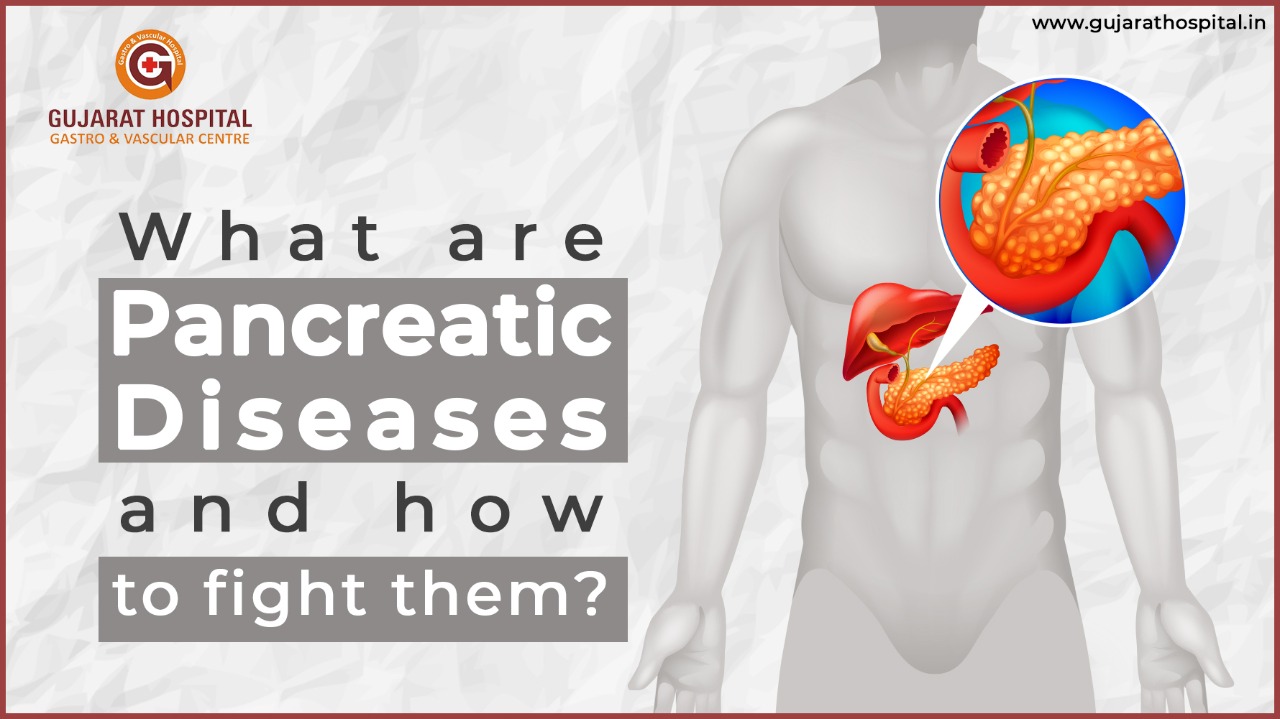
The pancreas is a soft, leaf-shaped organ about 15 cm long, lying behind the stomach and in front of the spine. It has two jobs: it makes the digestive enzymes that break down food in the small intestine, and it makes the hormones - insulin and glucagon - that control blood sugar. Because it sits so deep, its diseases are often discovered late, and their symptoms are easily mistaken for ordinary stomach trouble. This guide covers the four conditions we see most often.
Acute pancreatitis
What it is: sudden inflammation of the pancreas, in which its own enzymes begin to digest the gland. Most attacks are mild and settle within a week; a minority are severe, with damage to the pancreas and other organs.
Causes: gallstones slipping into the bile duct and alcohol account for about three-quarters of cases. Others include very high triglycerides, certain medicines, a complication of ERCP, viral infections and, in a few cases, no cause is found.
Symptoms: severe, constant pain in the upper abdomen that often goes through to the back, nausea and vomiting, fever, and a tender, swollen abdomen. The pain usually begins within hours of a large meal or heavy drinking.
Treatment: there is no drug that "switches off" pancreatitis. Treatment is hospital care - intravenous fluids, pain relief, early feeding when tolerated, and close monitoring - plus treatment of the cause: removal of bile duct stones by ERCP if they are still blocking, and gallbladder removal before discharge or soon after to prevent another attack. Severe cases may need intensive care and, later, drainage of infected collections. Read more on acute pancreatitis.
Chronic pancreatitis
What it is: long-standing inflammation that gradually scars the pancreas, so that it produces less enzyme and less insulin. Stones may form in the pancreatic duct.
Causes: alcohol is the commonest cause worldwide. In India, a distinct form - tropical or idiopathic chronic pancreatitis - affects younger people who do not drink, often with duct stones and early diabetes; genetic factors play a part. Smoking accelerates all forms.
Symptoms: recurring upper abdominal pain, often after meals; weight loss; pale, greasy, foul-smelling stools that are hard to flush (fat that is not being digested); and diabetes that appears at an unusually young age.
Treatment: stopping alcohol and smoking completely; pancreatic enzyme capsules with meals; management of diabetes; and pain control. When a stone or narrowing blocks the duct, endoscopic treatment (ERCP with stone removal or stenting, sometimes with shock-wave lithotripsy) or surgery to drain the duct relieves pain in most patients. Read more on chronic pancreatitis and pancreatic stones.
Pancreatic cysts
What they are: fluid-filled sacs in the pancreas, found more and more often because CT and MRI scans are done for other reasons. Some are the aftermath of pancreatitis (pseudocysts); others are true cystic tumours, most of which are benign but a few of which can turn cancerous over years.
Symptoms: usually none. Large cysts can cause pain, fullness or jaundice.
Treatment: the essential step is to work out which type of cyst it is - by MRI and, when needed, endoscopic ultrasound with sampling of the fluid. Harmless cysts are watched with periodic scans; cysts with worrying features are removed surgically before they can become cancer. Read more on pancreatic cysts.
Pancreatic cancer
What it is: a cancer arising from the enzyme-producing cells, most often in the head of the gland. It is uncommon but serious, mainly because it causes few symptoms until it is advanced.
Risk factors: smoking, chronic pancreatitis, long-standing diabetes, obesity, a family history, and certain inherited conditions.
Symptoms: painless jaundice (yellow eyes and skin with dark urine and pale stools) when the tumour blocks the bile duct; upper abdominal or back pain; unexplained weight loss; new diabetes in a person over 50 without obesity; or diabetes that suddenly becomes hard to control.
Treatment: surgery - most often the Whipple operation - is the only treatment that can cure, and is possible when the tumour has not spread to major blood vessels or distant organs. Chemotherapy is given before or after surgery, and alone when surgery is not possible. Jaundice is relieved with a stent placed by ERCP. Our pancreatic surgeons perform these operations, with the medical gastroenterology team providing endoscopic staging and drainage. Read more on pancreatic cancer and pancreas surgery.
Protecting your pancreas
- Do not smoke. It increases the risk of both chronic pancreatitis and cancer.
- Keep alcohol well within safe limits, or avoid it.
- Have gallstones that have caused symptoms treated - a stone in the bile duct is the commonest cause of acute pancreatitis.
- Control triglycerides, weight and diabetes.
When to see a specialist
Severe upper abdominal pain going through to the back, especially with vomiting, needs emergency assessment. Yellow eyes, pale greasy stools, unexplained weight loss, recurring upper abdominal pain, or new diabetes without an obvious reason should be seen by a gastroenterologist without delay.