
Black Stool or Blood in the Stool in Surat What to Expect
Bleeding from the digestive tract shows as black, tarry stools (bleeding higher up) or red blood (bleeding lower down). Small amounts are often from piles; larger or persistent bleeding needs prompt assessment, and heavy bleeding is an emergency.
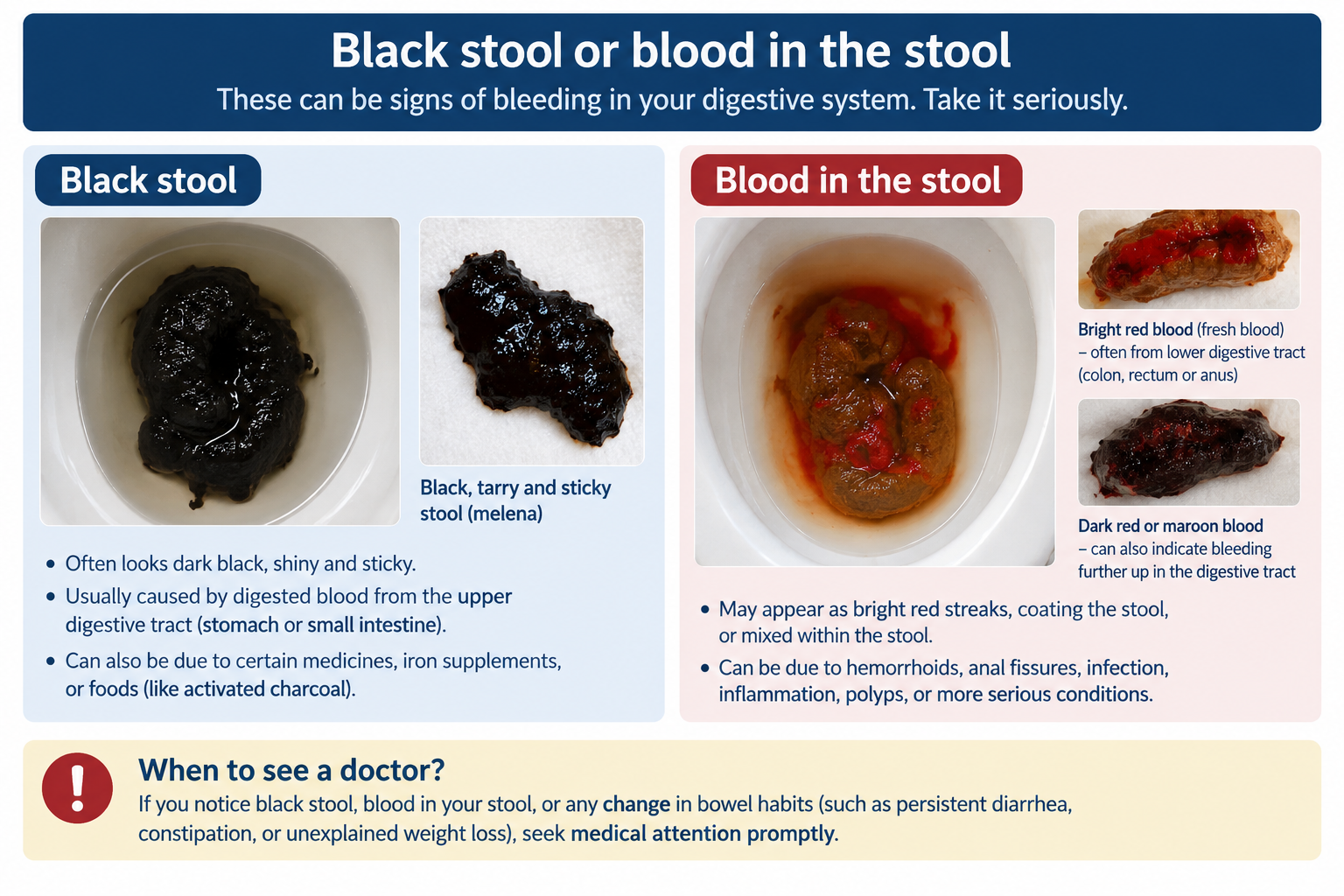
What Does Black Stool or Blood in the Stool Mean?
Blood that has passed through the stomach and small intestine is digested and turns the stool black and sticky - this usually points to a source in the food pipe, stomach or duodenum, such as an ulcer. Fresh red blood usually comes from the large bowel or anus: piles, a fissure, polyps, inflammation or, less often, a growth.
Iron tablets and some foods can darken the stool without bleeding, and a single streak of blood on the paper after a hard stool is usually a fissure or piles. But blood in the stool should never be assumed to be piles without examination, particularly after the age of 40 or when it recurs.
Seeing blood or black stool is frightening, and it is right to take it seriously. Many causes are common and very treatable - piles, a small fissure or a stomach ulcer - but the only way to be sure is to be examined.
How urgent it is depends on how much blood there is and how you feel. Small amounts of bright red blood with no other symptoms can usually wait for a prompt appointment. Black stools, a lot of blood, or feeling faint need same-day care.
Signs of Bleeding from the Digestive Tract
Bleeding from the digestive tract shows up in different ways, depending on where it comes from. You may notice:
- Black, tarry, foul-smelling stools
- Bright red blood mixed with the stool, on its surface, or in the pan
- Blood on the toilet paper, often with pain if from a fissure
- Dizziness, weakness or breathlessness from blood loss
- Vomiting blood or material that looks like coffee grounds
- Abdominal pain, depending on the cause
- Looking pale, or feeling unusually tired or breathless on stairs
- Pain or itching around the anus when passing stool
Symptoms vary from person to person. Having one or more of these does not confirm the condition - it means it is worth being checked.
When Is Bleeding an Emergency?
Do not wait for an online appointment if you have any of the following. Call the hospital or go to the nearest emergency department.
- Passing large amounts of blood or clots, or repeated black stools
- Vomiting blood
- Feeling faint, dizzy or having a racing heartbeat
- Bleeding in someone with known liver disease or on blood thinners
How We Find the Source of Bleeding
When you arrive, the doctor checks your pulse, blood pressure and how much blood you may have lost, and asks about your medicines - especially painkillers and blood thinners. The type of bleeding decides which test comes first.
What Causes Bleeding in the Stool?
- Peptic ulcer or gastritis, often related to painkillers, alcohol or H. pylori
- Piles (haemorrhoids) and anal fissure
- Polyps or cancer of the colon or rectum
- Inflammatory bowel disease or infection
- Diverticular disease and vascular malformations of the bowel
- Varices (swollen veins) in the food pipe in people with liver disease
Black, tarry stool usually means bleeding higher up, most often from an ulcer. Bright red blood usually comes from the lower bowel or anus, and piles and fissures are the most common causes. Polyps and growths are less common but can bleed in the same way, which is why bleeding should be examined rather than assumed to be piles.
Investigations
- Blood tests
- Check the blood count and how much has been lost, and clotting.What to expect: A routine blood sample. The results show whether you have lost a significant amount of blood and guide what happens next.
- Upper GI endoscopy
- For black stools or vomiting blood: finds the source and, in most cases, treats it in the same sitting.What to expect: Done under sedation. If a bleeding point is found, it can often be treated in the same procedure.
- Colonoscopy
- For red bleeding: examines the whole large bowel and removes polyps found.What to expect: You drink a bowel preparation first to clear the bowel, and the test is done under sedation.
- Examination of the anal area
- Identifies piles and fissures, which are treated in our colorectal clinic.What to expect: A short, gentle examination in the clinic, usually with a small instrument to look just inside. It is quick and causes only mild discomfort.
Treatment Options for GI Bleeding
The usual path
- Make you safe first.
If bleeding is heavy, the priority is to stabilise you - fluids, and a blood transfusion if needed.
- Find and treat the source.
Endoscopy or colonoscopy finds where the bleeding comes from and, in most cases, stops it in the same procedure.
- Treat the cause.
Medicines for ulcers and H. pylori, removal of polyps, and treatment of piles or fissures prevent the bleeding coming back.
- Surgery if needed.
An operation is needed only occasionally - when bleeding cannot be controlled through the endoscope, or for a tumour.
Medicines & lifestyle
- Medicines
- Acid suppression for ulcers, treatment of H. pylori, and stopping the medicine responsible where relevant.
Endoscopic treatment
- Endoscopic treatment
- Bleeding ulcers, vessels and varices can usually be sealed through the endoscope with clips, injection or banding.
Surgery
- Surgery
- Occasionally required when bleeding cannot be controlled endoscopically, or for a tumour.
Other care
- Treatment of the cause
- Piles and fissures, polyps, inflammatory bowel disease and other diagnoses each have their own treatment; see the related pages.
The right treatment depends on the cause, how severe it is and your overall health. Your doctor will discuss the options with you before anything is decided.
Frequently Asked Questions about Blood in the Stool
My stool is black but I feel fine - is it urgent?
Black stool can mean slow bleeding from an ulcer even when you feel well, so it should be checked the same day. If you are also dizzy or weak, treat it as an emergency.
Is blood in the stool always from piles?
No. Piles are the commonest cause, but polyps, inflammation and cancer can bleed in the same way. An examination - and often a colonoscopy - settles it.
Can I wait for an appointment?
Small amounts of bright red blood once or twice can wait for a prompt appointment. Heavy bleeding, black stools, vomiting blood or faintness cannot - call the emergency numbers.
Can iron tablets or food make my stool black without any bleeding?
Yes. Iron tablets, some antacids and certain foods can darken the stool. Bleeding from higher up usually produces stool that is tarry, sticky and unusually foul-smelling, rather than simply dark. If you are not sure, or if you also feel weak, dizzy or have stomach pain, it is safer to be examined.
I take blood thinners - should I stop them if I notice bleeding?
Do not stop them on your own, because that can be dangerous for the condition they were prescribed for. Contact your doctor or come to the hospital the same day; bleeding in someone on blood thinners needs prompt assessment. The doctor will decide whether the medicine should be paused or adjusted while the cause is found and treated.
What happens if I come to the emergency department with bleeding?
You are assessed straight away, blood tests are taken and your blood loss is treated if needed. An endoscopy is then done to find the source and, in most cases, treat it.
Do I need a colonoscopy for blood in the stool?
Often, yes, particularly if the bleeding keeps returning or you are over 40. It examines the whole large bowel and can remove polyps in the same test.
Can piles cause heavy bleeding?
Piles usually cause small amounts of bright red blood. Heavy bleeding, clots or feeling faint should never be put down to piles; treat it as an emergency.
Why Choose Gujarat Hospital for GI Bleeding
How we look after black stool or blood in the stool at our main hospital in Adajan, Surat:
- 24×7 emergency care, with separate medical and surgical emergency numbers shown on this page.
- Endoscopy that finds and treats in one sitting. Bleeding ulcers, vessels and varices can usually be sealed with clips, injection or banding.
- Colonoscopy for red bleeding, with polyps removed during the same test, and piles and fissures treated in our colorectal clinic.
- Surgeons and the ICU on site. If bleeding cannot be controlled through the endoscope, the GI surgical team and the 9-bed ICU are in the same building.
The information on this page is for general patient education and does not replace individual medical advice, diagnosis or treatment. Medical Disclaimer