
Popliteal Aneurysm in Surat What to Expect
A popliteal aneurysm is a widening of the artery behind the knee. It is the commonest aneurysm outside the aorta and is dangerous mainly because clot forming inside it can suddenly block the blood supply to the lower leg.
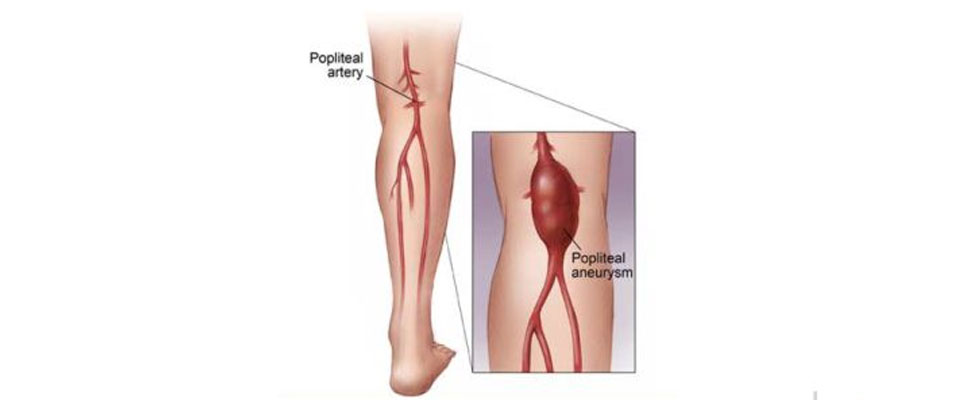
What Is a Popliteal Aneurysm?
The popliteal artery runs behind the knee and supplies the calf and foot. When it widens to more than about twice its normal size, blood swirls inside the sac and clot forms on its wall. Pieces of clot can wash down to block the small arteries of the foot, or the whole aneurysm can thrombose, cutting off the leg's blood supply; rupture is uncommon. Popliteal aneurysms occur in both legs in about half of patients and are associated with an abdominal aortic aneurysm in a third, so the aorta and the other leg are always scanned.
Repair is advised for aneurysms over about 2 cm, for any aneurysm containing a lot of clot, and for those causing symptoms. Both open bypass surgery and endovascular stent-grafts are used.
A popliteal aneurysm is sometimes found when a doctor feels a strong pulse behind the knee, or on a scan done for an aneurysm elsewhere. Unlike an aortic aneurysm, the main danger is not bursting but clot: the aneurysm can block suddenly and threaten the lower leg.
That is why repair is often advised even when you have no symptoms. Planned repair, done before the aneurysm blocks, is more straightforward than emergency treatment, and the surgeon will also check the other knee and the abdominal aorta.
Symptoms of an Aneurysm behind the Knee
Many people have no symptoms until the aneurysm causes a problem. You may also notice:
- Often none - found on examination as a pulsing lump behind the knee
- Cramping pain on walking when clot has narrowed the arteries below
- Sudden cold, pale, painful leg when the aneurysm blocks
- Painful blue toes from small emboli
- Swelling or pain behind the knee from pressure on the vein or nerve
- A feeling of fullness or pressure behind the knee when bending it
- Numbness or tingling in the foot from pressure on the nerve
Symptoms vary from person to person. Having one or more of these does not confirm the condition - it means it is worth being checked.
When Is a Popliteal Aneurysm an Emergency?
Do not wait for an online appointment if you have any of the following. Call the hospital or go to the nearest emergency department.
- A leg that suddenly becomes cold, numb, painful or weak - the aneurysm may have blocked
- Sudden painful discolouration of the toes
How We Diagnose a Popliteal Aneurysm
At your first visit the surgeon asks about leg pain, walking distance and any sudden changes, and feels the pulses behind both knees and in the feet. A duplex ultrasound confirms the aneurysm, and the abdominal aorta is checked. More detailed imaging of the leg arteries is added when repair is being planned.
Who Gets a Popliteal Aneurysm?
- Atherosclerosis and weakening of the arterial wall
- Male sex and age over 60
- Smoking and high blood pressure
- An aneurysm elsewhere, especially the abdominal aorta
- Rarely, injury or infection
Popliteal aneurysms are seen mostly in older men, often in those who smoke or have high blood pressure. They frequently come with aneurysms elsewhere, which is why finding one leads to checks of the other leg and the aorta. Stopping smoking and controlling blood pressure protect the rest of the arteries.
Investigations
- Duplex ultrasound
- Confirms the aneurysm, measures its size and shows how much clot it contains.What to expect: A painless scan with gel and a probe behind the knee, done lying on your front or side. The abdominal aorta and the other knee are usually checked at the same visit.
- CT angiography
- Maps the arteries above and below to plan repair and checks the aorta and the other leg.What to expect: You lie still on a scanner table while a dye is given through a drip in your arm. Tell the team about kidney problems, diabetes medicines or any allergy to dye.
- Assessment of the run-off arteries
- How well the arteries of the calf are flowing determines the repair technique.What to expect: Usually part of the duplex scan or CT, sometimes with angiography. It shows whether the calf arteries are open enough to carry blood after a bypass or stent.
Treatment Options for a Popliteal Aneurysm
The usual path
- Protect the arteries.
Antiplatelet medicine, a statin, blood-pressure control and stopping smoking, for every patient.
- Watch small aneurysms.
Small aneurysms with little clot are checked with duplex ultrasound at intervals your surgeon sets.
- Repair before it blocks.
Bypass surgery, usually with your own vein, is the common repair; a covered stent placed through a small puncture suits some patients. Your surgeon explains which is right for you.
- Emergency treatment if it blocks.
A suddenly cold, painful leg needs emergency care; the clot is cleared and the artery repaired to save the leg.
- Surveillance
- Ultrasound every six to twelve months for small aneurysms with little clot.
- Open bypass repair
- The aneurysm is tied off and the artery bypassed with a vein from the same leg - the most durable repair, done through incisions above and below the knee.
- Endovascular stent-graft
- A covered stent placed from inside the artery through a small puncture, used in patients less fit for open surgery.
- Emergency clot-dissolving treatment
- When the aneurysm has blocked, thrombolysis through a catheter may reopen the calf arteries before repair.
- Risk-factor control
- Antiplatelet medicine, statins and stopping smoking, with checks of the aorta and the other leg.
The right treatment depends on the cause, how severe it is and your overall health. Your doctor will discuss the options with you before anything is decided.
Frequently Asked Questions about Popliteal Aneurysm
Should a small popliteal aneurysm be repaired?
Small aneurysms with little clot can be watched with ultrasound. Repair is advised once the aneurysm reaches about 2 cm, contains a lot of clot or causes symptoms, because the risk of sudden blockage rises.
Which is better, surgery or a stent?
Bypass with your own vein generally lasts longer, especially in younger, active patients. A stent-graft avoids incisions and suits patients with other health problems.
Will the other leg be affected?
About half of patients have an aneurysm on both sides, so the other knee and the abdominal aorta are always checked.
What is the recovery like after popliteal aneurysm bypass?
Open bypass involves incisions above and below the knee and a hospital stay of a few days. Walking begins within a day or two, and swelling of the leg and stiffness of the knee are common for several weeks. Most patients return to desk work within two to four weeks and to heavier activity after about six weeks, as advised by the surgeon.
Will I need follow-up scans after repair?
Yes. A bypass graft or stent-graft is checked with duplex ultrasound at intervals to make sure it remains open, and the abdominal aorta and the other leg are kept under review because new aneurysms can develop. Continuing antiplatelet medicine, statins and stopping smoking protect the repair.
Is every lump behind the knee an aneurysm?
No. A fluid-filled swelling called a Baker's cyst is much more common. A lump that pulses with your heartbeat is more likely to be an aneurysm. A duplex ultrasound tells the two apart quickly and painlessly.
Which doctor should I see for a popliteal aneurysm?
A vascular surgeon. You can book at our Adajan hospital or at the OPD nearest you; the scan and any repair are done at Adajan.
Will I be able to bend my knee normally after repair?
Most people regain normal knee movement once the wounds heal and the swelling settles. Your surgeon will tell you about any limits on kneeling or deep bending while the repair settles in.
Why Choose Gujarat Hospital for Popliteal Aneurysm
How we look after a popliteal aneurysm at our main hospital in Adajan, Surat:
- Duplex ultrasound by the vascular team, to measure the aneurysm, see how much clot it holds, and check the other knee and the abdominal aorta.
- Bypass and catheter treatment by one surgeon. Dr. Ankur Patel performs bypass surgery of the leg arteries and angioplasty with stenting, so the repair is chosen on your arteries, not on what is available.
- A Hybrid Operation Theatre & Cathlab, where the arteries can be imaged and operated on in the same room, in the same sitting.
- Emergency care for a blocked aneurysm. A suddenly cold, painful leg is an emergency; surgery for clots in blood vessels is among the procedures the vascular surgeon performs.
The information on this page is for general patient education and does not replace individual medical advice, diagnosis or treatment. Medical Disclaimer