
GI Motility Studies in Surat What to Expect
Motility studies measure how the food pipe, stomach and bowel move and function - manometry for muscle pressure and coordination, pH-impedance for reflux, and transit and pelvic-floor tests for constipation. They explain symptoms that endoscopy and scans cannot.
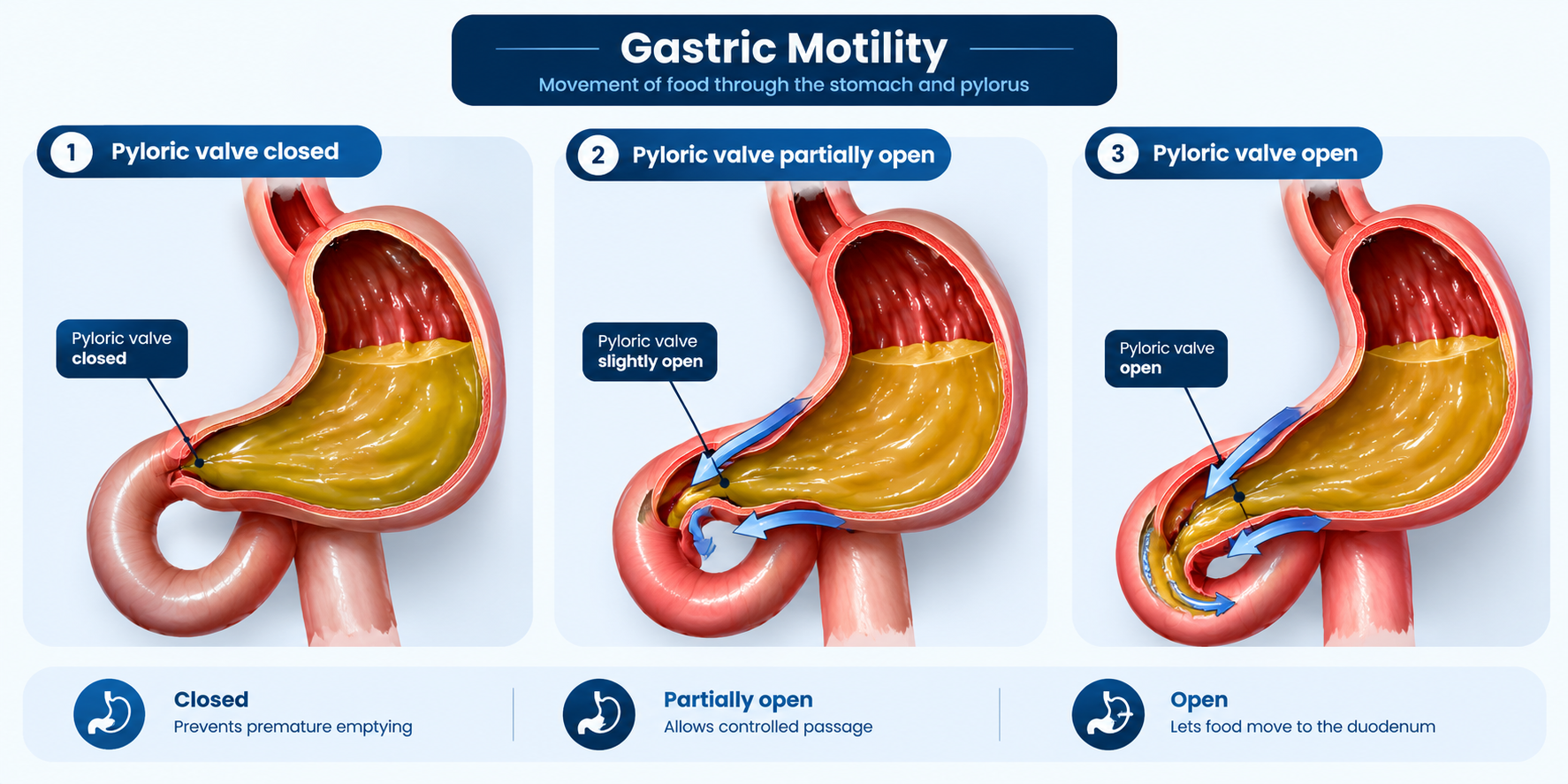
What are GI Motility Studies?
Many digestive symptoms - swallowing difficulty, reflux that does not respond to medicines, bloating, constipation - come not from damage that can be seen but from how the gut moves. Motility tests measure that movement directly. Oesophageal manometry passes a thin pressure-sensing catheter through the nose and records swallows; a pH-impedance study leaves a fine catheter in place for 24 hours to record reflux episodes; anorectal manometry measures the pressures and coordination of the anal muscles.
Our GI motility lab at Adajan is run by our consultant gastroenterologist with special interest in GI motility and functional disorders, who interprets the results and plans treatment - including whether a procedure such as POEM or anti-reflux surgery is appropriate.
When is a Motility Study Recommended?
Your doctor may recommend a motility study for:
- Difficulty swallowing where endoscopy is normal, to diagnose achalasia and other motility disorders See: difficulty swallowing
- Reflux symptoms not responding to treatment, or before anti-reflux surgery See: acidity and reflux (GERD)
- Non-cardiac chest pain
- Chronic constipation suspected to be due to pelvic-floor dysfunction See: constipation, diarrhoea and IBS
- Faecal incontinence
- Assessment before and after treatments of the food pipe
These tests are usually done after an endoscopy has shown a normal lining - they answer the next question: why does it not work properly?
Your Motility Study Visit: Step by Step
Motility tests need no sedation, so the visit is short and you can travel home alone. Manometry takes twenty to thirty minutes; a pH study records for 24 hours while you go about your day.
- Stopping medicines
Your doctor tells you which medicines to stop before the test, particularly acid suppressants and motility drugs, and for how long.
- Arrival
You come to the GI motility lab at the main hospital in Adajan, fasting for a few hours as instructed.
- The test
Manometry or anorectal manometry takes twenty to thirty minutes; for a pH study the fine catheter is placed and connected to a small recorder you wear home (described in the next section).
- The 24 hours (pH study)
You eat normally and keep a diary of meals and symptoms, then return the next day for the catheter and recorder to be removed.
- Results
The recordings are analysed by our consultant gastroenterologist and explained at a follow-up appointment, with the treatment plan.
What Happens During the Tests
Oesophageal manometry: a thin catheter is passed through the nose into the food pipe after a numbing gel; you take small sips of water while pressures are recorded; about twenty to thirty minutes, no sedation
pH-impedance study: a fine catheter is placed through the nose and connected to a small recorder worn for 24 hours while you eat and go about your day; you note symptoms and meals
Anorectal manometry: a small catheter is placed in the rectum; you are asked to squeeze and push; about twenty minutes
Transit studies: markers or a capsule track how quickly the bowel moves over days
What you will feel - and what you won't. Passing the thin catheter through the nose is briefly unpleasant - a numbing gel helps, and most people say the first minute is the worst of it. Once it is in place, the tests are not painful; manometry asks you to take small sips of water, and anorectal manometry asks you to squeeze and push. There is no sedation and no radiation, so you are fully aware and can go home on your own.
How to Prepare for Your Motility Study
- Stop the medicines you are told to. Your doctor will tell you which medicines to stop before the test, particularly acid suppressants and motility drugs, and for how long.
- Fasting. Fasting for a few hours is needed before manometry and pH studies.
- No sedation - come as you are. No sedation is used, so you can travel home alone and return to normal activities.
These are general points. The written instructions you receive from the hospital for your own procedure take priority - see also Patient Information.
After the Tests: Recovery & Results
Straight after. Mild nasal or throat discomfort for a short time. Normal diet after manometry.
During a 24-hour pH study. You eat normally and keep a diary of meals and symptoms; the recorder is small and worn on a belt.
Results. Results are analysed and explained at a follow-up appointment - at Adajan, or at the OPD nearest you in Varachha, Bharuch, Navsari or Vapi.
Are Motility Studies Safe?
These tests are very safe. Nose bleeding, gagging and temporary discomfort are the usual issues; serious complications are very rare.
Contact the hospital if a nosebleed does not settle, or if you have any other concern after the test.
After a procedure, contact the hospital at once for severe pain, fever, vomiting, bleeding or breathlessness: Emergency 24×7: 90333 62020
Alternatives to Motility Studies
Barium studies give an indirect picture of movement.
A trial of treatment without testing is reasonable for typical, mild symptoms.
Wireless pH capsules are an alternative to the nasal catheter in some centres.
Why Choose Gujarat Hospital for Motility Studies
A motility study is only useful if someone who understands these disorders reads it and acts on it. At Gujarat Gastro & Vascular Hospital, Adajan, Surat:
- A dedicated GI motility lab run by our consultant gastroenterologist with special interest in motility and functional disorders. The same doctor orders the test, interprets the recording and plans your treatment.
- The full set of tests in one place. Oesophageal manometry, 24-hour pH-impedance, anorectal manometry and transit studies - so swallowing, reflux and constipation problems are all measured here.
- Results that lead straight to treatment. If the study shows achalasia, POEM is done here by our medical gastroenterologist; if reflux surgery or pelvic-floor treatment is the answer, our GI surgical team is on the same campus.
- No sedation, no radiation. Thin catheters and pressure or acid sensors only, so the tests are safe and you go home on your own.
Frequently Asked Questions about Motility Studies
Is manometry painful?
Passing the catheter through the nose is briefly unpleasant; once it is in place the test is uncomfortable but not painful.
Can the tests be done at the OPD in Varachha, Bharuch, Navsari or Vapi?
No - the GI motility lab is at the main hospital in Adajan. Your doctor at the OPD will book the test for you, and the results can be explained at the OPD nearest you at follow-up.
Can I go to work with the pH monitor?
Yes - it is designed to record a normal day. The recorder is small and worn on a belt.
How long does each test take?
Oesophageal manometry about twenty to thirty minutes; anorectal manometry about twenty minutes; a pH-impedance study records for 24 hours while you live normally and come back the next day. Transit studies track the bowel over days.
Why can't the endoscopy tell you this?
Endoscopy shows the lining, not the movement. A food pipe can look normal and still not work properly.
Do I need to stop my acidity tablets before the pH study?
Usually yes, for several days, so that the test shows how much acid rises without treatment. Sometimes the test is deliberately done while you continue the tablets, to check whether they are working. Your doctor will tell you which applies to you and exactly when to stop, so do not change your medicines until you have been told.
What happens after the results?
Your consultant gastroenterologist explains what the recording shows and what it means - medicines, a procedure such as POEM, surgery, or reassurance - at a follow-up appointment at Adajan or the OPD nearest you.
Is there any radiation or sedation involved in motility tests?
No. Manometry and pH studies use thin catheters and pressure or acid sensors, with no X-rays and no sedation - you are awake, can swallow on instruction and can travel home alone afterwards. Only a numbing gel is used for the nose. This also means the tests are suitable for people who cannot have sedation.
The information on this page is for general patient education and does not replace individual medical advice, diagnosis or treatment. Medical Disclaimer