
Bariatric (Weight-loss) Surgery in Surat What to Expect
Sleeve gastrectomy and gastric bypass are operations for severe obesity that reduce hunger and food intake, producing substantial, lasting weight loss and improvement in diabetes and other weight-related conditions. They are performed laparoscopically or robotically by our gastrointestinal and bariatric surgeon.
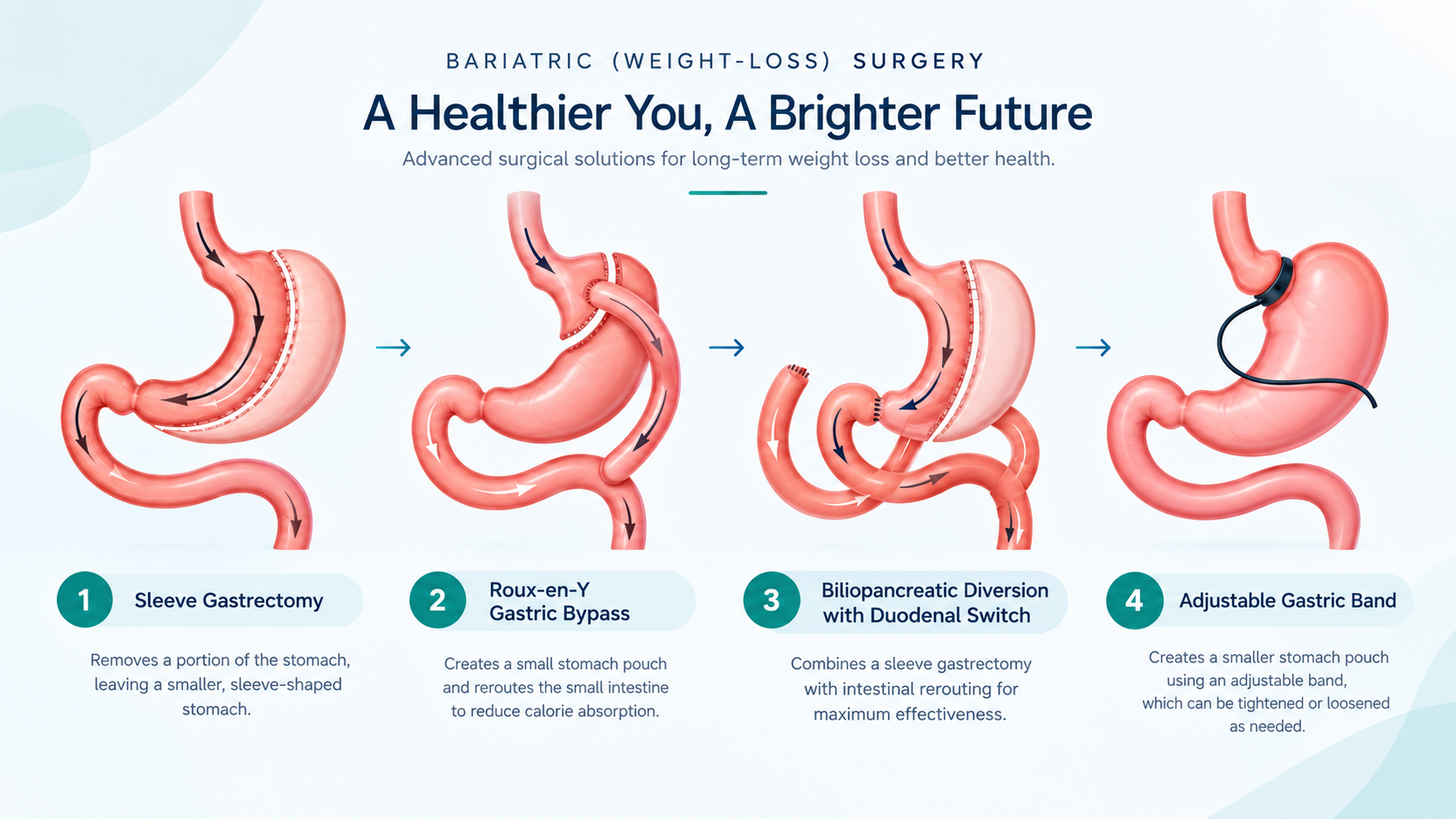
What is Bariatric (Weight-loss) Surgery?
In sleeve gastrectomy, about three-quarters of the stomach is removed, leaving a narrow tube; hunger hormones fall and portions become small. In gastric bypass, a small stomach pouch is joined directly to the small intestine, so food bypasses most of the stomach and the first part of the intestine; this has a particularly strong effect on type 2 diabetes.
Surgery is one part of a programme that includes dietetic and psychological support, treatment of related conditions and lifelong follow-up. Suitability is assessed against established criteria, and the choice between operations is made with you.
At Gujarat Gastro & Vascular Hospital in Adajan, Surat, sleeve gastrectomy and gastric bypass are performed laparoscopically or with the surgical robot by our gastrointestinal and bariatric surgeon. Surgery is never the first step: it is offered only when weight has not been controlled by supervised diet, exercise and medicines, and the medical gastroenterology team on the same campus does the endoscopy before surgery and offers endoscopic sleeve gastroplasty for suitable patients with a lower BMI.
Who is Bariatric Surgery For?
Bariatric surgery is considered for:
- Severe obesity meeting the criteria for surgery, particularly with type 2 diabetes, high blood pressure, sleep apnoea, fatty liver or joint disease See: bariatric (weight-loss) surgery · fatty liver
- Weight not controlled by supervised diet, exercise and medicines See: bariatric (weight-loss) surgery
- Patients able to commit to follow-up and lifestyle change
Surgery is never the first step. It is offered against established criteria, after supervised diet, exercise and medicines have not controlled weight, and only to patients able to commit to follow-up and lifestyle change. The choice between sleeve and bypass is made with you.
Your Bariatric Surgery Stay: Step by Step
Bariatric surgery is a planned operation at the end of a period of assessment and preparation, and the beginning of lifelong follow-up. This is the usual path from the first consultation onwards; the hospital stay is two to three days.
- Assessment and decision
Comprehensive assessment by the bariatric team - medical, dietetic and psychological - with blood tests, endoscopy, and sleep and heart assessment as needed. Suitability is checked against established criteria, the sleeve and bypass are explained, and the choice is made with you.
- Pre-operative diet and anaesthetic check
A pre-operative diet for one to two weeks shrinks the liver and makes surgery safer. You stop smoking, have an anaesthetic assessment, and receive written fasting and medicine instructions.
- Admission
Admission at the main hospital in Adajan, fasting as instructed.
- The operation
Under general anaesthesia, through small incisions, laparoscopically or robotically. In sleeve gastrectomy the stomach is divided along a calibration tube and the larger part removed; in gastric bypass a small pouch is created and joined to a loop of small intestine. The joins are checked for leaks and the incisions closed (described in the next section).
- Hospital stay, going home and follow-up
You walk from the first day and stay two to three days, taking liquids first. At home you move from pureed and soft foods to small solid meals over about six weeks with the dietitian, and return to work in two to three weeks. Follow-up visits and blood tests are regular in the first two years and then yearly - at Adajan or at the OPD nearest you.
What Happens During Bariatric Surgery
Comprehensive assessment by the bariatric team
General anaesthesia; laparoscopic or robotic approach through small incisions
Sleeve gastrectomy: the stomach is divided along a calibration tube and the larger part removed
Gastric bypass: a small pouch is created and joined to a loop of small intestine
Checks for leaks; incisions closed
Hospital stay of two to three days
What you will feel - and what you won't. The operation is done under general anaesthesia, so you are asleep and feel nothing during it. Afterwards there is discomfort at the small wounds and sometimes shoulder-tip pain from the gas used to create working space; both are controlled with regular pain relief so that you can walk from the first day. Hunger is noticeably less after the operation because of the changes to the stomach and hunger hormones, and small portions fill you quickly. Some nausea in the first days is common and is treated. Tiredness is normal while you are on liquids and soft foods, and the dietitian guides you through each stage.
How to Prepare for Bariatric Surgery
- Assessment by the bariatric team. Medical, dietetic and psychological assessment; blood tests, endoscopy, sleep and heart assessment as needed.
- The pre-operative diet. A pre-operative diet for one to two weeks to shrink the liver and make surgery safer.
- Smoking. Stopping smoking.
- Fasting and medicines. Fasting and medicine instructions. Please follow the written instructions exactly, especially for blood thinners and diabetes medicines.
These are general points. The written instructions you receive from the hospital for your own procedure take priority - see also Patient Information.
After Bariatric Surgery: Recovery, Eating & Follow-up
Eating, stage by stage. Liquids for the first days, then pureed and soft foods, then small solid meals over about six weeks, guided by the dietitian.
Getting back to normal. Walking from the first day; return to work in two to three weeks.
Supplements. Lifelong vitamin and mineral supplements after bypass and usually after sleeve.
Follow-up and your medicines. Regular follow-up visits and blood tests in the first two years and then yearly. Diabetes and blood-pressure medicines are reviewed as weight falls. Follow-up visits can be at Adajan or at the OPD nearest you.
Is Bariatric Surgery Safe?
Bleeding, leaks from the staple line or join, blood clots, infection and anaesthetic risks in the short term; they are uncommon with experienced teams.
Nutritional deficiencies, gallstones, reflux (after sleeve) and dumping syndrome (after bypass) in the longer term, managed with follow-up.
Weight regain is possible without lifestyle change.
Contact the hospital if you develop fever, severe abdominal pain, persistent vomiting, a racing pulse or breathlessness after you go home.
After a procedure, contact the hospital at once for severe pain, fever, vomiting, bleeding or breathlessness: Emergency 24×7: 90333 62020
Alternatives to Bariatric Surgery
Endoscopic sleeve gastroplasty for suitable patients with lower BMI.
Weight-loss medicines, including newer injectables, with medical supervision.
Intensive lifestyle programmes.
Why Choose Gujarat Hospital for Bariatric Surgery
Bariatric surgery works when the assessment before, the operation and the years of follow-up afterwards are handled together. At Gujarat Gastro & Vascular Hospital, Adajan, Surat:
- A gastrointestinal and bariatric surgeon. Dr. Tejas Patel, Gastrointestinal & Bariatric Surgeon, performs sleeve gastrectomy and gastric bypass here, with Dr. Naresh Gabani, Consultant Surgical Gastroenterologist & GI Robotic Surgeon, for robotic surgery.
- Keyhole and robotic approaches. The operations are done laparoscopically or robotically through small incisions, with the robotic surgery system used for bariatric surgery in suitable patients. Open surgery is used only where it is safer.
- Endoscopy and a non-surgical option on the same campus. The medical gastroenterology team does the endoscopy before surgery in the endoscopy suite here, and offers endoscopic sleeve gastroplasty (ESG) for suitable patients with a lower BMI - so the choice between an endoscopic procedure and an operation is made together.
- Care of related conditions. Fatty liver, reflux and other weight-related digestive conditions are managed by the gastroenterologists on the same campus, and diabetes and blood-pressure medicines are reviewed at follow-up as weight falls.
Frequently Asked Questions about Bariatric Surgery
How much weight will I lose?
Most patients lose a large proportion of their excess weight over one to two years, with sleeve and bypass differing somewhat. Results depend on follow-up and lifestyle.
Should I have a sleeve or a bypass?
It depends on your weight, your health conditions and your preferences, and the choice is made with you after assessment. Sleeve gastrectomy removes about three-quarters of the stomach and cannot be reversed; gastric bypass joins a small pouch to the small intestine and has a particularly strong effect on type 2 diabetes, but needs lifelong supplements. Reflux after sleeve and dumping after bypass are among the differences the surgeon will explain.
Will my diabetes go away?
Many patients see their diabetes improve markedly or go into remission, especially after bypass and when diabetes is of recent onset. Medicines are adjusted as this happens.
Why do I need a special diet before the operation?
A pre-operative diet for one to two weeks shrinks the liver, which lies over the stomach and has to be lifted out of the way during keyhole surgery. A smaller liver makes the operation safer and easier to do through small incisions. The dietitian gives you the diet and the team checks you have followed it before admission.
Is the surgery reversible?
Sleeve gastrectomy is not, as stomach is removed. Bypass can technically be reversed but rarely is.
Can I plan a pregnancy after bariatric surgery?
Yes, and fertility often improves as weight falls. Pregnancy is usually advised only once weight has stabilised, generally well over a year after surgery, so that the baby is not affected by rapid weight loss or low nutrient levels. Vitamin and mineral supplements must continue throughout, and the bariatric team and obstetrician should follow the pregnancy together.
What is endoscopic sleeve gastroplasty, and is it an alternative for me?
Endoscopic sleeve gastroplasty (ESG) narrows the stomach with stitches placed from inside through an endoscope, without any incisions. It is done by the medical gastroenterology team on the same campus and is an option for suitable patients with a lower BMI. Whether ESG, sleeve gastrectomy or bypass is right for you is decided together after assessment.
Will I be able to eat Indian food again?
Yes, in small portions and with some changes. Dal, vegetables, rotis and rice can all be eaten once solid food is reintroduced, but fried items, sweets and sugary drinks are best avoided, as they add calories without filling you and can cause discomfort after bypass. Eating slowly, chewing well and not drinking with meals matter more than the type of cuisine. The dietitian will help you adapt your usual meals.
The information on this page is for general patient education and does not replace individual medical advice, diagnosis or treatment. Medical Disclaimer