
ESD & EMR in Surat What to Expect
Endoscopic mucosal resection (EMR) and endoscopic submucosal dissection (ESD) remove large polyps and very early cancers confined to the lining of the food pipe, stomach or bowel through the endoscope - avoiding an operation while removing the lesion completely for examination.
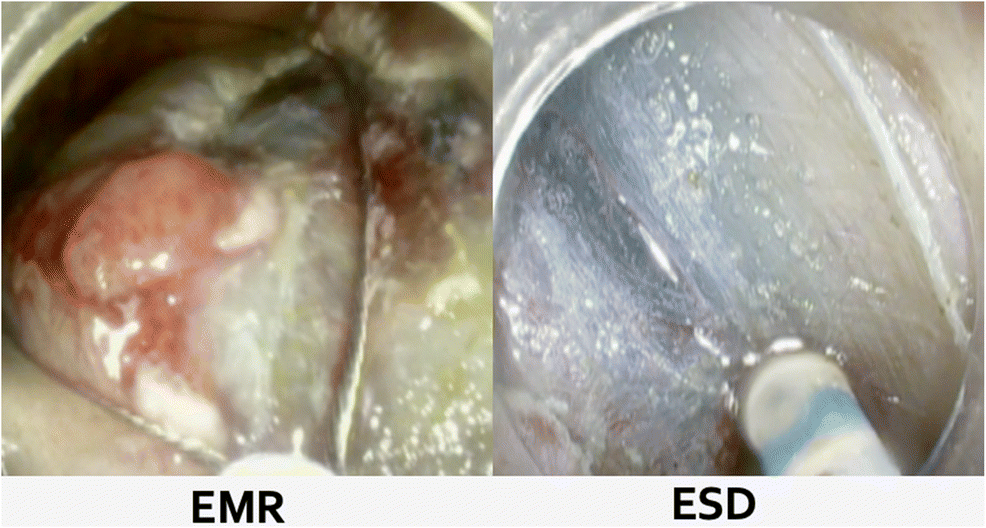
What are ESD and EMR?
Lesions that have not grown beyond the innermost layers can be lifted away from the muscle wall and removed from inside. EMR uses a snare after injecting fluid under the lesion, in one or several pieces. ESD uses a fine endoscopic knife to cut around and under the lesion so that it comes out in a single piece, allowing the pathologist to confirm that the removal is complete.
These are specialist procedures that require careful selection - the lesion must be assessed first, often with endoscopic ultrasound - and are performed by our medical gastroenterologists in the endoscopy suite at Adajan under sedation or anaesthesia.
When are ESD or EMR Recommended?
Your doctor may recommend it for:
- Large flat polyps in the colon or rectum that cannot be removed with a simple snare See: colon and rectal conditions
- Early cancers of the food pipe, stomach or bowel that have not invaded deeper layers See: cancers of the digestive system
- Barrett's oesophagus with abnormal cells See: acidity and reflux (GERD)
- Some lesions under the lining, after assessment
Whether a lesion can be removed endoscopically depends on its size, depth and position - that assessment comes first, and surgery remains the right answer for some.
Your ESD or EMR Visit: Step by Step
ESD and EMR are planned procedures. Small lesions are often a day case; larger resections mean observation for a few hours or overnight. The procedure takes from thirty minutes to several hours depending on size.
- Assessment first
The lesion is examined and, where needed, assessed with endoscopic ultrasound to confirm it is suitable for endoscopic removal.
- Arrival and check-in
Check-in at the main hospital in Adajan, fasting as instructed (and with bowel preparation for colon lesions).
- Anaesthesia
Sedation or general anaesthesia is given, and your pulse, oxygen and blood pressure are monitored throughout.
- The procedure
Thirty minutes to several hours in the endoscopy suite, depending on the size of the lesion (described in the next section).
- Observation and going home
You are observed for a few hours or overnight. A soft diet for a few days is advised after larger resections; the pathology report follows in about a week.
What Happens During ESD and EMR
Sedation or general anaesthesia is given
The lesion is examined closely and its edges marked
Fluid is injected beneath it to lift it away from the muscle layer
EMR: a snare removes the raised lesion, in one or more pieces
ESD: an endoscopic knife cuts around the lesion and dissects beneath it to remove it whole
The base is checked and any bleeding points sealed; clips may be placed
The procedure takes from thirty minutes to several hours depending on size
What you will feel - and what you won't. Under sedation or anaesthesia you feel nothing during the resection; the lining has no pain nerves, so cutting and lifting it is painless. Afterwards some discomfort or bloating for a day or two is normal and settles. There is no cut on the skin - the whole procedure is done from inside - which is why recovery is so much quicker than after an operation.
How to Prepare for ESD or EMR
- Blood thinners. Blood thinners are stopped as advised.
- Bowel preparation for colon lesions. Bowel preparation is needed for lesions in the colon.
- Possible admission. You may be admitted for observation after larger resections - bring what you need for a night in hospital and someone to take you home.
These are general points. The written instructions you receive from the hospital for your own procedure take priority - see also Patient Information.
After ESD or EMR: Recovery & Pathology Results
The first hours. Observation for a few hours or overnight. Some discomfort is normal; severe pain, fever, bleeding or black stools must be reported immediately.
The next days. A soft diet for a few days after larger resections, as advised, then a gradual return to normal food.
Results and follow-up. The pathology report, in about a week, confirms whether the removal was complete and whether any further treatment is needed. A follow-up endoscopy is scheduled to check healing.
Are ESD and EMR Safe?
Bleeding during or in the days after the procedure, and perforation of the wall, are the main risks; they are more likely than with a simple polypectomy and are managed endoscopically in most cases.
Occasionally the pathology shows deeper spread than expected and surgery is recommended afterwards.
A scar can cause a narrowing in the food pipe after large resections, which can be dilated.
Contact the hospital immediately if you develop severe pain, fever, bleeding or black stools after the procedure.
After a procedure, contact the hospital at once for severe pain, fever, vomiting, bleeding or breathlessness: Emergency 24×7: 90333 62020
Alternatives to ESD and EMR
Surgical removal of the affected segment of bowel or stomach - the alternative when a lesion is too deep or too large for endoscopic removal.
Ablation of Barrett's oesophagus with heat, for flat abnormal areas without a lesion.
Why Choose Gujarat Hospital for ESD and EMR
ESD and EMR save patients an operation only when the lesion is chosen carefully, removed completely and followed up properly. At Gujarat Gastro & Vascular Hospital, Adajan, Surat:
- Assessment and removal by the same consultant medical gastroenterologists. Endoscopic ultrasound to assess the lesion, then EMR or ESD in the endoscopy suite under sedation or anaesthesia with full monitoring.
- Whole-piece removal for a clear answer. ESD takes the lesion out in a single piece so the pathologist can confirm the edges and depth are clear - the information that decides whether anything more is needed.
- Bleeding and complications handled endoscopically, on the spot. The team seals bleeding points and places clips during the procedure, and observes you afterwards in the hospital rather than sending you home blind.
- Surgery on the same campus if the pathology calls for it. If the lesion proves deeper than expected, our surgical gastroenterology team - including robotic and laparoscopic GI surgery - is on site, with a 9-bed ICU.
Frequently Asked Questions about ESD and EMR
Is this a cure for cancer?
For early cancers that are confined to the lining and removed completely, yes - with follow-up. The pathology report determines this.
Will I be awake?
No. ESD and EMR are done under sedation or general anaesthesia, chosen according to the size and position of the lesion, so you feel nothing during the procedure. You are monitored throughout.
Why ESD rather than surgery?
It removes the lesion without removing the organ, so recovery is faster and digestion is preserved. It is only offered when the lesion is suitable.
Will I have to stay in hospital?
Small EMRs are often a day case. After larger resections, and after ESD, you are usually observed overnight so that any bleeding is caught early. Your doctor tells you beforehand what to expect.
Will I need surgery afterwards?
Only if the pathology shows the lesion was deeper or more aggressive than expected. This is uncommon with careful selection.
What can I eat and do in the days after ESD or EMR?
Start with liquids and a soft diet as advised, usually for a few days, then return gradually to normal food. Avoid alcohol, very hot or spicy food and heavy lifting or strenuous exercise for about a week, as the raw area inside can bleed. Blood thinners are restarted only when the doctor says so.
When can I go back to work?
After a day case, most people are back to light work in a day or two; after a larger resection, allow a few days on a soft diet first. Your doctor will tell you if anything more is needed once the pathology report is back.
How will I know whether the lesion was removed completely?
The pathologist examines the whole specimen and reports whether the edges and the deep margin are clear and how deep the abnormal cells reached. ESD removes the lesion in one piece, which makes this assessment more reliable than piecemeal removal. If the margins are clear, follow-up endoscopy checks the healed area at set intervals; if not, further endoscopic treatment or surgery is discussed.
The information on this page is for general patient education and does not replace individual medical advice, diagnosis or treatment. Medical Disclaimer