
Piles, Fissure and Fistula in Surat What to Expect
Piles (haemorrhoids), anal fissure and fistula are the commonest anal conditions - painful, embarrassing and often endured for years unnecessarily. Most are treated with simple measures or day-case procedures by our piles and colorectal surgeon in Adajan, Surat.
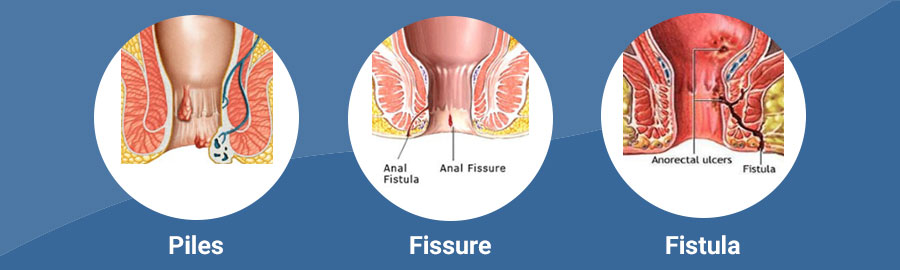
What Are Piles, Fissure and Fistula?
Piles are swollen blood vessels at the anus that bleed and can prolapse. A fissure is a small tear in the anal lining that causes sharp pain on passing stool and bright bleeding. A fistula is an abnormal tunnel from an infected gland at the anus to the skin, usually following an abscess, that leaks pus or discharge.
Each has a different treatment, so accurate examination matters - and bleeding should never be assumed to be from piles without checking. Our colorectal and ano-rectal surgeon (Dr. Sanket Sherekar) offers the full range from ointments and banding to laser and surgical procedures.
Many people delay seeing a doctor about the back passage because they feel embarrassed. Our colorectal surgeon is used to treating these conditions, and the examination is done privately and gently. Most patients are relieved to find that a simple treatment is enough.
Piles, fissure and fistula can cause similar symptoms - bleeding, pain or a lump - but each is treated differently. A proper examination tells them apart and also makes sure nothing else, such as a polyp, is causing the bleeding.
Symptoms of Piles, Fissure and Fistula
Problems at the anus can show up in different ways. You may also notice:
- Bright red blood on the paper or in the pan after passing stool
- A lump at the anus that may go back on its own or need pushing back (piles)
- Sharp, tearing pain during and after bowel movements (fissure)
- Persistent discharge of pus, itching or a recurring boil next to the anus (fistula)
- Pain, swelling and fever from an abscess
- Itching and soiling
- Fear of passing stool because of the pain it causes
- Staining of underwear with mucus, blood or pus
Symptoms vary from person to person. Having one or more of these does not confirm the condition - it means it is worth being checked.
When Should You See a Doctor Urgently for an Anal Problem?
Do not wait for an online appointment if you have any of the following. Call the hospital or go to the nearest emergency department.
- A painful, swollen area at the anus with fever - possible abscess
- Heavy bleeding or clots, dizziness
- A prolapsed pile that is very painful and cannot be pushed back
How We Diagnose Piles, Fissure and Fistula
At your consultation the surgeon asks about bleeding, pain, lumps and discharge, and about your bowel habits. A short, gentle examination usually confirms the diagnosis. Colonoscopy or a scan is added when age, symptoms or the type of fistula call for it.
What Causes Piles and Anal Problems?
- Constipation and straining, or prolonged sitting on the toilet
- Pregnancy and childbirth
- Chronic diarrhoea, heavy lifting, low-fibre diet
- Infection of an anal gland (abscess and fistula)
- Crohn's disease can cause complex fistulas
Hard stools and straining are behind most piles and fissures, so softening the stool is the starting point of treatment and of preventing recurrence. Fistulas are different: they usually follow an abscess from an infected gland, and they are not caused by diet. When fistulas are complex or keep coming back, the doctor may check for Crohn's disease.
Investigations
- Examination
- Inspection and a gentle internal examination, sometimes with a small scope (proctoscopy), usually give the diagnosis.What to expect: A short, private examination in the clinic while you lie on your side. A small lubricated instrument may be used to look just inside. If a fissure makes this too painful, the surgeon may wait or use a numbing gel.
- Colonoscopy
- Recommended when bleeding occurs after the age of 40, when symptoms are atypical, or when there is a family history - to rule out other causes.What to expect: Before the test, you drink a bowel preparation to clear the bowel; you are given written instructions. The test is done under sedation, so it is comfortable, and you go home the same day.
- MRI of the pelvis
- For complex or recurrent fistulas, to map the track before surgery.What to expect: You lie still inside the scanner while pictures are taken. It is painless and uses no radiation, though the machine is noisy.
Treatment Options for Piles, Fissure and Fistula
The usual path
- Soften the stool.
More fibre and fluid, not straining and warm sitz baths settle many piles and fissures on their own.
- Medicines and ointments.
Prescribed ointments relieve pain, shrink piles and help fissures heal by relaxing the anal muscle.
- Clinic procedures.
Banding or injection treats internal piles that bleed or come down, usually without an anaesthetic.
- Surgery when needed.
Larger piles, chronic fissures, abscesses and fistulas are treated with surgery or laser, chosen to protect the anal muscles.
Medicines & lifestyle
- Simple measures
- Fibre, fluids, avoiding straining, warm sitz baths and prescribed ointments settle many piles and most fissures.
- Fissure treatment
- Ointments that relax the anal muscle; for chronic fissures, a small operation (sphincterotomy) or other procedures give lasting relief.
Surgery
- Surgery for piles
- Haemorrhoidectomy, stapled procedures or laser treatment for larger or persistent piles, as day-case or overnight surgery.
- Abscess and fistula
- An abscess is drained promptly. Fistulas are treated by laying open, seton placement, or sphincter-preserving procedures (including laser) depending on the track, to cure the fistula while protecting continence.
Other care
- Office procedures for piles
- Rubber-band ligation and injection treatment for internal piles that bleed or prolapse.
The right treatment depends on the cause, how severe it is and your overall health. Your doctor will discuss the options with you before anything is decided.
Frequently Asked Questions about Piles, Fissure and Fistula
Is bleeding always from piles?
No. Polyps, inflammation and cancer can bleed in the same way. Piles are diagnosed by examination, and a colonoscopy is advised in many patients over 40 or with other symptoms.
Is piles surgery very painful?
Older operations were. Modern techniques - banding, stapling, laser - are much less painful, and pain after surgery is managed actively.
Will a fistula heal on its own?
Rarely. A fistula generally needs a procedure to close it; the technique is chosen to protect the anal muscles.
Can piles or a fissure be treated during pregnancy?
Yes. Both are common in pregnancy and after childbirth, and most settle with fibre, fluids, warm sitz baths and ointments that are safe in pregnancy. Procedures such as banding or surgery are usually deferred until after delivery, as many piles shrink on their own once the pregnancy is over. Heavy bleeding or a very painful prolapsed pile should still be seen promptly.
How do I stop a fissure coming back after it has healed?
The tear reopens when hard stool stretches the anus, so preventing constipation is the key: enough fibre and fluid, not delaying the urge to go, and not straining or sitting on the toilet for long. Warm sitz baths after bowel movements help the muscle relax. A fissure that keeps returning despite these measures is a chronic fissure, and the surgeon may recommend a small procedure to give lasting relief.
Which doctor should I see for piles?
A colorectal (colon and ano-rectal) surgeon. You can book a consultation at our Adajan hospital or at the OPD nearest you; procedures are done at Adajan.
Is laser treatment better than surgery for piles?
Laser suits some piles and fistulas and is often less painful, but it is not right for every case. The choice depends on the size and type of the piles or the path of the fistula, and the surgeon explains the options after examining you.
Does spicy food cause piles?
Not directly. Constipation and straining are the main causes. Very spicy food can make burning and discomfort worse for some people, so it is reasonable to cut down while symptoms settle.
Why Choose Gujarat Hospital for Piles, Fissure and Fistula
How we look after piles, fissure and fistula at our main hospital in Adajan, Surat:
- A dedicated colon and ano-rectal surgeon, who focuses on these conditions and treats them with care and privacy.
- Simple treatments tried before surgery. Diet changes, ointments and banding settle many piles and fissures without an operation.
- The full range of procedures. Banding, laser, stapled and conventional surgery for piles, and muscle-protecting procedures for fistula.
- Bleeding checked properly. Colonoscopy in the endoscopy suite rules out other causes when age or symptoms call for it.
The information on this page is for general patient education and does not replace individual medical advice, diagnosis or treatment. Medical Disclaimer