
Aneurysm Treatment in Surat What to Expect
Aneurysms above a threshold size are repaired to prevent rupture - either by endovascular stent-grafting through the groin (EVAR) or by open surgical replacement of the weakened segment. Smaller aneurysms are monitored with ultrasound.
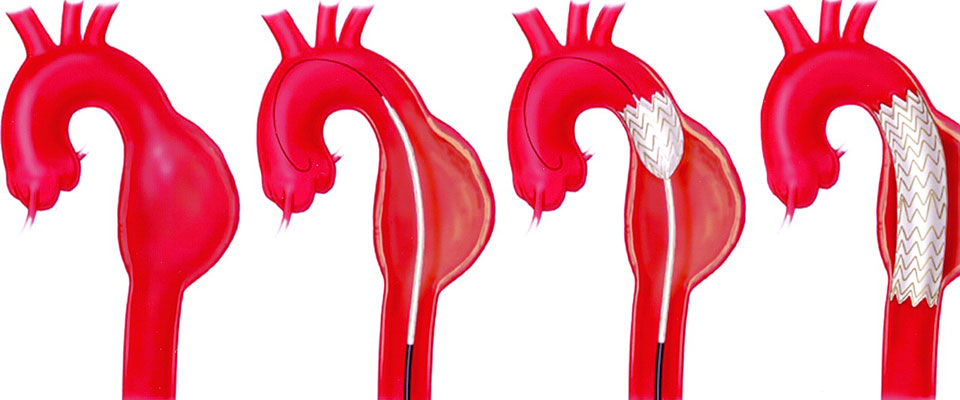
What is Aneurysm Treatment?
Endovascular repair places a fabric-covered stent inside the aorta through small punctures in the groin arteries, guided by X-ray, so that blood flows through the graft and the aneurysm wall is no longer under pressure. Recovery is quick, but lifelong imaging follow-up is needed to check the device. Open repair replaces the aneurysm with a synthetic graft through an incision, with a longer recovery but very durable results.
The choice depends on the shape of the aneurysm and the patient's fitness. Our vascular and endovascular surgeon at Adajan performs both, supported by the Hybrid Operation Theatre and Cathlab and by our critical care team.
Not every aneurysm needs an operation. Smaller aneurysms are watched with ultrasound, and repair is planned once an aneurysm reaches the size where repair is safer than leaving it.
When Does an Aneurysm Need Repair?
Your surgeon may recommend repair for:
- Abdominal aortic aneurysm that has reached the size threshold for repair or is growing quickly See: abdominal aortic aneurysm (AAA)
- Thoracic aortic aneurysm meeting criteria See: thoracic aneurysm
- Popliteal (behind-the-knee) aneurysm, to prevent clots and limb loss See: popliteal aneurysm
- Symptomatic or ruptured aneurysm - emergency repair See: aneurysm
Repair is planned when the risk of rupture outweighs the risk of the operation. Below that point the aneurysm is monitored, and blood pressure and cholesterol are controlled.
Your Aneurysm Repair Stay: Step by Step
Planned aneurysm repair follows CT angiography and a full fitness assessment. A symptomatic or ruptured aneurysm is an emergency and is repaired straight away. For planned repair, this is the usual path.
- Consultation and CT angiography
CT angiography measures the aneurysm and plans the repair. Heart, lung and kidney assessment shows how fit you are for each option.
- Choosing EVAR or open repair
Both options, their risks and the follow-up each requires are discussed in detail. Where both are possible, the trade-off - quicker recovery versus fewer follow-up procedures - is explained so that you can choose.
- Preparation and admission
Blood thinners and other medicines are adjusted as advised, and you stop smoking. Admission at the main hospital in Adajan, fasting as instructed.
- The repair
EVAR under regional or general anaesthesia through the groins, or open repair under general anaesthesia through the abdomen or chest; a popliteal aneurysm is treated with a vein bypass or a stent-graft (described in the next section).
- Recovery and lifelong follow-up
After EVAR, one to three nights in hospital; after open repair, ICU care for a day or two and about a week in hospital. After EVAR, CT or ultrasound follow-up continues at set intervals for life - at Adajan or at the OPD nearest you.
What Happens During Aneurysm Repair
EVAR/TEVAR: under regional or general anaesthesia, punctures or small cuts in both groins; the stent-graft is advanced into position under X-ray and deployed to seal above and below the aneurysm; completion imaging checks for leaks; one to three nights in hospital
Open repair: under general anaesthesia, the aorta is exposed through the abdomen or chest, clamped, and the aneurysm replaced with a graft; ICU care for a day or two and about a week in hospital
Popliteal aneurysm: bypass with a vein graft, or an endovascular stent-graft
What you will feel - and what you won't. EVAR is done under regional or general anaesthesia, so you feel nothing in the groins during the repair; afterwards the groins are sore and bruised, and most people are walking the next day. Open repair is done under general anaesthesia, so you are asleep throughout; afterwards there is wound pain in the abdomen or chest, which is controlled with regular pain relief in the ICU and on the ward so that you can breathe deeply and start moving. Tiredness after open repair lasts several weeks. The team tells you what to expect for your particular repair.
How to Prepare for Aneurysm Repair
- Scans and fitness checks. CT angiography to measure and plan; heart, lung and kidney assessment.
- Medicines and smoking. Blood thinners and other medicines adjusted as advised; stopping smoking.
- Understanding your options. Detailed discussion of both options, their risks and the follow-up each requires.
These are general points. The written instructions you receive from the hospital for your own procedure take priority - see also Patient Information.
After Aneurysm Repair: Recovery & Lifelong Follow-up
After EVAR. After EVAR: walking the next day, home within a few days, back to normal activity in two to three weeks; CT or ultrasound follow-up at set intervals for life.
After open repair. After open repair: several weeks of recovery; heavy activity after two to three months.
Protecting your arteries. Continued control of blood pressure and cholesterol. Follow-up visits can be at Adajan or at the OPD nearest you.
Is Aneurysm Treatment Safe?
EVAR: leaks around the graft (endoleaks), movement of the device, groin complications and contrast effects on the kidneys; the need for further procedures over the years.
Open repair: bleeding, heart and lung complications, kidney injury and, as with any major aortic surgery, a risk to life, which is assessed and discussed individually.
Both are far safer than rupture in an aneurysm that has reached the threshold.
Contact the hospital immediately - or come straight to the 24×7 emergency department - if you develop sudden severe abdominal, back or chest pain, or feel faint.
After a procedure, contact the hospital at once for severe pain, fever, vomiting, bleeding or breathlessness: Emergency 24×7: 90333 62020
Alternatives to Aneurysm Repair
Surveillance with ultrasound for aneurysms below the threshold, with risk-factor control.
Conservative care for patients too frail for any repair.
Why Choose Gujarat Hospital for Aneurysm Treatment
Aneurysm repair is safest where both the endovascular and the open operation are available, with critical care on hand. At Gujarat Gastro & Vascular Hospital, Adajan, Surat:
- Endovascular and open repair by one surgeon. Dr. Ankur Patel, Vascular & Endovascular Surgeon (M.S., FVES, Fellowship in Vascular & Endovascular Surgery), performs both EVAR and open repair, so the option is chosen on the shape of your aneurysm and your fitness.
- A Hybrid Operation Theatre & Cathlab. An operating room with a catheterisation lab built in, so the team can image blood vessels and operate in the same room, in the same sitting - used to place the stent-graft under X-ray and check it with completion imaging.
- 24x7 emergency care for a symptomatic or ruptured aneurysm. A ruptured aneurysm is a life-threatening emergency requiring immediate surgery, and the hospital provides 24x7 emergency care.
- Monitoring until repair is needed. Aneurysms below the size for repair are watched with ultrasound at intervals, with blood pressure and cholesterol controlled, so that repair can be planned at the right time.
Frequently Asked Questions about Aneurysm Treatment
Why do I need scans for life after EVAR?
To confirm the stent-graft remains sealed and in position. Most patients need no further treatment, but problems can develop silently and are treatable if found early.
Is EVAR keyhole surgery?
In a sense, yes. The stent-graft is placed through punctures or small cuts in both groins and guided into position under X-ray, without opening the abdomen or chest. Recovery is quicker than after open repair, but CT or ultrasound follow-up is needed for life to check the device.
Which option is right for me?
It depends on the aneurysm's shape and your fitness. Where both are possible, the trade-off - quicker recovery versus fewer follow-up procedures - is explained so that you can choose.
Will I need intensive care after aneurysm repair?
After open repair, ICU care for a day or two is usual, followed by about a week in hospital; the hospital has a 9-bed ICU with ventilator support on the same campus. After EVAR most patients spend one to three nights in hospital. Your surgeon tells you beforehand what to expect.
What if my aneurysm ruptures?
It is a life-threatening emergency requiring immediate surgery. Planned repair at the right size is intended to prevent this.
What happens if my aneurysm is below the size for repair?
It is monitored with ultrasound at intervals set according to its size, so that repair can be planned if it grows. In the meantime, stopping smoking and controlling blood pressure and cholesterol slow growth. New abdominal or back pain in someone with a known aneurysm should be assessed urgently rather than waiting for the next scan.
How is a popliteal aneurysm treated?
A popliteal aneurysm lies behind the knee. It is repaired to prevent clots and limb loss, either by a bypass using a vein graft or by an endovascular stent-graft. The choice depends on the aneurysm and your fitness, and is explained after the scans.
When can I drive after aneurysm repair?
After EVAR most people can drive again within a few weeks, once they are comfortable and can make an emergency stop without pain from the groin. After open repair it is longer, because the abdominal or chest wound must heal first. Your surgeon will tell you when it is safe, and you should not drive while taking strong painkillers.
The information on this page is for general patient education and does not replace individual medical advice, diagnosis or treatment. Medical Disclaimer