
Upper GI Endoscopy (Gastroscopy) in Surat What to Expect
An endoscopy test (upper GI endoscopy) examines the food pipe, stomach and the first part of the small intestine with a thin, flexible camera passed through the mouth. It takes a few minutes, is done under sedation, and allows biopsies and treatment in the same sitting.
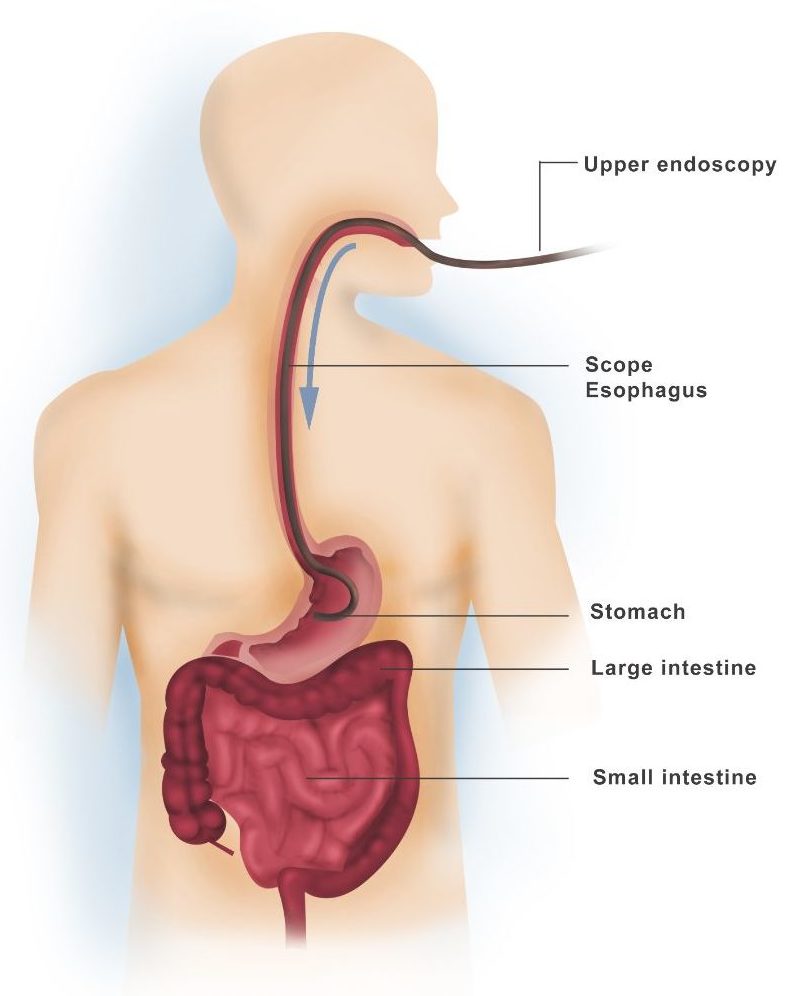
What is an Upper GI Endoscopy?
Upper GI endoscopy - also called gastroscopy or OGD - is the most direct way to look at the inside of your food pipe (oesophagus), stomach and the first part of the small intestine (duodenum). The endoscope is a slim, flexible tube with a light and a camera at its tip. As it passes down, the doctor sees the lining directly on a screen - far more accurately than any scan.
It is a test and a treatment in one. During the same examination the doctor can take painless tissue samples (biopsies), stretch a narrowing, remove a polyp, or stop bleeding, so most patients do not need a second procedure.
At Gujarat Hospital it is performed under sedation in the endoscopy suite by our medical gastroenterologists, so that the test is comfortable. Most people remember little of it and go home within a couple of hours.
When is an Upper GI Endoscopy Recommended?
Your doctor may recommend it for:
- Persistent heartburn, indigestion or upper abdominal pain, particularly with warning signs or after the age of 50 See: acidity and reflux (GERD) · stomach pain and indigestion
- Difficulty or pain on swallowing See: difficulty swallowing
- Vomiting blood or black stools, or unexplained anaemia See: black stool or blood in the stool
- Persistent vomiting or unexplained weight loss
- Checking for H. pylori, coeliac disease or Barrett's oesophagus
- Follow-up of ulcers, varices or earlier findings
If you are unsure whether your symptoms need a scope, a consultation first is always the right step - the gastroenterologist decides with you whether endoscopy is needed at all.
Your Endoscopy Visit: Step by Step
A planned endoscopy is a short visit. Expect two to three hours at the hospital in total; the examination itself takes five to fifteen minutes.
- Arrival and check-in
Check-in at the main hospital in Adajan.
- Preparation
A small cannula is placed in a vein for sedation, and your pulse, oxygen and blood pressure are monitored from here on.
- The procedure
Five to fifteen minutes in the endoscopy suite (described in the next section).
- Recovery
You rest in the recovery area until the sedation wears off, usually within an hour.
- Going home
The doctor tells you what was seen. Someone accompanies you home; biopsy results follow a few days later at your follow-up.
What Happens During an Upper GI Endoscopy
A local anaesthetic spray numbs the throat and sedation is given through the cannula
You lie on your left side; a mouth guard protects your teeth
The endoscope is passed gently over the tongue and down the food pipe - it does not affect breathing
Air is used to open the stomach so the lining can be seen; this can cause a feeling of fullness
Biopsies, dilatation or other treatment are done if needed
The whole procedure usually takes five to fifteen minutes
What you will feel - and what you won't. This is the question most first-time patients ask. The test is uncomfortable rather than painful. The two sensations people notice are a brief gagging feeling as the scope passes the throat, and a feeling of fullness or wanting to burp when air opens the stomach. There is no cutting and no pain from biopsies - the stomach lining does not feel them. With sedation most patients are relaxed, drowsy, and remember little or nothing of the test. The scope does not go into your windpipe, so breathing is not affected.
How to Prepare for Your Endoscopy
- An empty stomach is essential. Nothing to eat for several hours beforehand - your instructions give the exact time. A full stomach hides the lining and makes the test unsafe, so it would have to be postponed.
- Medicines. Blood pressure and heart tablets are usually taken as normal with a small sip of water; diabetes medicines and insulin need adjusting because you will be fasting; blood thinners may need to be paused. Your instructions say exactly what to do - if unsure, ring the endoscopy unit before the day rather than guessing.
- Tell the team about allergies, heart or lung conditions, diabetes, pregnancy, and every medicine you take.
These are general points. The written instructions you receive from the hospital for your own procedure take priority - see also Patient Information.
After Your Endoscopy: Recovery & Results
The first hour. You rest in the recovery area until the sedation wears off, usually within an hour. The doctor tells you what was seen straight away.
The rest of the day. A sore throat or bloating for a few hours is common and settles on its own. You can usually eat and drink once the throat numbness has gone. Because sedation is used, you should not drive, operate machinery or sign important documents for the rest of the day, and someone should accompany you home.
Results. Findings are explained the same day. Biopsy results take a few days; your doctor explains them at follow-up - at Adajan, or at the OPD nearest you in Varachha, Bharuch, Navsari or Vapi.
Is Upper GI Endoscopy Safe?
Upper endoscopy is a very safe test. A sore throat and bloating are common and temporary.
Serious complications - bleeding after a biopsy or treatment, a reaction to sedation, or a tear in the lining - are rare and are explained to you before you consent.
Contact the hospital if you develop severe chest or abdominal pain, fever, difficulty swallowing, or vomit blood after the procedure.
After a procedure, contact the hospital at once for severe pain, fever, vomiting, bleeding or breathlessness: Emergency 24×7: 90333 62020
Alternatives to Upper GI Endoscopy
Barium X-ray studies show the shape of the food pipe and stomach but cannot take biopsies and see less detail.
Capsule endoscopy is used for the small intestine, not as a replacement for gastroscopy.
A trial of treatment without endoscopy is appropriate for some younger patients with typical symptoms and no warning signs.
Why Choose Gujarat Hospital for Upper GI Endoscopy
Endoscopy is a short test, but where it is done decides how safe and how useful it is. At Gujarat Gastro & Vascular Hospital, Adajan, Surat:
- A dedicated endoscopy suite, not a side room. The test is done under sedation with your pulse, oxygen and blood pressure monitored throughout, and a recovery area where you are watched until you are fully awake.
- One sitting, not two. If the scope finds a polyp, a narrowing, a bleeding point or an area that needs sampling, our gastroenterologists deal with it there and then - biopsy, dilatation, polyp removal or control of bleeding - so you rarely need to come back for a second procedure.
- Specialists reading the pictures. Your endoscopy is performed by consultant medical gastroenterologists who treat these conditions every day, so what is seen is interpreted and acted on by the same doctor who will plan your care.
Frequently Asked Questions about Upper GI Endoscopy
Is endoscopy painful?
It is uncomfortable rather than painful, and with sedation most patients are relaxed and remember little. It does not interfere with breathing.
Will I be asleep?
You are given sedation, not a general anaesthetic. Most patients are drowsy and relaxed, and many remember nothing of the test, but you are breathing on your own throughout and wake quickly afterwards. The team monitors you the whole time.
How long does it take?
Usually five to fifteen minutes for the test itself; expect two to three hours at the hospital including preparation and recovery.
Can I eat or drink before the test?
No - the stomach must be empty for the doctor to see the lining and for the test to be safe. Your written instructions give the exact fasting time for food and for water; please follow them, because a full stomach means the test has to be postponed.
Will I get the result the same day?
The doctor tells you what was seen straight away. Biopsy results take a few days.
Should I take my blood pressure or diabetes tablets on the morning of my endoscopy?
Blood pressure and heart tablets are usually taken as normal with a small sip of water, but diabetes medicines and insulin need adjusting because you will be fasting, and blood thinners may need to be paused. Your written instructions will say exactly what to do; if you are unsure, ring the endoscopy unit before the day rather than guessing.
Can I go back to work the same day?
Because of the sedation you should not drive, operate machinery or sign important documents for the rest of the day, and someone should take you home. Most people are back to normal the next day; if a treatment was done during the scope, your doctor will tell you if anything more is needed.
Can an endoscopy be done in a very elderly person or a child?
In elderly patients it is generally well tolerated: the sedation dose is adjusted, heart and lung conditions are reviewed beforehand, and monitoring continues until the person is fully awake. Endoscopy in a child is considered only when there is a clear need and is discussed with the gastroenterologist first, as it is usually done under general anaesthesia.
The information on this page is for general patient education and does not replace individual medical advice, diagnosis or treatment. Medical Disclaimer