
Chronic Pancreatitis in Surat What to Expect
Chronic pancreatitis is long-standing inflammation that gradually scars the pancreas, causing recurring pain, difficulty digesting food and, later, diabetes. Treatment relieves pain, replaces lost enzymes and, in selected patients, uses endoscopy or surgery to relieve blocked ducts.
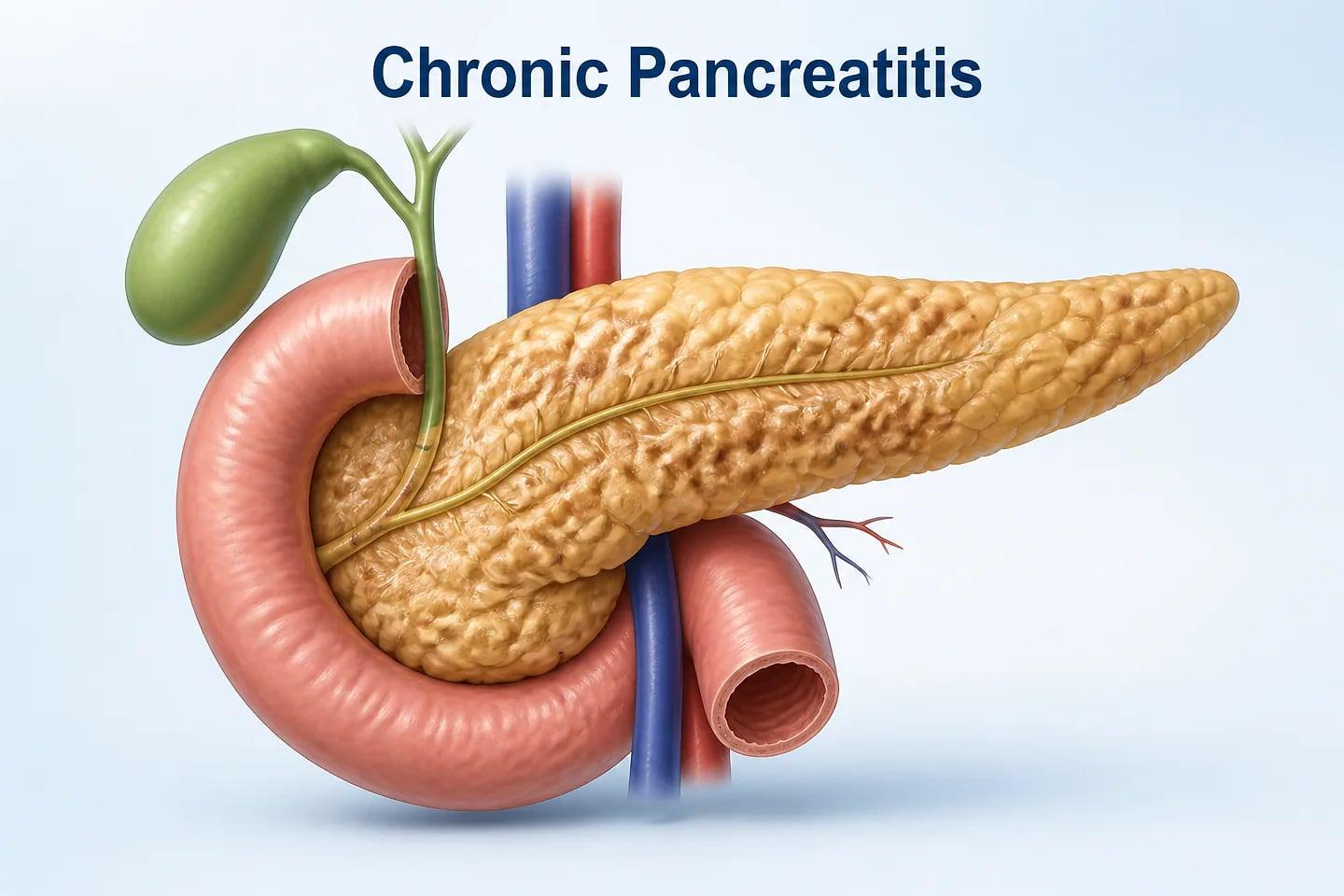
What Is Chronic Pancreatitis?
Repeated injury - from alcohol, genetic factors, or causes particular to India such as tropical pancreatitis - leaves the pancreas fibrosed and its duct narrowed, dilated or filled with stones. Pain is the dominant problem for most patients; as the gland fails, fatty stools, weight loss and diabetes follow.
Care is long-term and combines pain management, enzyme replacement, nutrition and diabetes control. When a blocked or stone-filled duct is driving the pain, endoscopic treatment or surgery to drain the duct can give lasting relief. Our surgical gastroenterologist with special interest in pancreatic disease leads this work with the medical team.
Living with chronic pancreatitis can be wearing - pain that keeps coming back, meals that do not agree with you, and weight that is hard to keep on. Each of these problems can be treated, and many people feel much better once pain, digestion and blood sugar are all looked after.
Care is planned for the long term. Some patients need just medicines and regular reviews; others reach a point where an endoscopic procedure or an operation gives better pain relief. Your plan is reviewed as the condition changes.
Signs of Chronic Pancreatitis
Chronic pancreatitis often builds up slowly over years. Alongside pain, you may notice:
- Recurring or constant upper abdominal pain radiating to the back, often worse after meals
- Pale, bulky, oily stools that are hard to flush
- Weight loss despite eating
- Bloating and indigestion
- Diabetes developing over time
- Episodes of acute pancreatitis
- Feeling full quickly, or avoiding meals because eating brings on pain
- Tiredness and low energy linked to poor nutrition
- Increased thirst and passing more urine as blood sugar rises
Symptoms vary from person to person. Having one or more of these does not confirm the condition - it means it is worth being checked.
When Does Chronic Pancreatitis Need Urgent Care?
Do not wait for an online appointment if you have any of the following. Call the hospital or go to the nearest emergency department.
- Severe pain with vomiting and fever - possible acute attack or complication
- Jaundice
- Vomiting blood or black stools
- Rapid weight loss
How We Diagnose Chronic Pancreatitis
At your first visit the doctor asks about your pain, bowel habit, weight, alcohol and smoking, and looks at any previous scans and reports. Tests are then chosen to confirm the diagnosis, map the pancreatic duct and check how well the gland is still working.
Why Does Chronic Pancreatitis Develop?
- Alcohol
- Tropical (idiopathic) pancreatitis, more common in South Asia
- Genetic mutations and family history
- Autoimmune pancreatitis
- Blocked ducts from stones, strictures or previous acute attacks
- Smoking accelerates damage
In India, alcohol and tropical pancreatitis - which often starts at a younger age and without any alcohol - are the commonest causes. Smoking adds to the damage whatever the cause. Sometimes no clear cause is found even after tests; this does not change how the pain, digestion and diabetes are treated.
Investigations
- Blood tests
- Pancreatic enzymes, blood sugar, nutrition markers and, where relevant, genetic or autoimmune tests.What to expect: A routine blood sample. Blood sugar and vitamin levels are usually checked again at follow-up visits.
- CT scan
- Shows calcification, duct dilatation, stones and cysts.What to expect: You lie on a table that passes through a ring-shaped scanner, often after a contrast dye is given into a vein. It is painless and quick.
- MRCP
- Maps the pancreatic and bile ducts.What to expect: A painless scan with no radiation. You lie still inside a tunnel-shaped machine, which is noisy, and you may be asked not to eat for a few hours beforehand.
- Endoscopic ultrasound
- The most sensitive test for early disease; also allows biopsy of any mass.What to expect: Done like an endoscopy, under sedation, so most people feel little or nothing. You usually go home the same day once the sedation has worn off.
- Faecal elastase
- A stool test that measures how well the pancreas is producing enzymes.What to expect: A small stool sample collected at home in a container you are given. No special preparation is usually needed.
Treatment Options for Chronic Pancreatitis
The usual path
- Medicines and lifestyle first.
Stopping alcohol and smoking, pain relief, enzyme capsules with meals and vitamin supplements are the foundation of care.
- Tests to look at the duct.
If pain continues, scans and EUS show whether stones or a narrowing are blocking the pancreatic duct.
- Endoscopic treatment.
ERCP can remove duct stones and stretch or stent a narrowing, without a cut on the skin.
- Surgery for lasting relief.
When the duct is widely blocked, or endoscopy has not helped, an operation to drain the duct or remove the most diseased part is discussed with you in detail.
Medicines & lifestyle
- Pain control
- A stepwise approach, avoiding long-term dependence on strong painkillers; nerve blocks under endoscopic ultrasound guidance can help selected patients.
- Enzyme replacement and nutrition
- Capsules taken with meals replace missing enzymes; dietary advice and vitamin supplements restore weight.
- Diabetes management
- Careful control, as this type of diabetes can be brittle.
- Stopping alcohol and smoking
- Essential to slow progression.
Endoscopic treatment
- Endoscopic treatment
- ERCP to remove duct stones and dilate or stent strictures, sometimes after shock-wave fragmentation of stones.
Surgery
- Surgery
- Operations that drain a dilated duct or remove the most diseased part of the pancreas relieve pain durably in well-selected patients. These are performed by our pancreatic surgery team.
The right treatment depends on the cause, how severe it is and your overall health. Your doctor will discuss the options with you before anything is decided.
Frequently Asked Questions about Chronic Pancreatitis
Is chronic pancreatitis curable?
The scarring is permanent, but pain and digestion can be controlled well, and progression can be slowed by removing the cause.
Will I have to take enzyme capsules for life?
If the pancreas is not producing enough enzymes, yes - they are safe and make a large difference to digestion and weight.
Does chronic pancreatitis lead to cancer?
It raises the risk somewhat, particularly with smoking. Any new symptom - weight loss, jaundice, a change in pain - should be assessed promptly.
What diet should I follow with chronic pancreatitis?
Small, frequent meals are easier to digest than large ones, and enzyme capsules should be taken with every meal and snack as prescribed. Alcohol must be stopped completely. Fat does not need to be avoided altogether once enzymes are being replaced, because that leads to weight loss and vitamin deficiency. A dietitian will help you plan meals that maintain your weight.
Why is diabetes caused by chronic pancreatitis harder to control?
The scarred pancreas loses not only the cells that make insulin but also those that make the hormones that protect against low blood sugar, so sugar levels can swing more than in ordinary type 2 diabetes. Regular monitoring, careful dosing of insulin and eating at consistent times are important, and your doctor may involve a diabetes specialist.
How should I take enzyme capsules?
With food - at the start of a meal or snack, or spread through it - so the enzymes mix with what you eat. Taken on an empty stomach they do little. If oily stools or weight loss continue, tell your doctor, as the dose often needs adjusting.
Does smoking matter if I do not drink alcohol?
Yes. Smoking damages the pancreas on its own, speeds up scarring and raises the risk of pancreatic cancer, whatever the original cause of the pancreatitis. Stopping is one of the most useful things you can do, and your doctor can advise on help to quit.
Which doctor should I see for chronic pancreatitis?
A gastroenterologist, ideally working with a pancreatic surgeon, because some patients need endoscopic treatment or an operation. You can book at our Adajan hospital or at the OPD nearest you; any tests or procedures are done at Adajan.
Why Choose Gujarat Hospital for Chronic Pancreatitis
How we look after chronic pancreatitis at our main hospital in Adajan, Surat:
- Medicine, endoscopy and surgery in one department. Medical and surgical gastroenterologists on the same campus decide together whether medicines, ERCP or an operation is the right next step.
- EUS and ERCP in the endoscopy suite. Endoscopic ultrasound assesses the gland, and ERCP removes duct stones and treats narrowings, under sedation with monitoring.
- A surgeon with special interest in the pancreas. When a blocked or stone-filled duct drives the pain, drainage or resection surgery is planned and performed by our pancreatic surgery team.
- Long-term follow-up. Pain, weight, enzyme dose and blood sugar are reviewed over time at Adajan or the OPD nearest you.
The information on this page is for general patient education and does not replace individual medical advice, diagnosis or treatment. Medical Disclaimer