
Gallstones in Surat What to Expect
Gallstones are hard deposits that form in the gallbladder. Many cause no trouble; those that cause pain, inflammation or block the bile duct are treated by removing the gallbladder, usually with keyhole surgery at our Adajan hospital in Surat.
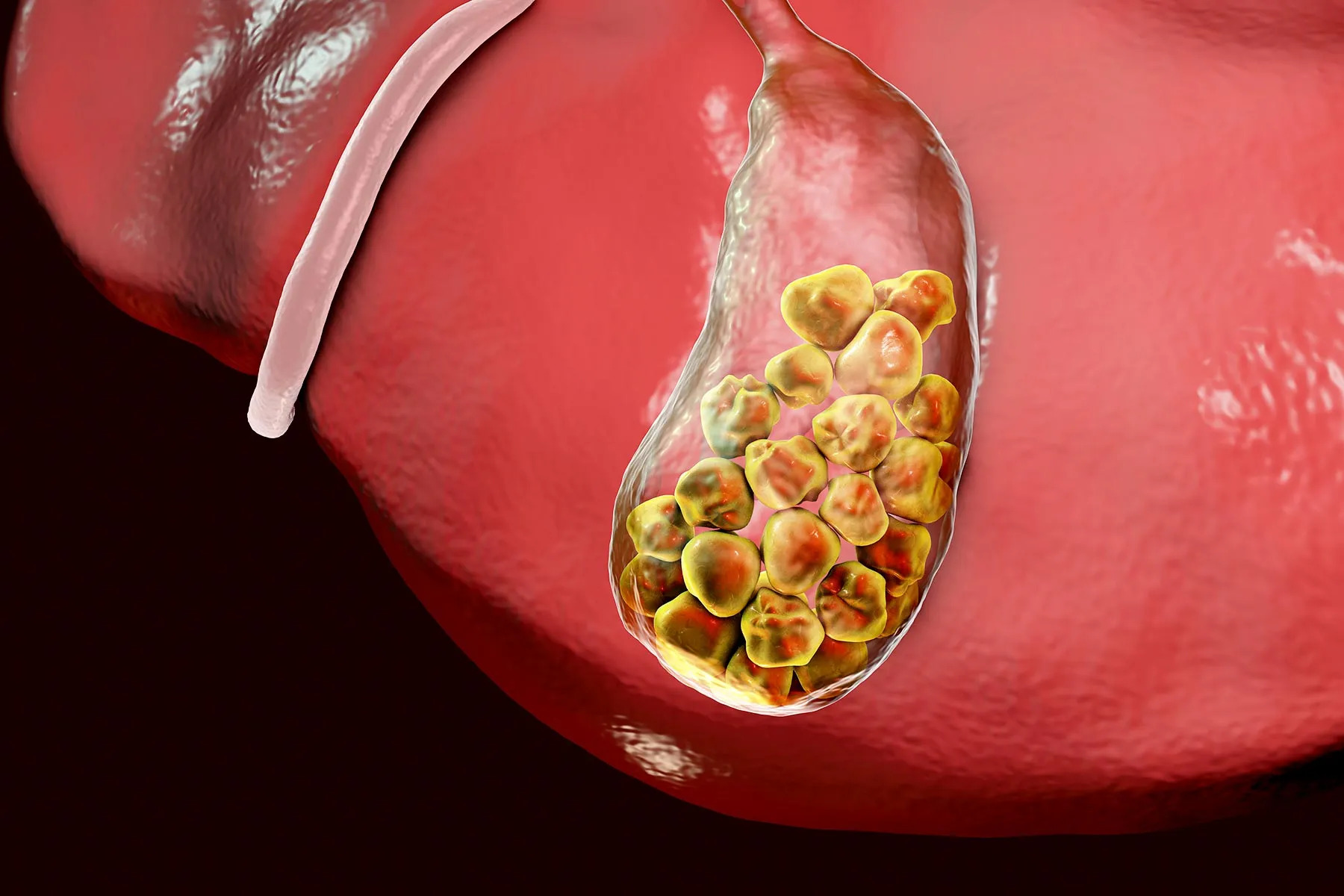
What Are Gallstones?
The gallbladder stores bile made by the liver and releases it after meals to help digest fat. Stones form when the bile becomes too concentrated. Most people with stones found on a scan never have symptoms and need no treatment. When a stone blocks the outlet of the gallbladder it causes biliary colic - severe pain under the right ribs after a meal - and it can lead to infection (cholecystitis) or slip into the bile duct.
Removal of the gallbladder (cholecystectomy) is one of the commonest operations and is usually done laparoscopically, with most patients home within a day or two. At our hospital it is also performed robotically in suitable patients.
Gallstones are very common, and many people learn they have them when a scan is done for something else. If that is you, there is usually no need to worry: stones that cause no trouble are normally left alone, and you simply need to know which symptoms to watch for.
If you have had attacks of pain, the visit is about confirming that the stones are the cause and planning treatment before a complication develops. Telling the doctor when the pain comes, how long it lasts, and whether you have had fever or yellow eyes helps decide how soon surgery is needed.
Symptoms of Gallstones
Gallstone pain often follows a pattern. You may also notice:
- Severe, steady pain under the right ribs or in the upper abdomen, often after fatty meals, lasting from thirty minutes to a few hours
- Pain that spreads to the back or right shoulder
- Nausea and vomiting with the pain
- Bloating and indigestion (non-specific)
- Fever, or yellow eyes, when a complication has developed
- Attacks that wake you at night, often after a heavy evening meal
- Pain that makes it hard to sit still or find a comfortable position
- Feeling sore under the right ribs for a day or two after an attack
Symptoms vary from person to person. Having one or more of these does not confirm the condition - it means it is worth being checked.
When Should You See a Doctor Urgently for Gallstone Pain?
Do not wait for an online appointment if you have any of the following. Call the hospital or go to the nearest emergency department.
- Pain lasting more than a few hours with fever or shivering
- Yellow eyes or dark urine with pain
- Severe pain with vomiting that does not settle
- Pain spreading across the whole abdomen or to the back with a very tender abdomen (possible pancreatitis)
How We Diagnose Gallstones
At your first visit the doctor asks about your pain and any fever or yellowing, and examines your abdomen. An ultrasound and blood tests are usually enough to confirm gallstones. Further tests are added only if a stone may have moved into the bile duct.
Why Do Gallstones Form?
- Bile that is too rich in cholesterol or pigment
- Female sex, pregnancy and hormone treatment
- Excess weight, rapid weight loss and fasting
- Family history and increasing age
- Diabetes and certain blood disorders
Stones form when bile holds more cholesterol or pigment than it can keep dissolved, or when the gallbladder does not empty well. Several factors often combine, which is why gallstones run in families and are more common in women, after pregnancy and with weight changes. Nothing you did caused them on its own, and diet alone does not make existing stones go away.
Investigations
- Ultrasound
- The best test for gallstones; also shows thickening of the gallbladder wall and whether the bile duct is dilated.What to expect: A painless scan using gel and a probe on your abdomen. You are usually asked not to eat for a few hours before, so the gallbladder is full and easy to see.
- Blood tests
- Liver function tests and inflammation markers suggest whether a stone has moved into the duct or infection has developed.What to expect: A routine blood sample. The results show whether the liver and bile duct are affected or there is infection.
- MRCP or endoscopic ultrasound
- When a stone in the bile duct is suspected but not seen on ultrasound.What to expect: MRCP is a type of MRI scan: you lie still in the scanner, which is noisy, and no instrument is passed. Endoscopic ultrasound is done like an endoscopy, under sedation.
- ERCP
- Both diagnoses and removes stones from the bile duct.What to expect: Done under sedation with monitoring, through the mouth, with no cut. You are observed for several hours afterwards, often overnight, and your doctor explains what was found.
Treatment Options for Gallstones
The usual path
- Watch silent stones.
If your stones have never caused symptoms, you usually need no treatment, just awareness of the warning signs.
- Settle an attack.
Pain relief and a light, low-fat diet help while treatment is planned. Attacks with fever, vomiting or yellow eyes need hospital care.
- Clear the bile duct if needed.
If a stone has moved into the bile duct, it is removed by ERCP before or around the time of the operation.
- Remove the gallbladder.
For stones that cause symptoms, the gallbladder is removed, usually by keyhole or robotic surgery. Your surgeon explains the operation and recovery beforehand.
Endoscopic treatment
- Clearing the bile duct first
- If stones have passed into the duct, they are removed by ERCP before or around the time of surgery.
Surgery
- Laparoscopic cholecystectomy
- Keyhole removal of the gallbladder through small incisions; the standard treatment for symptomatic stones.
- Robotic cholecystectomy
- The same operation performed with the robotic system, offered in suitable patients.
- Open surgery
- Used when keyhole surgery is not safe, for example with severe inflammation or previous abdominal operations.
Other care
- No treatment
- Silent stones found by chance usually need nothing except awareness of the symptoms to watch for.
The right treatment depends on the cause, how severe it is and your overall health. Your doctor will discuss the options with you before anything is decided.
Frequently Asked Questions about Gallstones
Can gallstones be dissolved or removed without taking out the gallbladder?
Tablets rarely work and stones return; the gallbladder itself is the problem. Removing it is the only reliable treatment for symptomatic stones.
Will I be able to digest food without a gallbladder?
Yes. Bile flows directly from the liver to the intestine. Most people notice no change in digestion; a few have looser stools for a while.
How soon can I return to work after keyhole surgery?
Many patients are home within a day or two and back to desk work within a week or so; heavy lifting takes longer. Your surgeon will advise based on your operation.
What should I eat while waiting for gallbladder surgery?
Fatty and fried foods, large meals and rich sweets are the usual triggers for biliary colic, so keep meals small, regular and low in fat until the operation. Do not fast for long periods, as this also encourages attacks. If pain lasts more than a few hours, or comes with fever, vomiting or yellow eyes, come to the hospital rather than waiting for the planned date.
Can gallstones be treated during pregnancy?
Gallstones are more common in pregnancy, and silent stones are simply watched. Attacks of pain are usually managed with a low-fat diet, pain relief and fluids, and surgery is deferred until after delivery where possible. If attacks are frequent or a complication such as infection or a duct stone develops, keyhole surgery or ERCP can be done during pregnancy, and the surgeon and obstetrician decide the timing together.
Which doctor should I see for gallstones?
A GI surgeon (surgical gastroenterologist), since symptomatic stones are treated by removing the gallbladder. You can book at our Adajan hospital or at the OPD nearest you; the operation is done at Adajan.
Is robotic gallbladder removal different from keyhole surgery?
Both remove the gallbladder through small cuts. In robotic surgery the surgeon controls the instruments through the robotic system. Your surgeon will tell you which approach suits you.
Can gallstones come back after the gallbladder is removed?
Stones cannot form in a gallbladder that has been removed. Occasionally a stone forms later in the bile duct; it causes pain or yellow eyes and is usually removed by ERCP.
Why Choose Gujarat Hospital for Gallstones
How we look after gallstones at our main hospital in Adajan, Surat:
- Surgery advised when it is needed. Silent stones found on a scan are usually watched; an operation is recommended when stones cause pain or a complication.
- Keyhole and robotic gallbladder removal. Laparoscopic cholecystectomy is done in our operation theatres, and robotic surgery is offered in suitable patients.
- Bile duct stones cleared without an incision. If a stone has slipped into the bile duct, ERCP is done in the endoscopy suite by our medical gastroenterology team on the same campus.
- Open surgery where safer, for example when the gallbladder is badly scarred or after previous abdominal operations.
The information on this page is for general patient education and does not replace individual medical advice, diagnosis or treatment. Medical Disclaimer