
Abdominal Aortic Aneurysm (AAA) in Surat What to Expect
An abdominal aortic aneurysm (AAA) is a ballooning of the aorta, the main artery, as it passes through the abdomen. Most cause no symptoms and are found on a scan; the danger is rupture once the aneurysm is large. Small aneurysms are monitored with ultrasound, and larger ones are repaired by endovascular stent-graft (EVAR) or open surgery.
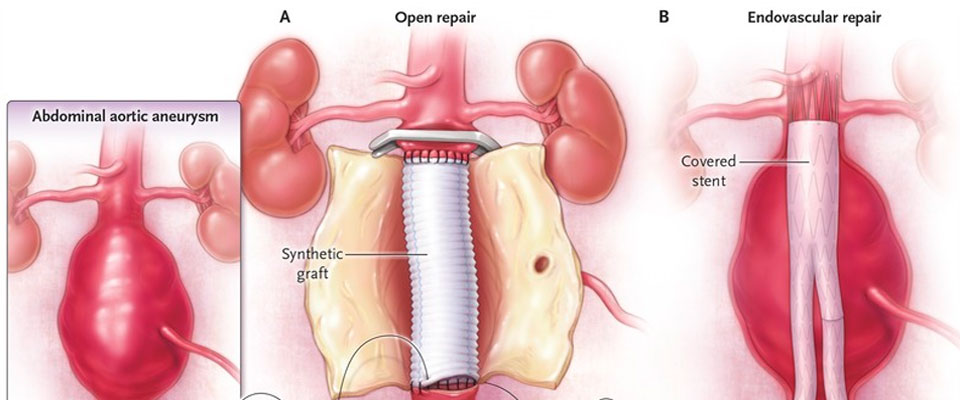
What Is an Abdominal Aortic Aneurysm?
The aorta carries blood from the heart down through the chest and abdomen before dividing into the leg arteries. With age, smoking and high blood pressure, a segment of its wall in the abdomen can weaken and stretch. An aneurysm is diagnosed when the aorta measures 3 cm or more across. Most grow slowly over years and cause nothing until they become large, when the wall can tear (rupture) - a catastrophic bleed that is fatal in most people who do not reach surgery quickly.
Because of this, the whole approach to AAA is about finding it early and repairing it at the right time. An aneurysm under about 5.5 cm carries a low yearly risk of rupture and is watched with regular ultrasound; above that size, or if it grows quickly or causes pain, repair is advised. Our vascular and endovascular surgeon performs both endovascular repair (EVAR) through small groin punctures and open surgical repair, supported by the Cathlab and Hybrid Operation Theatre.
An AAA is often found by chance, on an ultrasound or CT done for kidney stones, back pain or a routine check-up. Hearing about it can be a shock, but most AAAs are small when found, and a small one is managed safely with scans and a few lifestyle changes.
The key number is the width of the aorta. Your surgeon follows it over time, and when it reaches the size for repair, grows quickly or causes pain, repair is planned. Most patients have time to prepare, ask questions and get as fit as possible beforehand.
Symptoms of an Abdominal Aortic Aneurysm
Most AAAs cause no symptoms at all. When they do, you may notice:
- Usually none - the aneurysm is found on an ultrasound or CT scan done for another reason
- A pulsating feeling or lump in the abdomen, especially in slim people
- Deep, persistent pain in the abdomen, the side or the lower back
- Sudden severe abdominal or back pain, faintness or collapse - the signs of rupture
- A strong pulse in the tummy when lying down
- Tenderness when the abdomen is pressed over the aneurysm
Symptoms vary from person to person. Having one or more of these does not confirm the condition - it means it is worth being checked.
When Is an AAA an Emergency?
Do not wait for an online appointment if you have any of the following. Call the hospital or go to the nearest emergency department.
- Sudden severe abdominal or back pain in someone with a known aneurysm, or with faintness, sweating or collapse - call emergency services; a ruptured aneurysm needs surgery within minutes to hours
- A known aneurysm that has become tender or painful, even without collapse
How We Screen for and Measure an AAA
At your first visit the surgeon asks about smoking, blood pressure, family history and any abdominal or back pain, and examines your abdomen. An ultrasound by the vascular team measures the aorta. A CT angiogram is added when repair is being planned, together with checks of your heart, lungs and kidneys.
Who Is at Risk of an AAA?
- Atherosclerosis and weakening of the artery wall with age
- Smoking - the strongest risk factor, and the one that most affects growth
- High blood pressure and high cholesterol
- Male sex, age over 65 and a family history of aneurysm
- Inherited connective-tissue disorders, infection or injury of the aorta (rare)
Smoking is the single biggest factor you can change: it makes an AAA more likely and makes it grow faster. Men over 65 who have smoked carry the highest risk, but women and non-smokers can develop one too. A close relative with an AAA raises your own risk, which is why screening is offered to family members.
Investigations
- Abdominal ultrasound
- A painless scan that finds the aneurysm and measures it; also used for surveillance every six to twelve months.What to expect: You lie on your back while gel and a probe are moved over your abdomen. It is painless; you may be asked not to eat for a few hours before so the aorta is easier to see.
- CT angiography
- Shows the exact size and shape of the aneurysm and the arteries around it, needed to plan repair and choose between EVAR and open surgery.What to expect: You lie still on a scanner table while a dye is given through a drip in your arm. Tell the team about kidney problems, diabetes medicines or any allergy to dye.
- Screening
- A one-off ultrasound is advised for men over 65, especially those who have smoked, and for brothers, sisters and children of people with an aneurysm.What to expect: A single quick ultrasound of the abdomen, done lying down. If the aorta is a normal width, no further routine checks are usually needed.
- Fitness assessment
- Heart, lung and kidney checks before any repair.What to expect: Blood tests, an ECG and other heart and lung checks as needed, so the risk of repair is understood. Your surgeon explains the results and how they affect the choice of EVAR or open repair.
Treatment Options for an Abdominal Aortic Aneurysm
The usual path
- Protect the aorta.
Stop smoking and take blood pressure, cholesterol and antiplatelet medicines as prescribed.
- Measure at intervals.
Ultrasound scans follow the aneurysm's size; your surgeon sets how often, and the gap shortens as it grows.
- Plan the repair.
A CT angiogram and fitness checks show whether EVAR or open repair suits you, and the plan is explained before you decide.
- Repair and follow-up.
EVAR through the groin or open repair through the abdomen, followed by regular scans to check the repair for life.
- Surveillance
- For aneurysms under about 5.5 cm: regular ultrasound, control of blood pressure and cholesterol, and stopping smoking, which slows growth.
- Endovascular repair (EVAR)
- A stent-graft passed through small punctures in the groin arteries lines the aneurysm from inside and takes the pressure off its wall. Usually one or two nights in hospital and a quick recovery, with lifelong scan follow-up to check the graft.
- Open surgical repair
- Through an abdominal incision the weakened segment is replaced with a synthetic graft. A larger operation with a longer recovery, but durable, and the right choice when the anatomy does not suit a stent-graft.
- Emergency repair
- For a ruptured or rapidly painful aneurysm - immediate surgery or endovascular repair, which is why a known aneurysm should never be ignored.
- Risk-factor control
- Antiplatelet medicine, a statin and blood-pressure treatment for every patient, to protect the heart and the rest of the arteries.
The right treatment depends on the cause, how severe it is and your overall health. Your doctor will discuss the options with you before anything is decided.
Frequently Asked Questions about AAA
My aneurysm is small - why not repair it now?
Because at small sizes the yearly risk of rupture is lower than the risk of any repair. Monitoring with ultrasound is safe, and repair is advised once the aneurysm reaches about 5.5 cm, grows quickly or causes symptoms.
Can I feel an aneurysm growing?
No. Most aneurysms grow silently, which is why surveillance scans are kept to schedule. New abdominal or back pain in someone with an aneurysm should be assessed the same day.
Is EVAR as good as open surgery?
It carries a lower immediate risk and a much faster recovery, and is the first choice for many patients. It needs lifelong imaging follow-up to make sure the stent-graft stays sealed. Some aneurysm shapes are better repaired by open surgery; your surgeon will explain which applies to you.
Can medicines shrink an aneurysm?
No medicine shrinks an aneurysm. Stopping smoking and controlling blood pressure and cholesterol slow its growth and reduce the risk from the rest of the arterial system.
Should my family be checked?
Yes. Close relatives of someone with an aneurysm have a higher risk, and a one-off ultrasound after the age of 50 to 60 is a simple way to find one early.
How do I prepare for EVAR?
Your surgeon will tell you when to stop eating and drinking, and which medicines to continue or pause, especially blood thinners and diabetes medicines. Kidney tests are checked because X-ray dye is used. Bring your scan reports and a family member.
What should I do while my AAA is being watched?
Stop smoking, take your blood pressure and cholesterol medicines regularly, and keep your scan appointments. Normal daily activity and walking are usually fine; ask your surgeon about heavy lifting or straining.
Do I need to carry anything with me if I have an AAA?
It helps to keep a copy of your latest scan report and a list of your medicines. If you ever need emergency care for sudden abdominal or back pain, tell the doctors at once that you have an aneurysm.
Why Choose Gujarat Hospital for Abdominal Aortic Aneurysm
How we look after an abdominal aortic aneurysm (AAA) at our main hospital in Adajan, Surat:
- Ultrasound screening and surveillance, by the vascular team at the hospital, so the size of the aneurysm is measured the same way at each visit.
- EVAR and open repair by one surgeon. Dr. Ankur Patel performs both, so the choice is made on the shape of your aneurysm and your fitness.
- A Hybrid Operation Theatre & Cathlab, an operating room with a catheterisation lab built in, used to place the stent-graft under X-ray and check it before you leave the theatre.
- Repair planned at the right time, with blood pressure, cholesterol and smoking addressed while the aneurysm is being watched.
The information on this page is for general patient education and does not replace individual medical advice, diagnosis or treatment. Medical Disclaimer