
Carotid Body Tumours in Surat What to Expect
A carotid body tumour is a rare, usually benign growth at the point where the carotid artery divides in the neck. It grows slowly, but because it wraps around the artery and nerves, it is best removed by a vascular surgeon while it is still small.
What Is a Carotid Body Tumour?
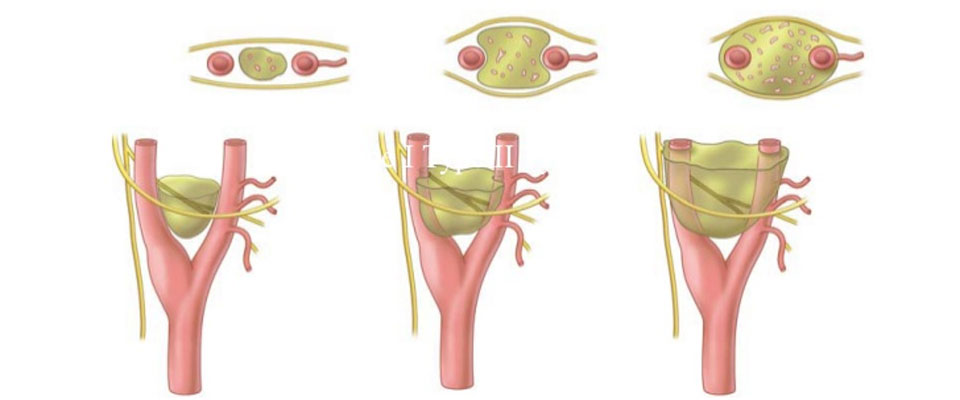
The carotid body is a pea-sized organ at the fork of the carotid artery that senses oxygen levels in the blood. A tumour arising from it (a paraganglioma) grows slowly over years, presenting as a painless lump on the side of the neck that can be moved side to side but not up and down. Most are benign and do not produce hormones, but as they enlarge they engulf the carotid arteries and the nerves to the tongue, voice box and shoulder, making removal more difficult.
Surgery is the standard treatment for tumours that are growing or causing symptoms, ideally while they are still separable from the artery. Larger tumours may need the artery to be repaired or replaced during the operation, which is why the surgery is done by a vascular surgeon. Small tumours in older patients can be watched with scans; radiotherapy is an option when surgery is not suitable.
Finding a lump in the neck is worrying. Most carotid body tumours are benign and grow slowly, so there is time to do the right tests and plan carefully. Even so, the lump should not be ignored, because treatment is simpler while the tumour is small.
The visit is about confirming that the lump is a carotid body tumour and not a swollen gland or another kind of lump, measuring its size and how closely it involves the artery and nerves, and checking the other side of the neck. The surgeon then discusses the options with you.
Symptoms of a Carotid Body Tumour
Many carotid body tumours are found by chance. When symptoms occur, you may also notice:
- A slowly enlarging, painless lump on the side of the neck below the angle of the jaw
- A lump that pulses or over which a whooshing sound is heard
- Hoarseness, difficulty swallowing or a weak tongue when nerves are pressed
- Rarely, palpitations, sweating or high blood pressure if the tumour releases hormones
- Often no symptoms - found on a scan done for another reason
- A feeling of fullness or pressure in the neck when you turn your head
- A pulsing sound or fullness in the ear on the same side
- Rarely, dizziness or fainting when the side of the neck is pressed
Symptoms vary from person to person. Having one or more of these does not confirm the condition - it means it is worth being checked.
When Does a Neck Lump Need Urgent Attention?
Do not wait for an online appointment if you have any of the following. Call the hospital or go to the nearest emergency department.
- Rapid growth, new nerve symptoms or a stroke-like episode need prompt assessment
How We Diagnose a Carotid Body Tumour
At your visit the doctor asks how long the lump has been there, about voice, swallowing and any palpitations or sweating, and about your family. The neck is examined gently. A duplex ultrasound is done by the vascular team at the hospital, and further imaging and tests are added to plan treatment.
What Causes Carotid Body Tumours?
- Most occur without a known cause
- Inherited gene changes (SDH mutations) in a proportion of patients, who may develop tumours on both sides or elsewhere
- Living at high altitude or long-standing low oxygen levels increase the risk
The carotid body senses oxygen in the blood. Long-term low oxygen, such as living at high altitude, makes it work harder and can lead to enlargement. In some people the tumour runs in families, which is why doctors ask about relatives and look at both sides of the neck. It is not caused by anything you did.
Investigations
- Duplex ultrasound
- Shows a highly vascular mass splaying the carotid fork - usually diagnostic.What to expect: A painless scan done at the hospital by the vascular team, with gel and a probe on the side of your neck. Both sides are usually checked, and there is no needle or radiation.
- CT or MR angiography
- Defines the size of the tumour and how closely it involves the artery; needle biopsy is avoided because the tumour bleeds heavily.What to expect: For CT a dye is given through a drip and the scan takes a few minutes; MRI is noisy but painless and you lie still in the scanner. Your doctor will tell you where it is done and how to prepare.
- Blood and urine tests
- To check for hormone secretion before surgery.What to expect: A routine blood sample, and sometimes urine collected over a set time at home. Your doctor will explain how to collect it and whether any foods or medicines should be paused first.
- Genetic testing
- Recommended for younger patients, bilateral tumours or a family history.What to expect: Usually a blood sample, offered after a discussion of what the result could mean for you and your family. Your doctor will explain where it is done and when the result is expected.
Treatment Options for Carotid Body Tumours
The usual path
- Confirm the diagnosis.
Duplex ultrasound and angiography show the tumour, its size and how closely it involves the artery and nerves - usually without a biopsy.
- Check for hormones and family links.
Blood and urine tests, and genetic testing where advised, are completed before treatment is planned.
- Watch small, slow-growing tumours.
Where surgery carries higher risk, regular scans may be advised to check for growth.
- Plan removal or other treatment.
For growing or symptomatic tumours, the vascular surgeon explains removal, whether blocking the feeding vessels beforehand is needed, or radiotherapy when surgery is not suitable, and how and where each is arranged.
- Surgical removal
- The tumour is carefully separated from the carotid arteries and nerves under magnification; the artery is repaired or replaced with a graft if it must be opened.
- Pre-operative embolisation
- Blocking the tumour's feeding vessels a day or two before surgery to reduce bleeding in large tumours.
- Surveillance
- Scans every year for small tumours in patients for whom surgery carries higher risk.
- Radiotherapy
- Controls growth when surgery is not possible.
- Family screening
- When an inherited gene change is found.
The right treatment depends on the cause, how severe it is and your overall health. Your doctor will discuss the options with you before anything is decided.
Frequently Asked Questions about Carotid Body Tumours
Is a carotid body tumour cancer?
The great majority are benign. A small proportion can spread to lymph nodes, which is one reason removal is advised while the tumour is small.
Why is a biopsy not done?
The tumour is made up of blood vessels and bleeds heavily if punctured. Imaging is usually enough to make the diagnosis safely.
What are the risks of surgery?
The main risks are bleeding and injury to the nerves of the tongue, voice and swallowing, which rise with tumour size. Operating early keeps those risks low.
How long does recovery take after removal of a carotid body tumour?
Most patients stay in hospital for a few days and return to normal activities within two to three weeks. Some temporary hoarseness, difficulty swallowing or weakness of the tongue can occur from bruising of the nerves and usually settles over weeks to months. Swallowing and voice are checked before discharge.
Can a carotid body tumour come back after surgery?
Recurrence after complete removal is uncommon, but scans are advised at intervals for some years, and patients with an inherited gene change are followed lifelong because new tumours can arise on the other side or elsewhere. Any new lump in the neck or new nerve symptoms should be reported promptly.
Which doctor should I see for a lump on the side of the neck?
Many neck lumps are swollen lymph glands and are usually seen by your family doctor or an ENT specialist. If a scan suggests a carotid body tumour, a vascular surgeon should assess it, because it sits on the artery. You can book at our Adajan hospital or at the OPD nearest you.
Does every carotid body tumour need an operation?
Not always. Growing tumours or those causing symptoms are usually removed. A small tumour in an older person, or in someone for whom surgery carries higher risk, may be watched with regular scans. Your surgeon will explain which suits you.
What should I bring to my appointment?
All scan reports and images, any blood or urine results, a list of your medicines, and details of any family members who have had neck lumps or similar tumours.
Why Choose Gujarat Hospital for Carotid Body Tumours
How we look after carotid body tumours at our main hospital in Adajan, Surat:
- Assessment by a vascular surgeon, because the tumour sits on the carotid artery. Dr. Ankur Patel, Vascular & Endovascular Surgeon, reviews your scans and plans treatment with you.
- Duplex ultrasound by the vascular team, done at the hospital, which usually shows the typical picture of a carotid body tumour without a needle biopsy.
- A plan that fits the tumour and you. The surgeon explains whether removal, regular scans or another option is advised, and how and where each would be arranged.
- Hormone and family checks considered. The surgeon advises when blood and urine tests or genetic testing are needed, for example with tumours on both sides or a family history.
The information on this page is for general patient education and does not replace individual medical advice, diagnosis or treatment. Medical Disclaimer