
Atherosclerosis in Surat What to Expect
Atherosclerosis is the build-up of fatty, calcified plaque in the walls of arteries. It is the underlying cause of most heart attacks, strokes, blocked leg arteries and many aneurysms, and it can be slowed with treatment at any stage.
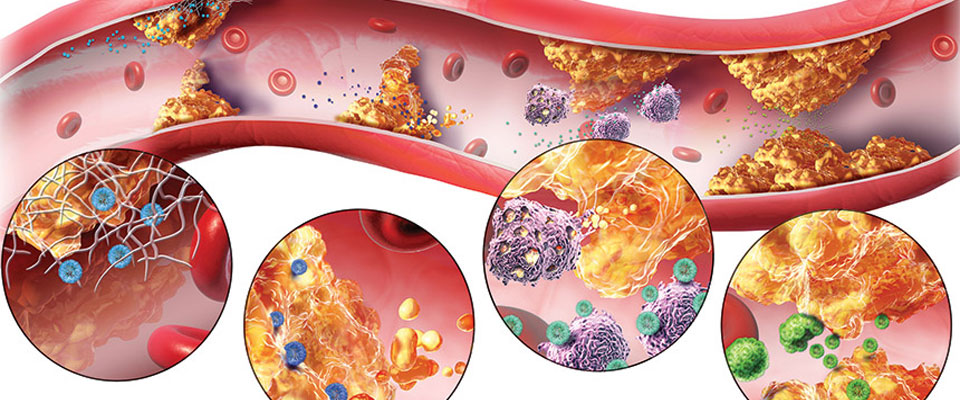
What Is Atherosclerosis?
From early adulthood, cholesterol and inflammatory cells collect in the inner lining of arteries and slowly form plaques. A plaque can narrow the artery and limit blood flow to the organ it supplies - the heart (angina), the brain (mini-strokes), the legs (claudication) or the kidneys - or its surface can crack, causing a clot that blocks the artery suddenly. Plaque can also weaken the wall so that it widens into an aneurysm.
Atherosclerosis is a whole-body disease: a person with blocked leg arteries almost always has plaque in the heart and neck arteries too. That is why treatment of any one blockage always includes measures to protect the rest of the circulation, and why a vascular assessment often prompts checks of the heart.
Atherosclerosis develops quietly over many years, and most people do not know they have it until an artery is narrowed enough to cause symptoms. If it has been found in one artery, it is very likely to be present in others too.
The encouraging part is that the disease can be slowed at any stage. Stopping smoking, taking protective medicines and controlling sugar, blood pressure and cholesterol reduce the risk of heart attack, stroke and losing a limb, whether or not you also need a procedure.
How Atherosclerosis Shows Itself
Because it can affect any artery, atherosclerosis may also show up as:
- None for many years - the disease is silent until an artery is significantly narrowed
- Chest pain or breathlessness on exertion (heart)
- Mini-stroke or stroke symptoms (neck arteries)
- Cramping leg pain on walking, cold feet, non-healing wounds (leg arteries)
- High blood pressure that is hard to control (kidney arteries)
- Erectile difficulty in men
- Brief loss of vision in one eye, or a short spell of weakness that recovers
- Wounds on the legs or feet that are slow to heal
- A pulsing feeling in the abdomen in some people with a widened aorta
Symptoms vary from person to person. Having one or more of these does not confirm the condition - it means it is worth being checked.
Which Symptoms Mean an Artery Has Suddenly Blocked?
Do not wait for an online appointment if you have any of the following. Call the hospital or go to the nearest emergency department.
- Chest pain, sudden weakness or speech difficulty, or a suddenly cold painful leg are emergencies caused by an acute blockage
How We Check Your Arteries
At your initial visit the doctor asks about symptoms in the legs, chest and head, your risk factors and family history, and checks blood pressure and pulses. Blood tests and painless ultrasound scans show how much the arteries are affected. Further scans are added when the result would change your treatment.
What Causes Plaque to Build Up in the Arteries?
- Smoking
- High LDL cholesterol
- High blood pressure
- Diabetes and insulin resistance
- Family history and increasing age
- Obesity, inactivity, chronic kidney disease and chronic inflammation
Several risks usually work together: smoking, high cholesterol, high blood pressure and diabetes each make the others more harmful. Some, like age and family history, cannot be changed, but most of the others can. Controlling each one you can change gives the greatest protection.
Investigations
- Risk assessment and blood tests
- Cholesterol profile, blood sugar, kidney function and blood pressure.What to expect: Questions about your health and family, and a blood sample, sometimes after not eating overnight; your doctor will tell you if this is needed.
- Ankle-brachial index and duplex ultrasound
- Detect narrowing in the leg and neck arteries painlessly.What to expect: Painless tests with blood-pressure cuffs and a probe with gel on the legs and neck, done by the vascular team at the hospital.
- CT calcium score or CT angiography
- Shows the amount of plaque in the heart or other arteries when the result would change treatment.What to expect: You lie still in a scanner for a short time. A calcium score needs no injection; a CT angiogram uses dye through a drip, so tell the team about kidney disease or allergies.
- Ultrasound of the aorta
- Screens for aneurysm in men over 65 and others at risk.What to expect: A painless scan with gel and a probe on your abdomen. You may be asked not to eat for a few hours before, so the aorta can be seen clearly.
How Atherosclerosis Is Treated and Slowed
The usual path
- Change what you can.
Stopping all tobacco, eating a healthier diet, being active every day and keeping a healthy weight.
- Take protective medicines.
A statin, often an antiplatelet tablet, and medicines for blood pressure and diabetes, taken long-term.
- Check the arteries at risk.
Scans of the legs, neck or aorta show whether any artery needs closer watching or treatment.
- Treat a narrowed or widened artery.
Angioplasty, bypass or aneurysm repair is advised where a specific artery causes symptoms or threatens an organ or limb.
- Stopping smoking
- The most powerful single change at every stage of the disease.
- Statins and other cholesterol-lowering drugs
- Lower LDL cholesterol, stabilise plaque and reduce heart attacks and strokes.
- Antiplatelet medicine
- Reduces the chance of a clot forming on a cracked plaque.
- Blood-pressure and diabetes control
- Targets set according to your overall risk.
- Diet, weight and exercise
- A Mediterranean-style diet, weight control and regular walking slow progression.
- Procedures for significant narrowing
- Angioplasty, stenting, endarterectomy or bypass where a specific artery is causing symptoms or threatening an organ.
The right treatment depends on the cause, how severe it is and your overall health. Your doctor will discuss the options with you before anything is decided.
Frequently Asked Questions about Atherosclerosis
Can atherosclerosis be reversed?
Plaque can be stabilised and sometimes shrinks slightly with intensive cholesterol lowering, but the aim of treatment is to stop progression and prevent clots rather than to clear the arteries.
I have leg artery disease - is my heart at risk?
Yes. Peripheral arterial disease is a strong marker of coronary disease. Protective medicines and, where appropriate, a heart assessment are part of every treatment plan.
At what age should I be checked?
Anyone with diabetes, a smoking history, high blood pressure or a family history of early heart disease should have their risk assessed in their 40s, earlier if symptoms appear.
Do I need a statin if my cholesterol level is normal?
Often, yes. Once plaque has been found in an artery, statins are recommended to stabilise it and reduce the chance of a clot, whatever the cholesterol number was to start with. The target is then a much lower level than is considered normal for a healthy person. Your doctor will decide the dose after assessing your overall risk.
Can atherosclerosis affect younger people?
Yes. Plaque begins forming in early adulthood, and in people who smoke, have diabetes, high blood pressure or a family history of early heart disease it can cause symptoms well before old age. Young people with these risk factors benefit most from early assessment and lifestyle change.
What changes to my diet help most?
Eat more vegetables, fruit, pulses, whole grains and a small handful of nuts. Cut down on fried and bakery food, ghee, vanaspati, sweets and salt. Small, steady changes that you can keep up matter more than a strict diet for a few weeks.
Are bidis, gutkha and other tobacco also harmful?
Yes. Bidis, chewing tobacco, gutkha and occasional smoking all damage the arteries. There is no safe amount. Your doctor can help you plan how to stop and suggest medicines that make it easier.
Do I need to see a heart specialist as well?
Often, yes. Plaque in the leg or neck arteries usually means the heart arteries are affected too. Your vascular surgeon may advise a heart check-up with a cardiologist or your physician, particularly if you have chest pain or breathlessness.
Why Choose Gujarat Hospital for Atherosclerosis
How we look after atherosclerosis at our main hospital in Adajan, Surat:
- A vascular surgeon who looks at the whole circulation. Dr. Ankur Patel assesses the arteries of the legs, neck and abdomen, not just the one that is causing symptoms.
- Duplex ultrasound by the vascular team, done at the hospital to check for narrowing in the leg and neck arteries and widening of the aorta.
- Risk-factor control at the centre of care. Every plan includes stopping smoking, protective medicines and targets for sugar, blood pressure and cholesterol, shared with your physician.
- Procedures for arteries that need them. Angioplasty, bypass of the leg arteries and aneurysm repair are done in the Hybrid Operation Theatre & Cathlab.
The information on this page is for general patient education and does not replace individual medical advice, diagnosis or treatment. Medical Disclaimer