
Thoracic Aortic Aneurysm in Surat What to Expect
A thoracic aortic aneurysm is a widening of the aorta within the chest. It usually causes no symptoms until it grows large, when it can tear or rupture; treatment ranges from surveillance and blood-pressure control to stent-graft or open repair.
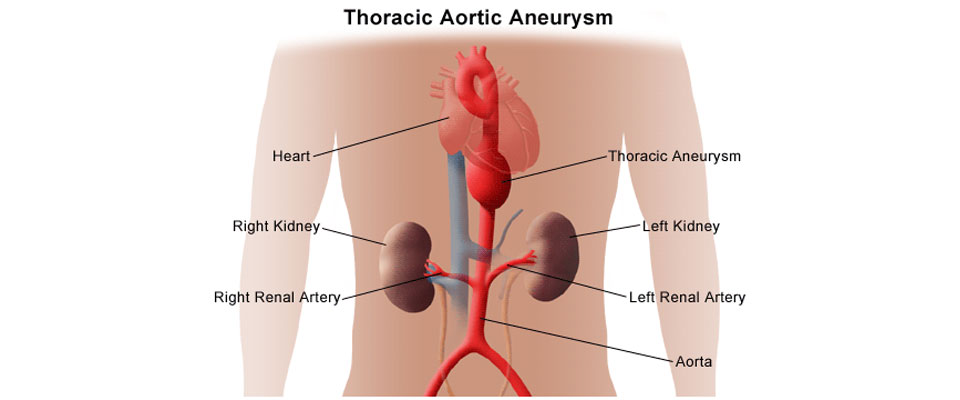
What Is a Thoracic Aortic Aneurysm?
The aorta leaves the heart, arches over and runs down the back of the chest before passing into the abdomen. Any part can widen into an aneurysm - the ascending aorta and arch are most often affected by wall weakness and valve disease, the descending aorta by atherosclerosis. The risk of rupture or dissection rises steeply once the aneurysm exceeds about 5.5 cm, or 5 cm in people with inherited wall weakness.
Most thoracic aneurysms are found by chance on a chest X-ray or CT. Small ones are watched with scans and blood-pressure control. Descending aneurysms are usually repaired with a stent-graft placed from the groin (TEVAR); those near the heart need open surgery by a cardiothoracic team.
A thoracic aneurysm is often found by chance on a chest X-ray, CT or heart scan done for another reason. Many are small when found and are managed safely for years with scans and good blood-pressure control.
Our vascular surgeon assesses and monitors thoracic aneurysms, looks for aneurysms elsewhere in the aorta and explains what the scan findings mean. Repair of the chest aorta, by stent-graft or open surgery, is not done at this hospital; when it is needed, it is arranged with a cardiothoracic or aortic team elsewhere, and your surgeon explains the options and where they are done.
Symptoms of an Aneurysm in the Chest
Most thoracic aneurysms are silent until they are large. Signs that may appear include:
- Usually none until large
- Deep, constant chest or upper back pain
- Hoarseness, cough or difficulty swallowing from pressure on nearby structures
- Shortness of breath
- Sudden severe pain, collapse or shock when the aneurysm tears or ruptures
- A change in your voice that does not settle
- Food feeling as if it sticks on the way down
Symptoms vary from person to person. Having one or more of these does not confirm the condition - it means it is worth being checked.
When Is a Thoracic Aneurysm an Emergency?
Do not wait for an online appointment if you have any of the following. Call the hospital or go to the nearest emergency department.
- Sudden severe chest or back pain, fainting or collapse in a person known to have an aneurysm - call emergency services immediately
How a Thoracic Aneurysm Is Measured and Monitored
At your first visit the surgeon reviews your scans, asks about chest or back pain, voice or swallowing changes and family history, and checks your blood pressure and pulses. The abdominal aorta is checked with duplex ultrasound. Further imaging, such as CT angiography, echocardiography or MRI, may be advised; your surgeon will tell you where it is done.
What Causes a Thoracic Aortic Aneurysm?
- Atherosclerosis and high blood pressure
- Inherited weakness of the aortic wall (Marfan, Loeys-Dietz, Ehlers-Danlos syndromes) and a bicuspid aortic valve
- A previous aortic dissection
- Smoking and increasing age
- Rarely, infection or inflammation of the aortic wall
Aneurysms near the heart are more often linked to an inherited weakness of the aortic wall or a heart-valve problem, and can appear at a younger age. Those lower in the chest are more often linked to hardened arteries, smoking and high blood pressure. Knowing which applies helps decide how closely to watch and whether relatives should be checked.
Investigations
- CT angiography
- Measures the aneurysm precisely and shows its relationship to the branches, essential for planning.What to expect: You lie still on a scanner table while a dye is given through a drip in your arm. Tell the team about kidney problems, diabetes medicines or any allergy to dye.
- Echocardiography
- For aneurysms of the ascending aorta and to assess the aortic valve.What to expect: A painless heart scan with gel and a probe on your chest. It shows the heart valve and the first part of the aorta.
- MRI
- Used for repeated surveillance to avoid radiation, especially in younger patients.What to expect: You lie still inside the scanner, which is noisy, for longer than a CT. No X-rays are used. Tell the team if you have a pacemaker or metal implants.
- Genetic assessment
- When an inherited condition is suspected, so relatives can be screened.What to expect: A discussion of your family history, sometimes with a blood test. It helps decide whether relatives should be checked and how often.
Treatment Options for a Thoracic Aortic Aneurysm
The usual path
- Control blood pressure.
Blood-pressure medicines, stopping smoking and avoiding heavy straining reduce stress on the aortic wall.
- Watch with scans.
The aneurysm is measured at intervals your surgeon sets, and the abdominal aorta is checked as well.
- Decide on repair.
When the aneurysm reaches the size for repair, grows quickly or causes symptoms, your surgeon explains the options, stent-graft or open surgery.
- Referral for repair.
Repair of the chest aorta is arranged with a cardiothoracic or aortic team elsewhere when needed. Follow-up and blood-pressure care can continue with us.
- Surveillance and medicines
- Scans every six to twelve months and strict blood-pressure control for aneurysms below the size threshold; avoidance of heavy straining.
- Endovascular repair (TEVAR)
- A covered stent-graft delivered from the groin excludes a descending aneurysm without opening the chest, with a short hospital stay.
- Open surgical repair
- Replacement of the aneurysm with a fabric graft, needed for the ascending aorta and arch, or when a stent-graft cannot be anchored.
- Hybrid procedures
- Branch arteries are first rerouted by surgery so a stent-graft can then cover the aneurysm.
- Lifelong follow-up
- Scans after repair to make sure the graft remains sealed.
The right treatment depends on the cause, how severe it is and your overall health. Your doctor will discuss the options with you before anything is decided.
Frequently Asked Questions about Thoracic Aortic Aneurysm
At what size does a thoracic aneurysm need repair?
Generally around 5.5 cm, earlier in people with inherited wall weakness, in women, or if it is growing quickly or causing symptoms.
Can I exercise with an aneurysm?
Moderate aerobic activity is usually encouraged. Heavy weightlifting and straining raise the pressure in the aorta and should be avoided - your surgeon will give specific advice.
Is stent-graft repair permanent?
It is durable, but the graft must be checked with scans over the years, because leaks around it can occur and can be treated if found early.
Should my children or siblings be tested if I have a thoracic aneurysm?
If an inherited condition such as Marfan syndrome or a bicuspid aortic valve is suspected, or if more than one family member has had an aneurysm or dissection, first-degree relatives are usually advised to have an echocardiogram or scan. Genetic assessment helps decide who should be checked and how often. Your surgeon will tell you whether family screening is recommended in your case.
How long does recovery take after stent-graft (TEVAR) repair?
Because the stent-graft is placed through a small puncture in the groin, the hospital stay is short and most patients are walking the next day. Light activity can resume within a week or two, while heavy lifting and straining are avoided for longer as advised. Regular scans follow to confirm the graft remains sealed, and blood-pressure control continues for life.
Is a thoracic aneurysm repaired at this hospital?
No. Our vascular surgeon assesses and monitors thoracic aneurysms here. When repair of the chest aorta is needed, it is arranged with a cardiothoracic or aortic team elsewhere, and your follow-up can continue with us.
What symptoms should I watch for between scans?
New chest or upper back pain, hoarseness, a cough that does not settle, or difficulty swallowing should be reported to your surgeon. Sudden severe pain or fainting needs emergency care at once.
What should I bring to my appointment?
All scan reports and the scan images on CD or as a link, any echocardiogram reports, a list of your medicines and your recent blood pressure readings. Note any family history of aneurysm or sudden death.
Why Choose Gujarat Hospital for Thoracic Aortic Aneurysm
How we look after a thoracic aortic aneurysm at our main hospital in Adajan, Surat:
- Assessment by a vascular surgeon. Dr. Ankur Patel, Vascular & Endovascular Surgeon, reviews your scans, explains the size and position of the aneurysm and what it means for you.
- Surveillance and risk-factor control, with blood pressure, cholesterol and smoking addressed between scans, so growth is slowed and repair is planned at the right time.
- The abdominal aorta checked too. Aneurysms can occur in more than one part of the aorta, so the abdominal aorta is checked with duplex ultrasound by the vascular team.
- Clear advice on repair. Repair of the chest aorta is not done at this hospital. When it is needed, it is arranged with a cardiothoracic or aortic team elsewhere, and your surgeon explains the options and where they are done.
The information on this page is for general patient education and does not replace individual medical advice, diagnosis or treatment. Medical Disclaimer