
Aortic Dissection in Surat What to Expect
Aortic dissection is a tear in the inner layer of the aorta, the body's main artery, that lets blood force its way between the layers of the wall. It causes sudden severe chest or back pain and is a life-threatening emergency.
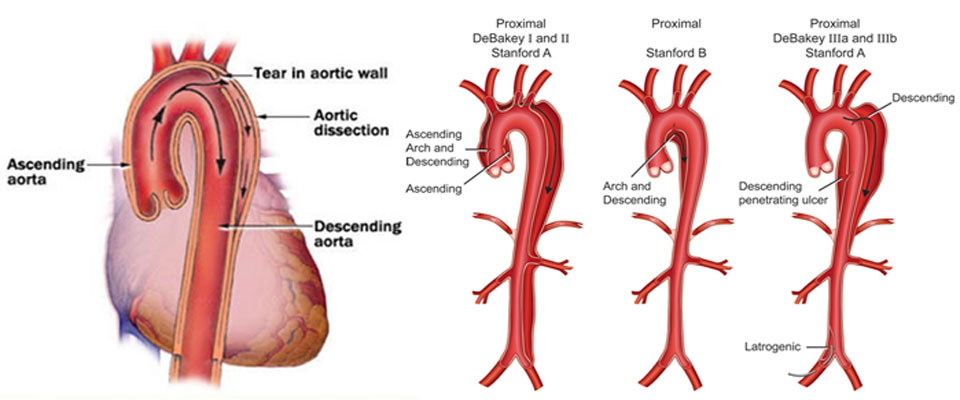
What Is an Aortic Dissection?
The wall of the aorta has three layers. When the inner layer tears, usually because of high blood pressure or a weakness in the wall, blood surges into the tear and splits the layers apart along the length of the vessel. This can block the branches to the brain, arms, kidneys, bowel or legs, and the weakened outer wall can rupture. Dissections that involve the first part of the aorta near the heart (type A) need emergency open-heart surgery; those confined to the descending aorta in the chest and abdomen (type B) are usually managed with strict blood-pressure control and, when complicated, an endovascular stent-graft.
Survivors need lifelong blood-pressure control and regular scans, because the weakened aorta can slowly widen into an aneurysm in the following years.
An aortic dissection usually starts suddenly, with pain so severe that people describe it as tearing or ripping. It is an emergency: call an ambulance or go to the nearest emergency department at once, and do not drive yourself.
At our hospital the emergency and ICU teams start treatment to lower blood pressure and heart rate, and the vascular surgeon assesses the patient. A type A dissection needs emergency surgery by a cardiothoracic team, and a stent-graft for the chest aorta is done by an aortic team; transfer to a hospital that provides these is arranged once the patient is stabilised.
Symptoms of an Aortic Dissection
Dissection pain usually starts suddenly and is at its worst from the start. You may also notice:
- Sudden, severe, tearing or ripping pain in the chest, between the shoulder blades or in the abdomen
- Pain that moves as the tear extends
- Fainting, sweating and shortness of breath
- A different blood pressure or pulse in the two arms
- Sudden stroke-like symptoms, a cold painful leg or severe abdominal pain when branches are blocked
- A feeling of fear or that something is seriously wrong
- Weakness or numbness in an arm or leg
- Pain that is not eased by changing position
Symptoms vary from person to person. Having one or more of these does not confirm the condition - it means it is worth being checked.
What to Do if You Suspect an Aortic Dissection
Do not wait for an online appointment if you have any of the following. Call the hospital or go to the nearest emergency department.
- Sudden severe chest, back or abdominal pain - call emergency services at once
- Pain with fainting, weakness of a limb or a cold leg
How an Aortic Dissection Is Diagnosed
In the emergency department the doctor asks how the pain started, checks the blood pressure in both arms and the pulses in the limbs, and starts treatment to lower blood pressure. An ECG and blood tests help rule out a heart attack. CT angiography confirms the diagnosis; it and echocardiography may be done at the hospital the patient is transferred to.
What Causes the Aorta to Tear?
- Long-standing or poorly controlled high blood pressure - the commonest cause
- Weakness of the aortic wall in conditions such as Marfan syndrome and bicuspid aortic valve
- An existing aortic aneurysm
- Injury, cocaine use or, rarely, pregnancy
- Increasing age and atherosclerosis
Most dissections happen in people whose blood pressure has been high for years, often without them knowing. A smaller group have an inherited weakness of the aortic wall and may be younger. Controlling blood pressure is the most important protection, both before and after a dissection.
Investigations
- CT angiography
- The key test: shows the tear, how far it extends and which branches are affected.What to expect: You lie still on a scanner table for a short time while a dye is given through a drip in your arm. It is usually done urgently, and the team stays with you.
- Echocardiography
- Looks at the first part of the aorta and the heart valve in suspected type A dissection.What to expect: A painless heart scan with gel and a probe on the chest. Sometimes a probe passed through the mouth is used, under sedation, to see the aorta more closely.
- ECG and blood tests
- To rule out a heart attack, which can mimic dissection, and to check the kidneys.What to expect: Stickers are placed on your chest and limbs for a few minutes for the ECG, and a blood sample is taken. Both are done early and may be repeated.
- MRI
- For follow-up imaging in the years after treatment.What to expect: Used later for follow-up. You lie still inside the scanner, which is noisy, and no X-rays are used. Tell the team if you have a pacemaker or metal implants.
How an Aortic Dissection Is Treated
The usual path
- Emergency stabilisation.
Pain relief and medicines through a drip in the ICU lower blood pressure and heart rate, with close monitoring, to stop the tear from spreading.
- Confirm the type of dissection.
A CT scan shows whether the tear involves the aorta near the heart (type A) or lower down (type B), and which branches are affected.
- Transfer for surgery when needed.
Type A needs emergency surgery by a cardiothoracic team, and a complicated type B may need a stent-graft by an aortic team; transfer is arranged after stabilisation. Uncomplicated type B is usually treated with medicines alone.
- Lifelong care.
Blood-pressure tablets every day and regular scans to check the aorta, with follow-up at Adajan or the OPD nearest you.
- Emergency blood-pressure and pain control
- Intravenous medicines in intensive care to lower the pressure and heart rate and stop the tear spreading.
- Open surgery for type A dissection
- Replacement of the torn section near the heart by a cardiothoracic team - a true emergency.
- Endovascular stent-graft (TEVAR) for type B
- A covered stent placed from the groin seals the tear when there is complication - blocked branches, rupture or persistent pain - or when the aorta keeps enlarging.
- Long-term medical management
- Lifelong blood-pressure control and regular CT or MRI to watch for enlargement.
- Later aneurysm repair
- If the dissected aorta widens over time.
The right treatment depends on the cause, how severe it is and your overall health. Your doctor will discuss the options with you before anything is decided.
Frequently Asked Questions about Aortic Dissection
How is a dissection different from an aneurysm?
An aneurysm is a widening of the whole wall; a dissection is a tear within the wall. A dissection can lead to an aneurysm later, and an aneurysm can tear.
Can I live a normal life afterwards?
Many people do, with strict blood-pressure control, avoidance of heavy lifting and regular scans. Your team will give you clear limits.
Is it hereditary?
Some dissections occur in inherited conditions of the aortic wall. If that is suspected, close relatives may be advised to have a scan.
How often will I need scans after a dissection?
Scans are more frequent in the first year, when the weakened aorta is most likely to change, and then usually yearly if it is stable. The exact schedule is set by your team according to the extent of the dissection and how it was treated. Missing scans means an enlarging aorta may go unnoticed until it is dangerous.
Can I stop my blood-pressure tablets once my pressure is normal?
No. Your pressure is normal because of the tablets, and the aorta needs that protection for life. Stopping or missing doses raises the pressure on the weakened wall and the risk of further tearing or enlargement. If side effects trouble you, tell your doctor so the medicine can be changed rather than stopped.
What happens if I come to the emergency department with suspected dissection?
You are assessed at once, monitored, and given pain relief and medicines to lower your blood pressure and heart rate. A CT scan is arranged to confirm the diagnosis, and transfer for surgery is arranged if it is needed.
Can an aortic dissection be mistaken for a heart attack?
Yes. Both can cause sudden chest pain, which is why doctors check carefully before giving clot-dissolving or blood-thinning medicines. Pain that is tearing, felt in the back or moving is a warning sign of dissection.
Should I check my blood pressure at home after a dissection?
Yes, it is usually advised. Keep a record of your readings and bring it to each visit. Your doctor will tell you the target to aim for and what to do if readings stay above it.
Why Choose Gujarat Hospital for Aortic Dissection
How we look after an aortic dissection at our main hospital in Adajan, Surat:
- 24×7 emergency care, so a patient with sudden chest or back pain is assessed and treatment to lower blood pressure is started without delay.
- ICU care for blood-pressure control. Medicines through a drip lower blood pressure and heart rate, with close monitoring, to stop the tear from spreading.
- Assessment by a vascular surgeon. Dr. Ankur Patel, Vascular & Endovascular Surgeon, assesses the patient and advises on the next step.
- Transfer arranged when surgery is needed. A type A dissection needs emergency surgery by a cardiothoracic team, and a stent-graft for the chest aorta is done by an aortic team; transfer to a hospital that provides these is arranged after stabilisation.
The information on this page is for general patient education and does not replace individual medical advice, diagnosis or treatment. Medical Disclaimer