
Leg Ulcers in Surat What to Expect
A leg ulcer is an open wound on the lower leg or foot that has not healed within a few weeks. Most are caused by vein disease, poor arterial blood supply, diabetes or a combination, and treatment only works when the cause is identified first.
What Is a Leg Ulcer?
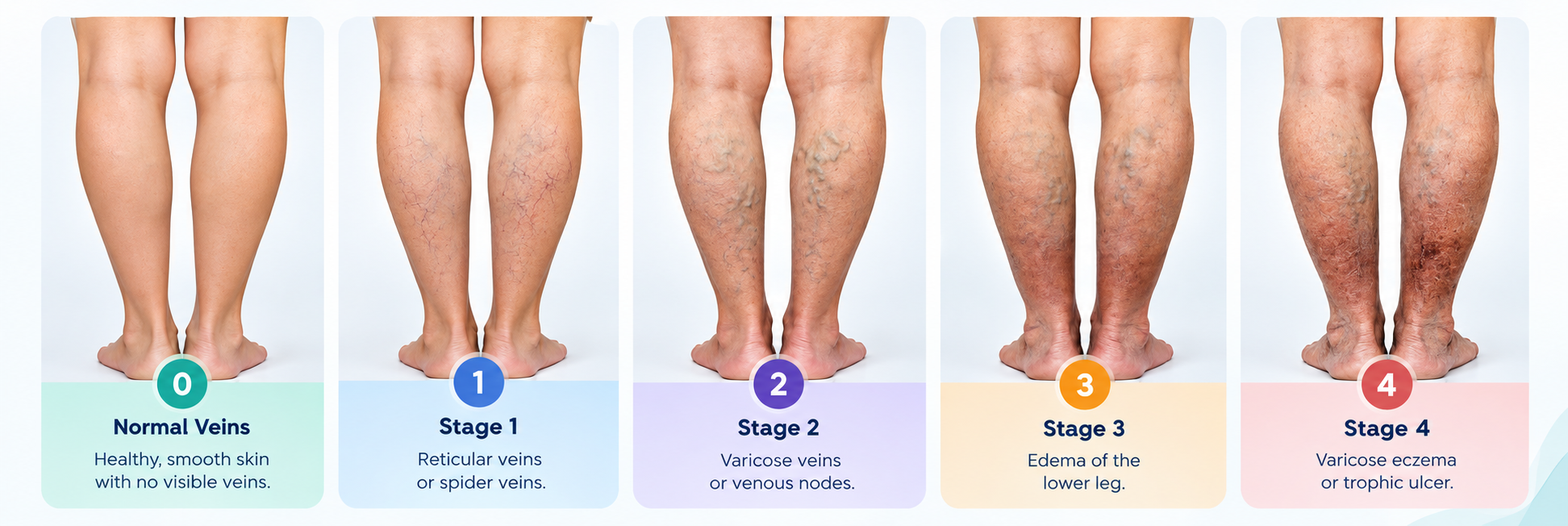
Around three-quarters of chronic leg ulcers are venous: high pressure in faulty leg veins damages the skin above the ankle until it breaks down. Arterial ulcers occur where the blood supply is too poor to heal even a small injury, typically on the toes, heel or the outside of the foot. Diabetic foot ulcers combine nerve damage, pressure and often arterial disease. Less common causes include lymphoedema, infection, skin cancer and inflammatory conditions.
Because venous ulcers need compression and arterial ulcers can be made worse by it, every leg ulcer is assessed by a vascular surgeon with a duplex scan and arterial pressures before treatment starts. With the right treatment most venous ulcers heal within three to six months and the underlying veins can then be treated to stop them coming back.
A wound that will not heal is tiring and often painful, and many people try dressings for months before seeing a specialist. Most leg ulcers can heal once the cause is found and treated, so it is worth having a proper assessment early.
The visit is about finding why the wound is not healing. The vascular surgeon checks the veins, the arteries and, if you have diabetes, the foot. Treatment is then planned around the cause, together with regular wound care.
Signs of a Leg Ulcer
A leg ulcer often starts as a small injury that does not heal. You may also notice:
- An open, weeping wound above the ankle, often shallow with an irregular edge (venous)
- A deep, punched-out, painful wound on the toes, heel or foot (arterial)
- A painless wound under a pressure point of the foot in a person with diabetes
- Brown staining, eczema or hardening of the skin around the ankle
- Swelling, aching or heaviness of the leg
- Increasing pain, redness, warmth or discharge when infection develops
- Pain that eases when the leg is raised (more typical of venous ulcers)
- Pain that is worse when the leg is raised or at night (more typical of arterial ulcers)
Symptoms vary from person to person. Having one or more of these does not confirm the condition - it means it is worth being checked.
When Does a Leg Ulcer Need Urgent Care?
Do not wait for an online appointment if you have any of the following. Call the hospital or go to the nearest emergency department.
- Spreading redness, fever or a foul-smelling discharge
- Black tissue in or around the wound
- A cold, pale foot with severe pain
- Rapid enlargement or bleeding of the ulcer
How We Find the Cause of a Leg Ulcer
At your first visit the surgeon asks how the ulcer started, how long it has been present and about diabetes, smoking and earlier clots. The wound and both legs are examined. Simple tests of the blood supply and a duplex scan come first, and further tests are added if the ulcer looks unusual or infected.
Why Do Leg Ulcers Form and Fail to Heal?
- Varicose veins and previous deep vein thrombosis (venous insufficiency)
- Blocked leg arteries (peripheral arterial disease)
- Diabetes with nerve damage
- Prolonged swelling from heart, kidney or lymphatic problems
- Reduced mobility, obesity and older age
- Rarely, skin cancer or vasculitis
A small knock or scratch heals normally when the circulation is healthy. When vein pressure is high, the blood supply is poor or the skin has lost feeling, the same injury can become a lasting wound. Often more than one factor is present, which is why each ulcer is assessed carefully before treatment.
Investigations
- Examination and ankle-brachial index
- Tells venous from arterial ulcers and shows whether compression is safe.What to expect: The wound is looked at and measured. A blood pressure cuff is placed on your ankle and arm in turn while you lie down; it is painless.
- Duplex ultrasound
- Maps faulty veins and blocked arteries.What to expect: A painless scan with gel and a probe on the leg, done by the vascular team, to look at both the veins and the arteries.
- Blood tests
- Diabetes, anaemia, kidney function and markers of infection.What to expect: A routine blood sample. The results help show anything that may be slowing healing.
- Swab, X-ray or biopsy
- When infection reaches bone or the ulcer looks unusual and cancer must be excluded.What to expect: A swab is wiped gently over the wound. An X-ray is painless. A biopsy takes a tiny piece of tissue after a local anaesthetic injection.
Treatment Options for Leg Ulcers
The usual path
- Care for the wound.
Regular cleaning, dressings and treatment of any infection, with compression for venous ulcers once the arteries are known to be healthy.
- Find the cause.
Duplex ultrasound and arterial pressures show whether veins, arteries or both are involved.
- Fix the circulation.
Faulty veins are closed as a day case, and narrowed arteries are opened with angioplasty in the Hybrid Operation Theatre & Cathlab.
- Surgery where needed.
Bypass surgery, diabetic foot surgery or a skin graft may be advised, and stockings afterwards help prevent the ulcer coming back.
- Compression therapy
- Multi-layer bandaging or compression stockings are the mainstay for venous ulcers once arterial disease has been excluded.
- Wound care
- Regular cleaning, removal of dead tissue and dressings chosen for the stage of the wound.
- Treating the veins
- Laser, radiofrequency, glue or foam treatment of the faulty veins speeds healing and halves the chance of recurrence.
- Restoring arterial flow
- Angioplasty or bypass for arterial ulcers - without blood supply no dressing will work.
- Offloading and footwear
- Special footwear or casts for diabetic ulcers to take pressure off the wound.
- Skin grafting
- For large, clean ulcers that are slow to close.
The right treatment depends on the cause, how severe it is and your overall health. Your doctor will discuss the options with you before anything is decided.
Frequently Asked Questions about Leg Ulcers
Why has my ulcer not healed for months?
Usually because the cause - faulty veins, poor arterial flow or pressure - is still there. Once the cause is treated, most ulcers begin to heal within weeks.
Is compression bandaging painful?
It can feel tight for the first days but should not be painful. Pain under compression needs review, as it may mean the arterial supply is poor.
Will the ulcer come back?
Venous ulcers recur in many patients unless the veins are treated and compression stockings are worn afterwards. Treating the veins greatly lowers that risk.
Can I bathe or shower with a leg ulcer under compression bandages?
Compression bandages must stay dry, so most patients wash around them or cover the leg with a waterproof sleeve or bag while showering. The bandages are changed by the team at set intervals, and washing of the leg is done then. If a bandage becomes wet or soiled, contact the clinic rather than leaving it, as a damp dressing slows healing and encourages infection.
Can a leg ulcer be a sign of cancer?
Rarely, yes. Most ulcers are venous, arterial or diabetic, but a wound that looks unusual, has a raised or irregular edge, bleeds easily, or does not respond to correct treatment over months may need a small biopsy to exclude skin cancer. This is one reason why every leg ulcer is assessed by a specialist rather than treated with dressings alone.
Which doctor should I see for a leg ulcer?
A vascular surgeon, because most leg ulcers are caused by vein or artery problems. You can book at our Adajan hospital or at the OPD nearest you; scans and procedures are done at Adajan.
Should I keep the ulcer open to the air to dry it?
No. Wounds heal better under a suitable dressing that keeps them clean and slightly moist. Your team chooses the dressing for the stage of the wound and tells you how often it should be changed.
What can I do at home to help my ulcer heal?
Raise the leg when sitting, walk regularly, wear compression as advised, keep blood sugar controlled if you have diabetes, and stop smoking. Eating well, with enough protein, also supports healing.
Why Choose Gujarat Hospital for Leg Ulcers
How we look after leg ulcers at our main hospital in Adajan, Surat:
- The cause found before treatment starts. A vascular surgeon checks both veins and arteries, so compression is used when it is safe.
- Faulty veins treated as a day case. VenaSeal glue, radiofrequency, laser and foam sclerotherapy are done under local anaesthetic to help venous ulcers heal and stay healed.
- Blood flow restored where needed. Angioplasty and bypass are done in the Hybrid Operation Theatre & Cathlab, where they can be combined in the same sitting.
- Diabetic foot surgery by the same team, so blood flow, infection and the wound are planned together.
The information on this page is for general patient education and does not replace individual medical advice, diagnosis or treatment. Medical Disclaimer