
Intermittent Claudication in Surat What to Expect
Intermittent claudication is cramping pain in the calf, thigh or buttock that comes on after walking a predictable distance and goes away with rest. It is the earliest symptom of blocked leg arteries and a warning sign for the heart as well.
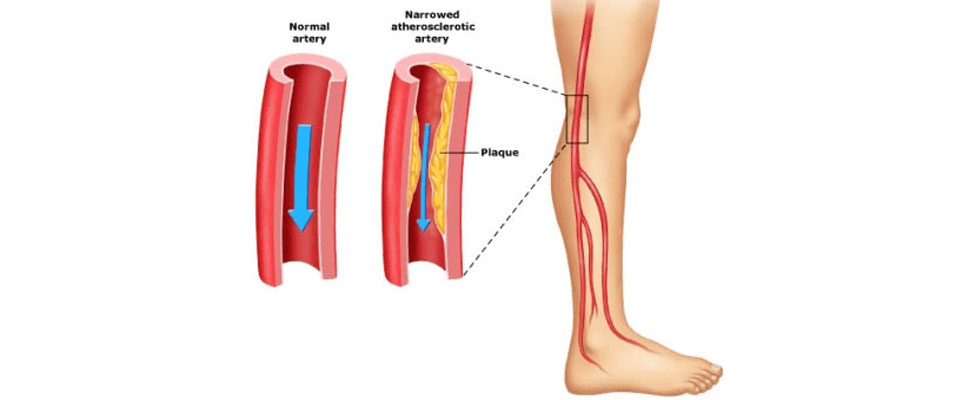
What Is Intermittent Claudication?
When a leg artery is narrowed, the muscles receive enough blood at rest but not during exercise. Lactic acid builds up and the muscle cramps, forcing the person to stop; after a minute or two of rest the pain settles and walking can resume. The distance before pain starts is often remarkably constant and shortens as the disease progresses.
Claudication itself rarely threatens the leg - only a small proportion of patients progress to critical ischemia - but it marks widespread atherosclerosis, and the risk of heart attack and stroke is several times higher than average. Treatment therefore focuses first on risk factors and exercise, with angioplasty or bypass for pain that limits daily life.
Many people put up with leg pain on walking for months, thinking it is just age or tiredness. If your pain comes on after a similar distance each time and goes when you stop, it is worth getting checked. The tests are simple, and the treatment usually starts with walking, not an operation.
Most people with claudication improve with a steady walking routine, stopping smoking and protective medicines. Seeing a vascular surgeon also matters for your general health, because narrowed leg arteries are a sign to look after your heart and brain arteries too.
How Claudication Pain Feels
Claudication pain has a pattern that often helps the doctor recognise it. You may also notice:
- Cramping or aching pain in the calf (most common), thigh or buttock brought on by walking
- Pain that starts after a similar distance each time and stops within minutes of resting
- Pain that comes on sooner when walking uphill or quickly
- Weak pulses in the foot, cool skin or hair loss on the leg
- In some men, erectile difficulty when the arteries in the pelvis are affected
- Stopping several times on longer walks, such as to the market or the temple
- Pain that eases when you stand still, without needing to sit down
- One leg that hurts sooner than the other
Symptoms vary from person to person. Having one or more of these does not confirm the condition - it means it is worth being checked.
When Does Leg Pain Need Urgent Review?
Do not wait for an online appointment if you have any of the following. Call the hospital or go to the nearest emergency department.
- Pain in the foot at rest or at night
- A wound on the foot that is not healing
- A leg that suddenly becomes cold, pale, numb or weak
How We Test for Claudication
At your initial visit the doctor asks where the pain is, how far you can walk and what makes it stop, and checks the pulses in your legs and feet. A simple ankle pressure test usually confirms the diagnosis. Detailed scans of the arteries are added when a procedure is being planned.
Why Does Walking Cause Leg Pain?
- Atherosclerosis of the leg or pelvic arteries
- Smoking
- Diabetes
- High blood pressure and high cholesterol
- Age over 50, family history of arterial disease
Walking makes the leg muscles need more blood. When an artery is narrowed, the extra blood cannot get through, so the muscle cramps until you rest. The narrowing is usually caused by atherosclerosis, and smoking and diabetes make it more likely and faster to progress.
Investigations
- Ankle-brachial index
- Blood pressure at the ankle compared with the arm; a simple, reliable first test.What to expect: You lie flat while blood-pressure cuffs are placed on your arms and ankles. It is painless and quick, and the result is explained to you straight away.
- Treadmill walking test
- Measures the distance to pain and pressures after exercise when the resting test is borderline.What to expect: You walk on a treadmill at a steady pace until the pain starts or you need to stop, and your ankle pressures are measured again afterwards. Wear comfortable shoes and tell the team if you get chest pain or breathlessness.
- Duplex ultrasound
- Shows the site and severity of narrowing.What to expect: A painless scan with gel and a probe moved along your leg, done by the vascular team at the hospital. It shows where the artery is narrowed and how severely.
- CT or catheter angiography
- Only when a procedure is being planned.What to expect: Usually arranged when a procedure is planned. For CT you lie still in a scanner while dye is given through a drip; catheter angiography is done through a small puncture under local anaesthetic.
Treatment Options for Claudication
The usual path
- Stop smoking and start medicines.
An antiplatelet tablet and a statin protect the heart and brain, and stopping smoking slows the disease in the legs.
- Walk every day.
Walk until the pain is moderately strong, rest until it settles, then carry on. Most people walk further over the following weeks and months.
- Review your progress.
The doctor checks how far you can walk and repeats tests if your symptoms change.
- Consider a procedure.
If pain still limits work or daily life despite exercise, angioplasty or bypass may be advised after scans of the arteries.
- Stop smoking
- The single most effective step; continuing to smoke doubles the chance of progression.
- Supervised exercise
- Walking to the point of pain, resting and repeating, for 30-45 minutes several times a week, improves pain-free walking distance in most people within three months.
- Medicines
- An antiplatelet drug and a statin to protect the heart and brain; cilostazol may improve walking distance in selected patients.
- Angioplasty and stenting
- For claudication that limits work or daily life despite exercise, particularly for short blockages in the pelvic or thigh arteries.
- Bypass surgery
- For long blockages when symptoms are disabling and angioplasty is not suitable.
The right treatment depends on the cause, how severe it is and your overall health. Your doctor will discuss the options with you before anything is decided.
Frequently Asked Questions about Claudication
Will exercise damage my leg if it hurts?
No. Walking to the point of pain and resting is the treatment - it encourages small bypass channels to develop. Stop if you get chest pain or breathlessness.
Do I need an operation?
Most people do not. Exercise, medicines and stopping smoking control symptoms in the majority. Procedures are for pain that still limits your life after three to six months of this.
Is claudication the same as cramps at night?
No. Night cramps in the calf while lying in bed are usually muscular. Claudication happens only when walking and stops with rest.
Why do I need heart and cholesterol medicines when the problem is in my leg?
Narrowed leg arteries are a sign that atherosclerosis is present throughout the body, including the arteries of the heart and brain. An antiplatelet tablet and a statin reduce the risk of heart attack and stroke, which is the greater danger for someone with claudication. These medicines are taken long-term, even if the leg pain improves.
Can claudication get better on its own?
The narrowing does not reverse, but walking distance often improves considerably with structured exercise, stopping smoking and good control of diabetes and blood pressure, because the muscles adapt and small bypass channels develop. Without these changes the disease tends to progress. A foot wound that will not heal or pain at rest means it has advanced and needs urgent review.
Could my leg pain be coming from my back instead?
Sometimes. A narrowed spinal canal can also cause leg pain on walking, but it often comes on with standing too and eases when you sit or bend forward. Claudication eases when you stop walking, even while standing. Simple tests of the leg arteries help tell them apart.
Do cycling or swimming help as much as walking?
Walking is the exercise most studied for claudication and usually gives the clearest gain in walking distance. Cycling, swimming and other activity still help your general fitness and are useful on days you cannot walk. Your doctor can suggest a mix that suits you.
Should I keep a record of how far I walk?
Yes. Noting how far or how long you walk before the pain starts, and how quickly it settles, shows you and your doctor whether you are improving. It also makes any change for the worse easier to spot.
Why Choose Gujarat Hospital for Intermittent Claudication
How we look after intermittent claudication at our main hospital in Adajan, Surat:
- A vascular surgeon from the start. Dr. Ankur Patel checks whether the pain comes from the arteries and explains how far walking, medicines and lifestyle change can take you.
- Walking advice you can follow. You are shown how to build up your walking distance safely and how to track your progress between visits.
- Duplex ultrasound by the vascular team, done at the hospital to show the site and severity of the narrowing.
- Angioplasty or bypass if walking is not enough, in the Hybrid Operation Theatre & Cathlab, where both can be done in the same sitting.
The information on this page is for general patient education and does not replace individual medical advice, diagnosis or treatment. Medical Disclaimer