
Lymphedema Clinic in Surat What to Expect
The Lymphedema Clinic provides assessment and complete decongestive therapy for swollen arms and legs - manual lymphatic drainage, compression bandaging, exercise and skin care - given by a certified lymphedema therapist working with the vascular surgeon.
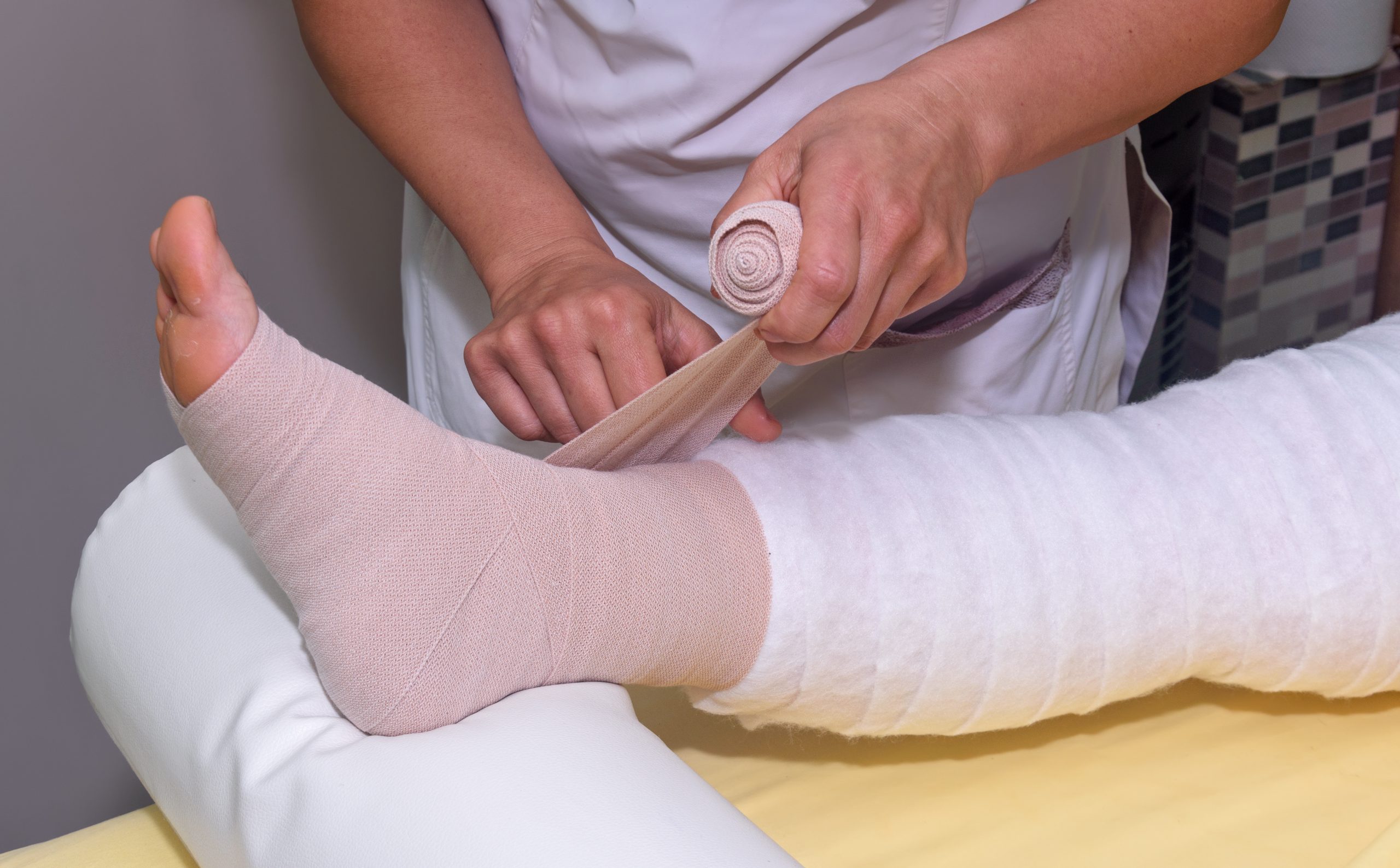
What is the Lymphedema Clinic?
Lymphedema does not respond to water tablets; it responds to a specific programme that moves fluid out of the limb and then keeps it out. The intensive phase uses manual lymphatic drainage - a gentle skin technique - followed by multi-layer bandaging, exercises and skin care, usually daily for a few weeks. The maintenance phase relies on fitted compression garments, self-care and periodic review.
Patients after breast, pelvic or other cancer surgery, with filarial lymphedema, or with congenital lymphedema are treated. Where swelling has another cause - veins, heart, kidneys - the vascular surgeon investigates and treats that. Therapy at the clinic is provided by Dr. Chaitali Patel, BPT, CLT.
The Lymphedema Clinic is part of the Department of Vascular & Endovascular Surgery. Therapy is given by the Clinical Lymph Therapist, and the vascular surgeon assesses the limb where another cause of swelling, such as a clot or vein problem, needs to be ruled out.
Who is the Lymphedema Clinic For?
The clinic sees patients with:
- Swelling of an arm or leg after cancer treatment See: lymphedema and limb swelling
- Filarial and other secondary lymphedema
- Congenital (primary) lymphedema See: lymphedema and limb swelling
- Swelling with repeated skin infections
- Lipoedema and mixed lymphatic-venous swelling, after diagnosis See: lymphedema and limb swelling · varicose veins
- Prevention advice and early treatment for patients at risk after lymph node surgery
Swelling is easier to control when it is treated early. If you are at risk after lymph node surgery, you are welcome at the clinic before swelling starts.
Your Lymphedema Therapy: Step by Step
Lymphedema care is a course of therapy, not an operation. It has an intensive phase followed by maintenance that you continue at home. This is the usual path through the clinic.
- Assessment
The therapist takes your history, examines the limb and measures it. Ultrasound or other tests are arranged to exclude clots and other causes, and the vascular surgeon investigates and treats swelling that has another cause.
- Your therapy plan
The therapist explains the programme, how often you need to attend and what you will learn to do yourself.
- The intensive phase
Manual lymphatic drainage, compression bandaging, decongestive exercises and skin care, several sessions a week for two to four weeks.
- Measuring and fitting garments
The limb is measured again to check the improvement, and compression garments are fitted.
- Maintenance and review
Daily garments, self-drainage and exercise taught to you, with review visits to re-measure the limb and adjust garments.
What Happens During Lymphedema Therapy
Assessment: history, examination, limb measurements, and ultrasound or other tests to exclude clots and other causes
Intensive phase: manual lymphatic drainage, compression bandaging, decongestive exercises and skin care, several sessions a week for two to four weeks
Measurement of improvement and fitting of compression garments
Maintenance phase: daily garments, self-drainage and exercise taught to the patient, with review visits
Treatment of infections and advice on avoiding injury to the limb
What you will feel - and what you won't. There are no needles, cuts or anaesthesia in lymphedema therapy. Manual lymphatic drainage is a gentle skin technique and should not hurt. Multi-layer bandages and compression garments feel firm and take some getting used to, but they should not be painful - tell the therapist if a bandage or garment feels too tight, numb or uncomfortable, because it may need adjusting.
How to Prepare for Your First Clinic Visit
- Bring your reports. Bring reports of previous surgery, radiotherapy or scans. Your medicine list helps too.
- What to wear. Wear loose clothing; the limb needs to be accessible.
- Tell the therapist about your health. Tell the therapist about heart, kidney or skin conditions and any infection.
These are general points. The written instructions you receive from the hospital for your own procedure take priority - see also Patient Information.
After the Intensive Phase: Garments, Exercise & Skin Care
Compression every day. Wear the compression garment every day as advised; replace it when it loses elasticity.
Keep up the routine. Continue the exercises and skin care taught in the clinic.
Protect the limb. Treat any cut or infection of the limb promptly and report fever with redness.
Review visits. Review visits to re-measure and adjust garments.
Is Lymphedema Therapy Safe?
Therapy is safe and gentle. Compression must be fitted correctly; poorly fitting bandages or garments can cause discomfort or skin problems, which the therapist checks for.
Therapy is adjusted or paused during active infection, clot or heart failure.
Contact the hospital if the limb becomes red, hot and painful or you develop fever, as this can be an infection that needs prompt treatment.
After a procedure, contact the hospital at once for severe pain, fever, vomiting, bleeding or breathlessness: Emergency 24×7: 90333 62020
Alternatives to Lymphedema Therapy
Compression garments alone for very mild swelling.
Surgical options - lymphaticovenous bypass, lymph node transfer or reduction surgery - for selected patients, discussed with the vascular surgeon.
Treatment of the underlying venous or medical cause where that is responsible.
Why Choose Gujarat Hospital for Lymphedema Care
Lymphedema is controlled by a careful therapy programme and by making sure nothing else is causing the swelling. At Gujarat Gastro & Vascular Hospital, Adajan, Surat:
- Therapy by a Clinical Lymph Therapist. Dr. Chaitali Patel, Clinical Lymph Therapist (BPT, CLT), runs the clinic and treats primary lymphedema and secondary lymphedema after cancer treatment.
- The vascular surgeon in the same department. Dr. Ankur Patel, Vascular & Endovascular Surgeon, assesses swelling that may have another cause, such as a clot or vein problem, and discusses surgical options for selected patients.
- Complete decongestive therapy, not water tablets. Manual lymphatic drainage, compression bandaging, exercise and skin care, followed by fitted garments and self-care you are taught to continue at home.
- Care for patients after cancer treatment. Patients with swelling after breast, pelvic or other cancer surgery are treated, and those at risk after lymph node surgery can come for advice before swelling starts.
Frequently Asked Questions about the Lymphedema Clinic
How long does treatment take?
The intensive phase is usually two to four weeks, followed by lifelong maintenance with garments and self-care that takes a few minutes a day.
Do I need a referral to come to the Lymphedema Clinic?
No. You can book an appointment through the hospital in the usual way. Bring reports of any previous surgery, radiotherapy or scans to your first visit.
Will the swelling go completely?
Most patients see a large reduction and keep it controlled. Long-standing lymphedema with hard tissue changes improves more slowly.
Why is a vascular surgeon involved in lymphedema care?
Not every swollen limb is lymphedema. A clot, a vein problem, or heart or kidney disease can also cause swelling, and these need different treatment. The vascular surgeon investigates and treats such causes, while the therapy itself is given by the Clinical Lymph Therapist.
Can lymphedema after breast cancer be prevented?
The risk can be reduced with early advice, exercise, care of the arm and prompt treatment of early swelling - which is why patients at risk are welcome at the clinic before problems start.
Can I exercise and do housework with lymphedema?
Yes, and gentle exercise is part of treatment because muscle movement pumps lymph out of the limb. Wear the compression garment during activity, build up gradually, and avoid heavy carrying or repetitive strain on the swollen limb until the therapist advises. Protect the skin with gloves for housework and gardening, since cuts can lead to infection.
Is surgery an option for lymphedema?
For selected patients, surgical options such as lymphaticovenous bypass, lymph node transfer or reduction surgery can be discussed with the vascular surgeon. For most patients, therapy and compression garments are the main treatment.
Is it safe to have injections or blood pressure checks on the swollen arm?
Where possible, blood tests, injections, drips and blood-pressure cuffs should be done on the other arm, because a puncture or tight cuff can trigger swelling or infection in an arm with lymphedema or at risk of it. Tell hospital staff and laboratory technicians about your lymphedema before any procedure. If both arms are affected, ask the clinic which is safer to use.
The information on this page is for general patient education and does not replace individual medical advice, diagnosis or treatment. Medical Disclaimer