
Deep Vein Thrombosis (DVT) Care in Surat What to Expect
DVT care covers rapid diagnosis by ultrasound, anticoagulant treatment, catheter-based removal of large clots where appropriate, prevention of pulmonary embolism, and long-term care of the leg to prevent post-thrombotic swelling and ulcers.
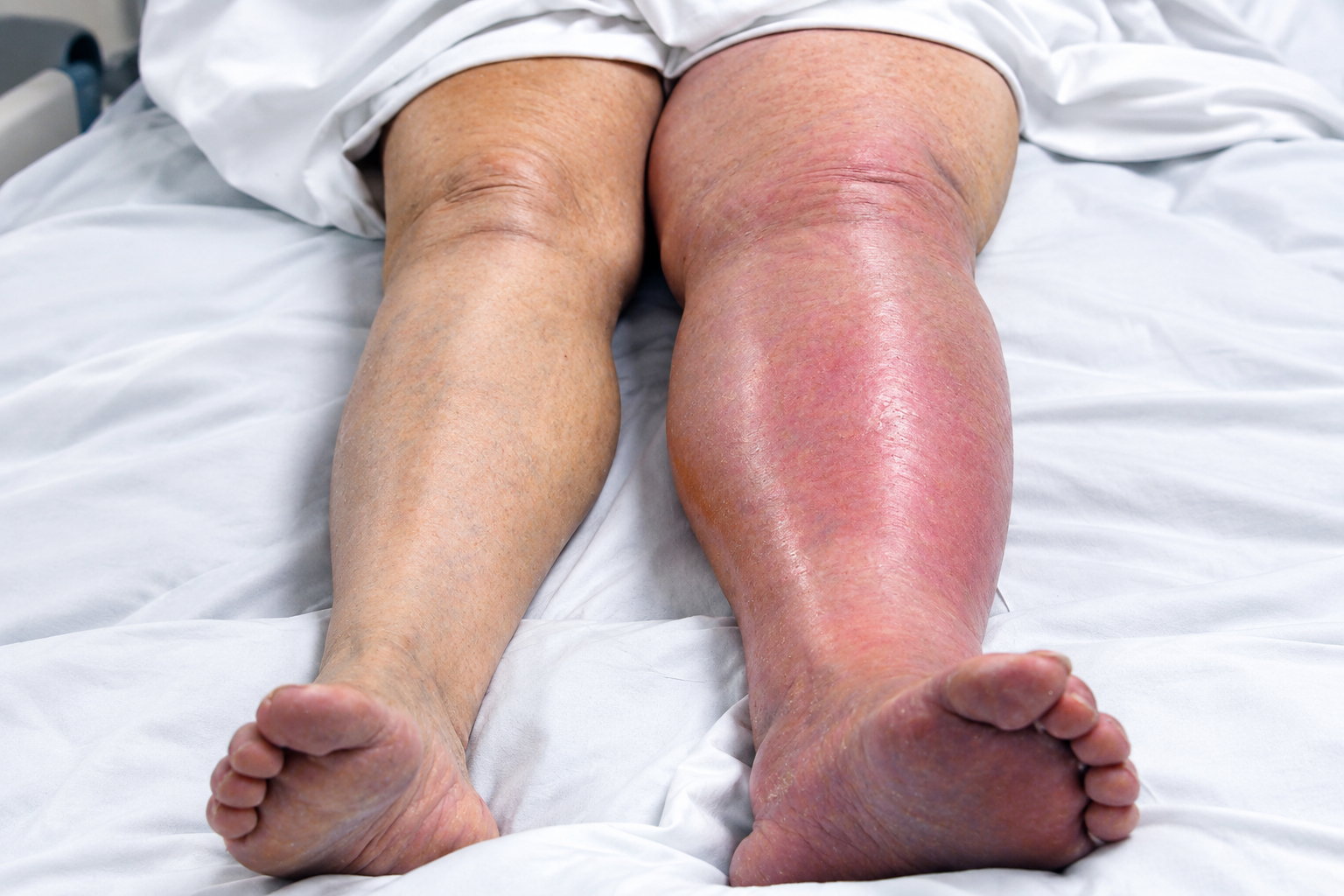
What is DVT Care?
Most deep vein thromboses are treated with blood-thinning tablets started the same day, with the patient walking and at home. For extensive clots in the thigh and pelvis - which carry the highest risk of long-term leg damage - dissolving or removing the clot through a catheter in the Cathlab restores flow quickly and protects the vein's valves.
Our vascular team at Adajan provides same-day duplex ultrasound, decides on the treatment, and follows up to determine how long anticoagulation is needed and to manage any long-term swelling.
Sudden breathlessness or chest pain in a person with a DVT, or with a swollen leg, can mean a clot has travelled to the lungs (pulmonary embolism). This is an emergency: come to the 24×7 emergency department at Gujarat Gastro & Vascular Hospital straight away rather than waiting for a clinic appointment.
When Do You Need DVT Care?
You may need DVT care for:
- Suspected DVT: a swollen, painful leg, especially after surgery, immobility, travel or in pregnancy See: deep vein thrombosis (DVT)
- Confirmed DVT needing anticoagulation and follow-up See: deep vein thrombosis (DVT)
- Extensive iliofemoral DVT for catheter-directed treatment
- Patients who cannot take blood thinners, for consideration of a filter
- Post-thrombotic syndrome - swelling, pain or ulcers after a previous DVT See: lymphedema and limb swelling · leg ulcers
A swollen, painful leg after surgery, a long journey, a period of bed rest or in pregnancy should be checked the same day. Sudden breathlessness or chest pain needs the emergency department at once.
Your DVT Care: Step by Step
For most people DVT care is an outpatient course of treatment with tablets, not an operation. Catheter treatment is added only for large clots in the thigh and pelvis. This is the usual path from the first scan to follow-up.
- Same-day assessment
If a DVT is suspected you are seen the same day. A duplex ultrasound confirms the clot and its extent, with blood tests, and a CT scan if pulmonary embolism is suspected.
- Starting treatment
Anticoagulation - tablets or injections - is started at once. Most patients go home the same day, walking normally.
- Catheter treatment for large clots
For extensive thigh and pelvic clots, the clot is dissolved or removed through a catheter placed in the vein in the Cathlab, under local anaesthetic and sedation; a narrowing in the vein may be stented. This needs admission. If blood thinners cannot be taken, an IVC filter may be placed.
- Recovery at home
You walk normally, elevate the leg when resting, take the anticoagulants exactly as prescribed and wear compression stockings if advised.
- Follow-up
Follow-up decides how long anticoagulation continues and checks the leg's recovery and any long-term swelling - at Adajan or at the OPD nearest you.
How a DVT is Diagnosed and Treated
Duplex ultrasound to confirm the clot and its extent; blood tests; CT if pulmonary embolism is suspected
Anticoagulation: tablets or injections started at once, continued for three to six months or longer
Catheter-directed thrombolysis or thrombectomy for large clots: under local anaesthetic and sedation in the Cathlab, a catheter is placed in the vein and clot-dissolving medicine infused or the clot removed mechanically; a narrowing in the vein may be stented
IVC filter placement when anticoagulation is not possible
Compression and a walking programme
What you will feel - and what you won't. The duplex ultrasound is painless - a probe with gel is moved over the leg, with some pressure over the veins. Blood-thinning tablets or injections are started without any procedure. If catheter treatment is needed, it is done under local anaesthetic and sedation through a puncture into the vein, not an open cut, so you feel the numbing injection and little else. The swollen leg usually becomes more comfortable over the following weeks as flow returns.
How to Prepare for Your DVT Assessment
- Do not wait. Come for assessment the same day if a DVT is suspected - do not wait. Sudden breathlessness or chest pain needs the 24×7 emergency department straight away.
- Tell the team everything. Tell the team about all medicines, previous clots, pregnancy and any bleeding problems.
- If catheter treatment is planned. For catheter procedures: fasting and blood tests as advised.
These are general points. The written instructions you receive from the hospital for your own procedure take priority - see also Patient Information.
After a DVT: Blood Thinners, Compression & Recovery
Keep moving. Walk normally; elevate the leg when resting.
Blood thinners. Take anticoagulants exactly as prescribed and attend for monitoring where required.
Compression. Wear compression stockings if advised.
Warning signs. Report any bleeding, worsening swelling, chest pain or breathlessness immediately. Sudden breathlessness or chest pain should be seen in the 24×7 emergency department at once.
Follow-up. Follow-up decides the duration of treatment and checks the leg's recovery. Follow-up visits can be at Adajan or at the OPD nearest you.
Is DVT Treatment Safe?
Anticoagulants carry a risk of bleeding, which is balanced against the risk of the clot.
Catheter-directed treatment adds risks of bleeding and, rarely, of clot movement; it is used where the benefit clearly outweighs them.
Filters can themselves cause problems and are removed when no longer needed.
Contact the hospital immediately - or come straight to the 24×7 emergency department - if you develop sudden breathlessness, chest pain or cough with blood, or unusual bleeding while on blood thinners.
After a procedure, contact the hospital at once for severe pain, fever, vomiting, bleeding or breathlessness: Emergency 24×7: 90333 62020
Alternatives to Catheter Treatment for DVT
Anticoagulation alone, which is appropriate for most DVTs.
Observation with repeat scans for small calf clots in some situations.
Why Choose Gujarat Hospital for DVT Care
DVT care depends on a quick scan, the right treatment started at once, and a clear plan for how long it continues. At Gujarat Gastro & Vascular Hospital, Adajan, Surat:
- Same-day duplex ultrasound. A suspected DVT is scanned the same day, so treatment can begin without delay.
- A vascular and endovascular surgeon who treats clots. Dr. Ankur Patel, Vascular & Endovascular Surgeon, performs catheter-directed thrombolysis and surgery for clots.
- Catheter treatment in the Hybrid Operation Theatre & Cathlab. For extensive thigh and pelvic clots, the vein can be imaged and the clot dissolved or removed in the same room, in the same sitting, with a stent placed in a narrowed vein where needed.
- Follow-up for the long term. The team decides how long blood thinners are needed and manages any long-term swelling, with the department's Lymphedema Clinic for limb swelling on the same campus.
Frequently Asked Questions about DVT Care
Do I need to be admitted?
Most patients with a DVT are treated as outpatients with tablets. Admission is for extensive clots, suspected pulmonary embolism, or when catheter treatment is planned.
What should I do if I suddenly feel breathless or have chest pain?
Treat it as an emergency. Sudden breathlessness or chest pain in a person with a DVT or a swollen leg can mean a clot has reached the lungs (pulmonary embolism). Come to the 24×7 emergency department at the hospital in Adajan straight away, or call for emergency help - do not wait for a clinic appointment.
When is catheter treatment used?
For large clots in the thigh and pelvis in patients with a low bleeding risk, ideally within the first two weeks, to prevent long-term leg problems.
How is a DVT diagnosed?
A duplex ultrasound of the leg confirms the clot and shows how far it extends. Blood tests are done at the same time, and a CT scan is added if a clot in the lungs is suspected. The scan is done the same day, so treatment can start straight away.
Can DVT be prevented?
Yes - by moving early after surgery, staying hydrated and mobile on long journeys, and, in hospital, with preventive injections and stockings where indicated.
How long will I need to take blood thinners?
Usually three to six months for a first DVT with a clear cause such as surgery or travel. A clot without an obvious cause, a repeat clot or an ongoing risk factor may mean longer or lifelong treatment. The duration is decided at follow-up after weighing the risk of another clot against the risk of bleeding.
What is an IVC filter and will I need one?
An IVC filter is a small device placed in the main vein of the abdomen to catch clots before they reach the lungs. It is considered only for patients who cannot take blood thinners. Filters can themselves cause problems, so they are removed when no longer needed.
Will my leg swelling go away after a DVT?
In most patients the swelling settles over weeks as the clot dissolves and flow returns, helped by walking, compression stockings and elevating the leg when resting. Some patients, particularly after extensive thigh or pelvic clots, are left with long-term swelling, aching or skin changes known as post-thrombotic syndrome. Early treatment and regular follow-up reduce this risk.
The information on this page is for general patient education and does not replace individual medical advice, diagnosis or treatment. Medical Disclaimer