
Diabetic Foot Care in Surat What to Expect
Diabetic foot care combines assessment of nerves and circulation, restoration of blood supply where arteries are blocked, control of infection, wound care and offloading, and prevention - with the aim of healing ulcers and avoiding amputation.
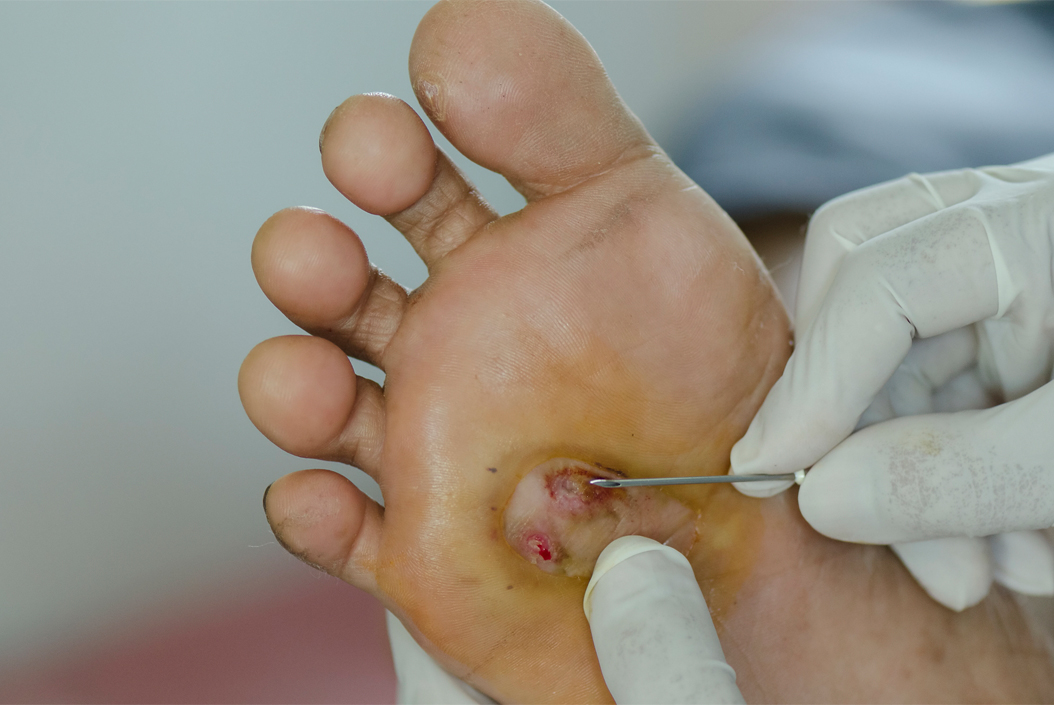
What is Diabetic Foot Care?
A foot wound in diabetes needs three things to heal: enough blood, control of infection and removal of pressure. Our vascular team at Adajan assesses all three at the first visit. Where the arteries are narrowed, blood flow is restored by angioplasty or bypass; infection is treated with antibiotics and, where necessary, surgical cleaning; and the wound is protected with dressings and offloading footwear or casts.
Diabetes control, kidney and heart health, and stopping smoking are managed with your physician. After healing, preventive care - inspection, footwear, nail and skin care - keeps the foot safe.
At Gujarat Gastro & Vascular Hospital, angioplasty and bypass can be done in the Hybrid Operation Theatre & Cathlab - an operating room with a catheterisation lab built in - so that blood flow can be restored and the foot treated by the same vascular team.
When Does a Diabetic Foot Need Specialist Care?
Your doctor may refer you for diabetic foot care if you have:
- A foot ulcer, blister or wound in a person with diabetes See: diabetic foot · leg ulcers
- Foot infection, with or without an ulcer See: diabetic foot
- Numbness, deformity or calluses that put the foot at risk
- Poor circulation found on examination or Doppler See: blocked leg arteries · critical limb ischemia
- Non-healing wounds after minor surgery or injury See: leg ulcers
Do not wait for a foot wound to hurt. Numb feet often hide a wound until it is deep or infected, so any new wound in a person with diabetes should be seen promptly.
Your Diabetic Foot Care: Step by Step
Diabetic foot care is a course of treatment rather than a single operation. This is the usual path from the first visit to long-term prevention; what you need depends on your circulation, any infection and the wound itself.
- Assessment at the first visit
The vascular team checks sensation, pulses and the ankle-brachial index, probes the wound and arranges an X-ray or MRI if bone infection is suspected. A Doppler scan may be done to look at the circulation.
- The treatment plan
The team explains whether the foot needs blood flow restored, infection treated, wound care and offloading - or a combination - and agrees the plan with you.
- Restoring blood flow and controlling infection
Where arteries are blocked, angioplasty and stenting through a small puncture in the Cathlab, bypass surgery, or both combined in the Hybrid Operation Theatre. Infection is treated with cultures, antibiotics and, where needed, surgical removal of dead or infected tissue.
- Wound care and offloading
Dressings chosen for the wound, and special footwear, boots or casts to keep weight off it. The wound is reviewed at short intervals until it heals.
- Follow-up and prevention
After revascularisation, follow-up scans check that the arteries remain open. Once the foot has healed, protective footwear, podiatry and regular foot checks continue - at Adajan or at the OPD nearest you.
What Happens During Diabetic Foot Treatment
Assessment: sensation testing, pulses, ankle-brachial index, wound probing and X-ray or MRI if bone infection is suspected
Restoring blood flow: angioplasty and stenting through a small puncture in the Cathlab, or bypass surgery, or both combined in the Hybrid Operation Theatre
Infection control: cultures, antibiotics and surgical removal of dead or infected tissue
Wound care: dressings chosen for the wound, and offloading with special footwear, boots or casts
Where tissue cannot be saved, limited removal of a toe or part of the foot, preserving as much function as possible
Prevention: footwear, podiatry and education
What you will feel - and what you won't. Many people with a diabetic foot wound feel very little from it, because diabetes can damage the nerves in the feet - this is why the wound needs checking even when it does not hurt. Wound probing and dressing changes are usually uncomfortable rather than painful. Angioplasty is done through a small puncture rather than a cut, while bypass surgery and surgical cleaning of the wound involve an incision; the team explains the anaesthetic for any procedure beforehand. Offloading footwear or a cast can feel awkward at first, but it is one of the most important parts of healing.
How to Prepare for Your Diabetic Foot Visit
- What to bring. Bring your blood-sugar records, medicines and any previous scans or wound reports. A photo ID and your medicine list help the team at registration.
- Protect the foot until you are seen. Do not walk barefoot or apply home remedies to the wound before the visit.
- If a procedure is planned. For procedures: fasting and medicine instructions from the team.
These are general points. The written instructions you receive from the hospital for your own procedure take priority - see also Patient Information.
After Treatment: Healing & Keeping the Foot Safe
Wound reviews. Wounds are reviewed at short intervals until healed.
Keep weight off the wound. Keep weight off the wound as instructed - this is often the deciding factor.
Medicines. Antibiotics are completed as prescribed.
Checking the arteries. After revascularisation, follow-up scans check that the arteries remain open.
For life. Once healed, protective footwear and regular foot checks continue for life. Follow-up visits can be at Adajan or at the OPD nearest you.
Is Diabetic Foot Treatment Safe?
Procedures to restore blood flow carry the risks of angioplasty or bypass, discussed beforehand.
Wound infection can worsen despite treatment; early review is essential.
Some wounds heal slowly over months; patience and adherence to offloading matter.
Contact the hospital if the foot becomes more red, swollen, painful or smelly, if the wound drains more, or if you develop fever or high blood sugars.
After a procedure, contact the hospital at once for severe pain, fever, vomiting, bleeding or breathlessness: Emergency 24×7: 90333 62020
Alternatives to Diabetic Foot Surgery
Where the blood supply is adequate, wound care and offloading alone may heal the ulcer.
Where the limb cannot be saved, amputation at the lowest possible level with rehabilitation.
Why Choose Gujarat Hospital for Diabetic Foot Care
A diabetic foot heals when circulation, infection and pressure are treated together, by a team that can do all three. At Gujarat Gastro & Vascular Hospital, Adajan, Surat:
- A vascular and endovascular surgeon who does diabetic foot surgery. Dr. Ankur Patel, Vascular & Endovascular Surgeon, performs diabetic foot surgery, peripheral angiography and angioplasty, and bypass surgery of leg vessels.
- Blood flow restored in the Hybrid Operation Theatre & Cathlab. The team can image the arteries and operate in the same room, in the same sitting - so angioplasty and bypass can be combined where one alone is not enough, without moving you between separate facilities.
- Treatment chosen for your foot, not a fixed route. Care ranges from wound care and offloading to catheter-based procedures and open surgery. Where the blood supply is adequate, wound care and offloading alone may be enough.
- Saving as much of the foot as possible. Where tissue cannot be saved, removal is limited to a toe or part of the foot, preserving as much function as possible, followed by footwear, podiatry and education to protect the foot.
Frequently Asked Questions about Diabetic Foot Care
Can I keep walking on my ulcer?
Walking on it prevents healing. Offloading - special footwear or a cast - is one of the most important parts of treatment, and the team will arrange it.
Why does the vascular team check my circulation for a foot wound?
A wound needs enough blood to heal. In diabetes the leg arteries are often narrowed, and a wound with poor blood supply may not heal however well it is dressed. Checking the pulses, the ankle-brachial index and, if needed, a Doppler scan tells the team whether blood flow has to be restored first.
Will I lose my foot?
Most ulcers heal with proper care, particularly when blood supply is restored and infection controlled early. The earlier you come, the better the outcome.
Will I need an operation for my diabetic foot?
Not always. Where the blood supply is adequate, wound care and offloading alone may heal the ulcer. Angioplasty, bypass or surgical cleaning of infected tissue are used when the foot needs them, and the team explains why before anything is done.
How often should a diabetic have their feet checked?
At least once a year by a professional, and every day by yourself or a family member.
Why did I not feel the wound on my foot?
Long-standing diabetes can damage the nerves in the feet, so cuts, blisters and pressure sores do not hurt as they would in a person with normal sensation. This is why a wound can become deep or infected before it is noticed. Numbness in the feet is a sign that daily inspection and protective footwear are needed even when there is no wound.
Can I go to my nearest OPD for wound reviews?
Follow-up visits can be at Adajan or at the OPD nearest you in Varachha, Bharuch, Navsari or Vapi. Procedures such as angioplasty, bypass and surgical cleaning of the wound are done at the main hospital in Adajan. Your doctor will tell you where each review should be.
What should I look for when checking my feet at home?
Look every day at the soles, between the toes and around the heels - using a mirror or with help from a family member - for cuts, blisters, cracks, redness, swelling, warmth, colour change or discharge. Check inside shoes for stones or rough edges before wearing them. Any new wound, or redness that does not settle overnight, should be seen by the team promptly rather than treated at home.
The information on this page is for general patient education and does not replace individual medical advice, diagnosis or treatment. Medical Disclaimer