
Colorectal and Ano-rectal Surgery in Surat What to Expect
Colorectal surgery treats diseases of the colon, rectum and anus - from piles, fissures and fistulas to diverticular disease, inflammatory bowel disease and cancer. Our colorectal and ano-rectal surgeon uses day-case techniques for anal conditions and laparoscopic or robotic surgery for the bowel.
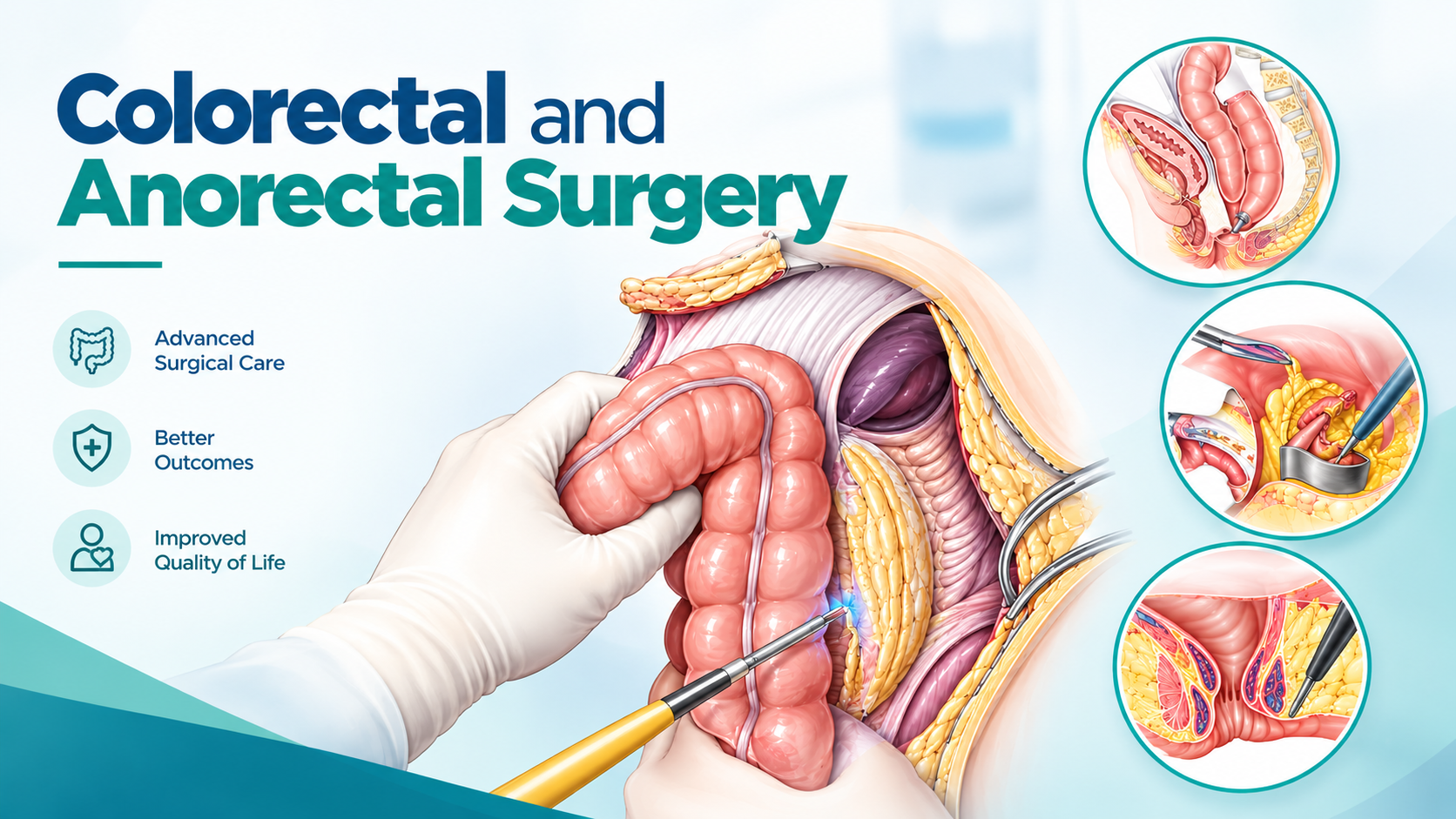
What is Colorectal and Ano-rectal Surgery?
Ano-rectal conditions are common and often left untreated for years out of embarrassment; most are cured by short procedures with modern, less painful techniques. Bowel operations - removing a diseased segment and rejoining the ends - are now mostly performed through small incisions, with faster recovery and, for cancer, results equal to open surgery.
Care is coordinated with our gastroenterologists at Adajan, who diagnose these conditions at colonoscopy and manage inflammatory bowel disease medically. Protecting continence is a priority in every anal procedure.
At Gujarat Gastro & Vascular Hospital in Adajan, Surat, piles, fissure, fistula and rectal prolapse are treated by a colorectal and anorectal surgeon, and operations on the colon and rectum are done laparoscopically or with the surgical robot in suitable patients. Surgery is never the first step: ointments, banding and dietary measures are tried for early piles and fissures, and the operation is decided with you after examination and, where needed, colonoscopy or MRI.
When is Colorectal or Ano-rectal Surgery Needed?
Your surgeon may recommend an operation for:
- Piles, anal fissure, anal fistula and abscess See: piles, fissure and fistula
- Colon and rectal cancer See: cancers of the digestive system · colon and rectal conditions
- Diverticular disease with complications or repeated attacks See: colon and rectal conditions
- Ulcerative colitis or Crohn's disease needing surgery See: ulcerative colitis and Crohn's disease
- Rectal prolapse and pelvic-floor problems See: colon and rectal conditions
- Bowel obstruction and other emergencies
Surgery is never the first step. Early piles and fissures are treated with ointments, banding and dietary measures, inflammatory bowel disease and mild diverticulitis with medicines, and polyps and early tumours are removed at colonoscopy. The reason for an operation is explained to you before consent.
Your Colorectal Surgery Visit or Stay: Step by Step
Ano-rectal procedures are day cases; bowel operations mean a hospital stay of a few days. This is the usual path from the first consultation to follow-up. Emergencies such as bowel obstruction are assessed round the clock and follow a shorter path.
- Examination and decision
The surgeon examines you and arranges colonoscopy or imaging as needed - MRI for complex fistulas or rectal cancer. The operation, the possibility of a stoma and the effects on bowel function are discussed, and you decide together whether surgery is the right step.
- Preparation and anaesthetic check
Bowel preparation or an enema as instructed, fasting and medicine adjustments, and an anaesthetic assessment. You receive written instructions on fasting and your regular medicines.
- Admission
Admission at the main hospital in Adajan, fasting as instructed.
- The operation
Ano-rectal procedures are done under short general or regional anaesthesia - banding, haemorrhoidectomy, stapled or laser procedures for piles, sphincterotomy for fissure, and laying open, seton or sphincter-preserving repair for fistula. Bowel resection and prolapse repair are done under general anaesthesia, laparoscopically or robotically (described in the next section).
- Going home and follow-up
After ano-rectal surgery you go home the same day with pain relief, laxatives and warm baths. After bowel surgery you walk the next day, stay a few days and return to diet gradually. Follow-up to check healing, and after cancer surgery to plan further treatment, is at Adajan or at the OPD nearest you.
What Happens During Colorectal and Ano-rectal Surgery
Ano-rectal procedures: under short general or regional anaesthesia, as day cases - banding, haemorrhoidectomy, stapled or laser procedures for piles; sphincterotomy for fissure; laying open, seton, or sphincter-preserving repair for fistula
Bowel resection: under general anaesthesia, laparoscopically or robotically, removing the affected segment with its lymph nodes and rejoining the bowel; a temporary stoma is occasionally needed to protect the join
Prolapse repair: fixing the rectum in place, usually laparoscopically
What you will feel - and what you won't. You feel nothing during the operation: ano-rectal procedures are done under a short general or regional anaesthetic and bowel operations under general anaesthesia. After an anal procedure there is some discomfort, most of all with the first few bowel motions, which is eased by pain relief, laxatives to keep the stools soft and warm baths; laser and other newer techniques cause less pain for suitable piles. After keyhole or robotic bowel surgery there is pain at the small wounds, controlled with regular pain relief so that you can walk the next day. The team tells you what to expect for your particular operation.
How to Prepare for Colorectal and Ano-rectal Surgery
- Tests before the operation. Examination and colonoscopy or imaging as needed; MRI for complex fistulas or rectal cancer.
- Bowel preparation. Bowel preparation or an enema as instructed.
- Fasting and medicines. Fasting and medicine adjustments. Please follow the written instructions exactly, especially for blood thinners and diabetes medicines.
- Understanding the operation. Discussion of the operation, the possibility of a stoma, and effects on bowel function.
These are general points. The written instructions you receive from the hospital for your own procedure take priority - see also Patient Information.
After Colorectal and Ano-rectal Surgery: Recovery & Bowel Function
After an ano-rectal procedure. Ano-rectal surgery: home the same day, with pain relief, laxatives and warm baths; some discomfort for one to two weeks.
After a bowel operation. Bowel surgery: walking the next day, hospital stay of a few days, gradual return to diet.
When to call us. Report bleeding, fever, difficulty passing urine or increasing pain.
Follow-up. Follow-up to check healing and, after cancer surgery, plan further treatment. Follow-up visits can be at Adajan or at the OPD nearest you.
Is Colorectal and Ano-rectal Surgery Safe?
Anal procedures: pain, bleeding, infection, and a small risk of impaired control, which sphincter-preserving techniques minimise.
Bowel surgery: bleeding, infection, leak at the join, clots, and the possibility of a stoma; explained before consent.
Contact the hospital if you develop fever, heavy bleeding, severe pain, vomiting or difficulty passing urine after you go home.
After a procedure, contact the hospital at once for severe pain, fever, vomiting, bleeding or breathlessness: Emergency 24×7: 90333 62020
Alternatives to Colorectal and Ano-rectal Surgery
Ointments, banding and dietary measures for early piles and fissures.
Medical treatment for inflammatory bowel disease and mild diverticulitis.
Endoscopic removal of polyps and early tumours.
Why Choose Gujarat Hospital for Colorectal and Ano-rectal Surgery
Ano-rectal problems are treated best where the surgeon does this work every week, and bowel surgery is safest where colonoscopy, the operation and the care afterwards are in one place. At Gujarat Gastro & Vascular Hospital, Adajan, Surat:
- A dedicated colon and ano-rectal surgeon. Dr. Sanket Sherekar, Consultant Colorectal and Anorectal Surgeon (FALS Robotic, MMAS Colorectal), performs laparoscopic and robotic colorectal surgery and ano-rectal surgery for piles, fissure, fistula, rectal prolapse, obstructed defaecation and incontinence. Dr. Naresh Gabani, Consultant Surgical Gastroenterologist & GI Robotic Surgeon, performs GI cancer and robotic surgery.
- Keyhole and robotic bowel surgery. Bowel resections and prolapse repair are done laparoscopically or robotically, with the robotic surgery system used for cancer operations on the colon and rectum in suitable patients. Open surgery is used where it is safer.
- Colonoscopy and IBD care on the same campus. The medical gastroenterology team diagnoses colon and rectal conditions at colonoscopy, removes polyps and early tumours endoscopically and manages ulcerative colitis and Crohn's disease with medicines - so you are offered an operation only when it is the right step, and the findings go straight into one plan.
- 24x7 emergency care for bowel obstruction and abscess. Bowel obstruction, anal abscess and other emergencies are assessed round the clock, with CT and ultrasound available and the operation theatres ready.
Frequently Asked Questions about Colorectal and Ano-rectal Surgery
Will I need a colostomy bag?
Most bowel operations do not need one. A temporary stoma is sometimes used to protect a low join in the rectum and is reversed later; your surgeon will tell you beforehand if this is likely.
Do I need to stay in hospital for piles, fissure or fistula surgery?
Usually not. Ano-rectal procedures are done as day cases under a short general or regional anaesthetic, and you go home the same day with pain relief, laxatives and advice on warm baths. Someone should take you home because of the anaesthetic. Bowel operations are different and mean a hospital stay of a few days.
Is laser treatment for piles better?
Laser and other newer techniques cause less pain for suitable piles; the best method depends on the grade and type. The surgeon will recommend one after examination.
Can colon and rectal surgery be done by robot?
Yes, in suitable patients. The robotic surgery system is used at Gujarat Hospital for cancer operations on the colon and rectum, with the surgeon at a console controlling instruments through small incisions. The segment removed and the lymph nodes taken are the same as in open surgery. The surgeon chooses laparoscopic, robotic or open surgery according to what is safest for you.
How is continence protected in fistula surgery?
By mapping the fistula with MRI where needed and choosing techniques that avoid cutting the muscle - setons, flaps, laser or plug procedures.
How do I manage bowel movements after piles or fissure surgery?
Keep the stools soft with the prescribed laxative, plenty of water and a high-fibre diet, and do not strain or sit for long on the toilet. A warm sitz bath after each motion eases pain and keeps the area clean; pat dry rather than rub. Some bleeding with the first few motions is expected, but heavy bleeding, fever or inability to pass urine should be reported.
I have had symptoms for years - is it too late to be treated?
No. Piles, fissures and fistulas are often put up with for years out of embarrassment, and most are still cured by short procedures with modern, less painful techniques. Bleeding or a change in bowel habit should always be checked first, usually by colonoscopy, so that the cause is known before any procedure. The examination is done privately and the options are explained to you plainly.
Will diverticulitis return after the affected bowel is removed?
Removing the diseased segment removes the pouches that were causing attacks, so recurrence in that area is very unlikely, although new pouches can form elsewhere in the colon over the years. A high-fibre diet and plenty of fluids reduce that risk. The surgeon will confirm from the pathology report and follow-up whether any further checks are needed.
The information on this page is for general patient education and does not replace individual medical advice, diagnosis or treatment. Medical Disclaimer