
PEG Feeding Tube Placement in Surat What to Expect
A PEG (percutaneous endoscopic gastrostomy) is a feeding tube placed directly into the stomach through the skin of the abdomen, guided by an endoscope. It provides nutrition, fluids and medicines for people who cannot swallow safely for a prolonged period.
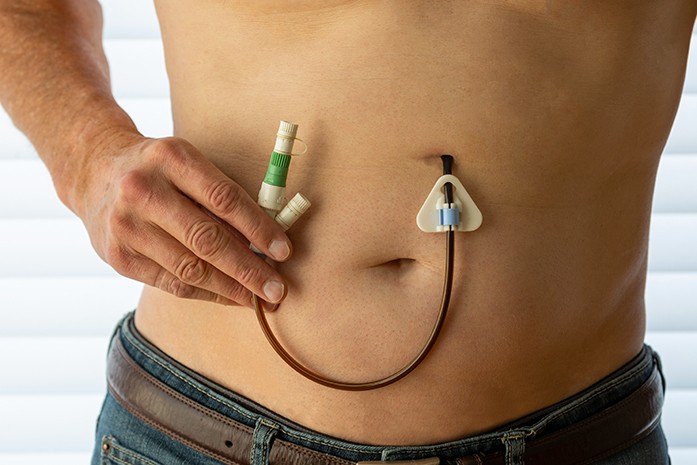
What is a PEG Tube?
When swallowing is unsafe or impossible - after a stroke, with neurological disease, or with a blockage of the throat or food pipe - a tube through the nose is uncomfortable for more than a few weeks. A PEG is more comfortable, more secure and easier for families to manage at home.
The procedure takes about twenty minutes under sedation. The endoscope shows the stomach from inside while the tube is passed through a small puncture in the abdominal wall. Our gastroenterologists at Adajan place PEG tubes and train patients and carers in their use.
When is a PEG Tube Needed?
A PEG tube may be advised for:
- Inability to swallow safely after a stroke or with neurological disease, when feeding is likely to be needed for more than a few weeks See: difficulty swallowing
- Blockage of the throat or food pipe by a tumour, or during treatment for head and neck cancer
- Severe malnutrition when oral intake is insufficient
- Occasionally, to drain the stomach when the bowel is blocked
The decision to place a PEG is made with the patient and family, after discussing the goals of feeding and the alternatives - it is a way of giving nutrition safely, and it can be removed if swallowing recovers.
Your PEG Placement Visit: Step by Step
PEG placement is a short procedure of about twenty minutes under sedation, usually with a brief stay so that feeding can be started and the family taught.
- The decision
The team discusses with the patient and family why feeding is needed, for how long, and the alternatives, before consent.
- Before the day
Blood tests for clotting; blood thinners are stopped as advised.
- Arrival and preparation
At the main hospital in Adajan, sedation is given through a small cannula and antibiotics are administered to prevent infection; pulse, oxygen and blood pressure are monitored throughout.
- The procedure
About twenty minutes in the endoscopy suite (described in the next section).
- Feeding, teaching and going home
Feeding usually starts within hours. A dietitian sets the feeding plan, and the team teaches the family site care and flushing before discharge.
What Happens During PEG Tube Placement
Sedation is given and antibiotics are administered to prevent infection
The endoscope is passed into the stomach and the stomach is inflated
The endoscope light is seen through the abdominal wall, showing the safe spot
A needle and guide wire are passed through the skin into the stomach
The tube is pulled through the mouth into position and secured at the skin
The procedure takes about twenty minutes
What the patient will feel - and what they won't. Under sedation the patient feels nothing during the placement; the puncture in the abdominal wall is made through numbed skin. Afterwards there is some soreness at the site for a few days, like a small wound, which settles. The tube itself is not felt once the site has healed, and it is far more comfortable than a tube through the nose.
How to Prepare for PEG Placement
- Blood tests and blood thinners. Blood tests for clotting; blood thinners are stopped as advised.
- A shared decision. The decision to place a PEG is discussed with the patient and family, including the goals of feeding and the alternatives.
These are general points. The written instructions you receive from the hospital for your own procedure take priority - see also Patient Information.
After PEG Placement: Feeding, Care & Follow-up
The first hours. Feeding usually starts within hours. Some soreness at the site for a few days.
Learning the care. The skin site is cleaned daily and the tube flushed after each use - the team teaches this before discharge. A dietitian sets the feeding plan.
Living with the tube. The tube can stay in place for months or years and is replaced when needed; it can also be removed if swallowing recovers.
Is PEG Placement Safe?
Infection at the skin site is the commonest problem and is treated with antibiotics.
Bleeding, leakage around the tube, and, rarely, injury to nearby organs or peritonitis can occur.
The tube can block or dislodge; the team explains what to do.
Contact the hospital if the tube blocks or comes out, or if you develop fever, severe abdominal pain, bleeding or spreading redness at the skin site.
After a procedure, contact the hospital at once for severe pain, fever, vomiting, bleeding or breathlessness: Emergency 24×7: 90333 62020
Alternatives to a PEG Tube
Nasogastric tube feeding for short-term needs.
Radiologically inserted gastrostomy when endoscopy is not possible.
Intravenous nutrition in specific situations.
Why Choose Gujarat Hospital for PEG Placement
A PEG is as much about the care around it - the decision, the teaching and the follow-up - as the twenty-minute procedure. At Gujarat Gastro & Vascular Hospital, Adajan, Surat:
- An honest discussion before any tube. Our gastroenterologists talk through the goals of feeding and the alternatives with the patient and family first, so a PEG is placed only when it is the right thing.
- Placed under sedation with endoscopic guidance and monitoring, with antibiotics to prevent infection, in the endoscopy suite at Adajan - about twenty minutes.
- Families taught before going home. Feeding, flushing and site care are taught by the team, a dietitian sets the feeding plan, and the team is available when questions come up at home.
- Follow-up and tube changes by the same team. Tubes are replaced when needed and removed if swallowing recovers - and if a tube ever comes out, the hospital is open 24×7.
Frequently Asked Questions about PEG Tubes
Can the patient still eat by mouth with a PEG?
Sometimes, if swallowing is partly safe - the speech and swallow therapist advises. The PEG then tops up what is taken by mouth.
Will the patient be asleep?
The procedure is done under sedation - the patient is drowsy and comfortable, breathing on their own, and feels nothing during the placement. They are monitored throughout.
Is it permanent?
No. If swallowing recovers, the tube is simply removed and the opening closes within days.
How long will the patient be in hospital?
Usually a short stay - long enough to start feeding, make sure the site is settled, and teach the family the care. Your doctor confirms the plan before the procedure.
Can we manage the tube at home?
Yes. Feeding, flushing and site care are straightforward once taught, and the team is available for problems.
Can medicines be given through the PEG tube?
Yes. Liquid preparations are preferred; some tablets can be crushed and dissolved, but slow-release, enteric-coated and certain other tablets must not be crushed. The tube is flushed with water before and after each medicine to prevent blocking. Ask the pharmacist or the team which of the patient's medicines are suitable before giving them through the tube.
Who helps us once we are home?
The team teaches feeding, flushing and site care before discharge, a dietitian sets the feeding plan, and you can call the hospital with questions. Tube changes and follow-up are arranged with the same gastroenterologists.
What should we do if the tube comes out at home?
Cover the site with a clean dressing and come to the hospital the same day, bringing the tube if possible. The opening can begin to close within hours, so it should not be left until the next day. Do not try to push the tube back in unless the team has taught you to, and do not give feeds until a tube has been placed.
The information on this page is for general patient education and does not replace individual medical advice, diagnosis or treatment. Medical Disclaimer