
Endoscopic Sleeve Gastroplasty (ESG) in Surat What to Expect
Endoscopic sleeve gastroplasty reduces the size of the stomach from inside, using an endoscopic suturing device, without any incision. It is a weight-loss option for suitable patients who want an alternative to surgery.
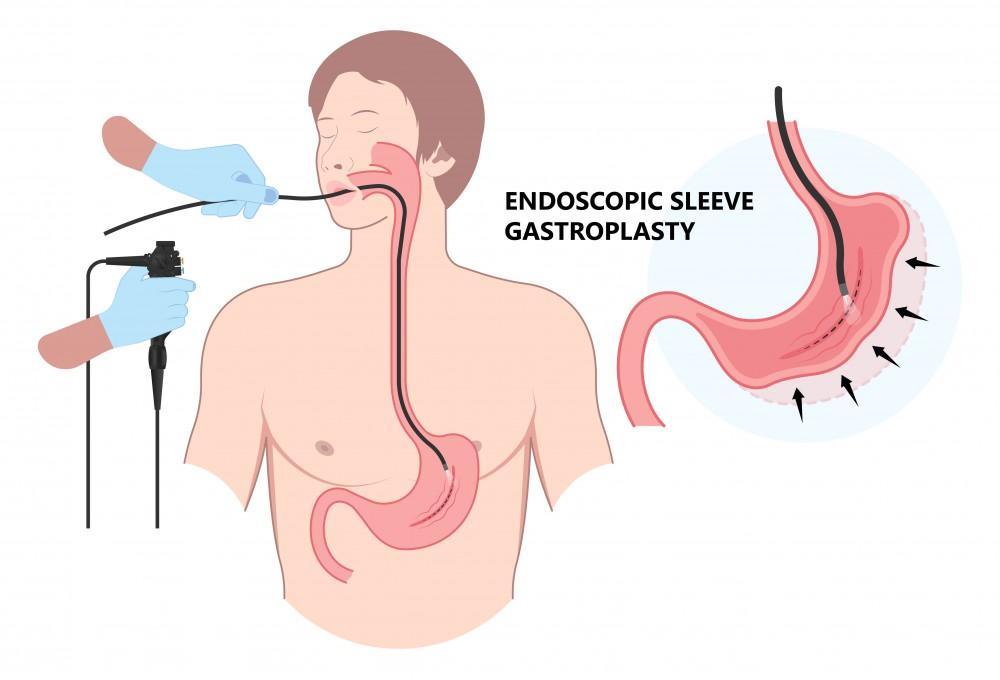
What is Endoscopic Sleeve Gastroplasty?
Through an endoscope passed via the mouth, a suturing device places stitches along the stomach wall to gather it into a narrow sleeve. The stomach holds less, empties more slowly, and hunger is reduced. Because nothing is removed and there are no incisions, recovery is quick.
ESG produces less weight loss than surgical sleeve gastrectomy but carries fewer risks, and it can be a first step for patients with lower body mass index or those not suitable for surgery. Assessment, dietetic support and follow-up are the same as for bariatric surgery, and our medical gastroenterologist works with the bariatric surgical team at Adajan.
Who is ESG Suitable For?
ESG may be suitable for:
- Obesity in patients who meet the criteria for endoscopic treatment, particularly with weight-related conditions See: bariatric (weight-loss) surgery
- Patients who are not suitable for, or do not want, bariatric surgery
- As part of a comprehensive weight-management programme
Suitability is decided after the full bariatric assessment - the team will tell you honestly whether ESG, surgery, medicines or a structured programme is the right first step for you.
Your ESG Visit: Step by Step
ESG is a planned procedure of one to two hours; most patients go home the same day or after one night. The assessment before it, and the follow-up after it, are what make it work.
- Assessment
Full assessment with the bariatric team: medical review, blood tests, dietetic and psychological assessment, and an upper endoscopy. A pre-procedure diet may be prescribed.
- Arrival and check-in
Check-in at the main hospital in Adajan.
- The procedure
One to two hours under general anaesthesia (described in the next section).
- Recovery
You recover from the anaesthesia under monitoring; nausea and cramping in the first days are common and treated with medicines.
- Going home and follow-up
Home the same day or after one night, on liquids. Regular follow-up with the dietitian and doctor guides the staged return to normal food and is essential for results.
What Happens During ESG
General anaesthesia is given
The endoscope with the suturing device is passed into the stomach
A series of full-thickness stitches gather the stomach wall along its length, forming a narrow tube
The procedure takes about one to two hours
Most patients go home the same day or after one night
What you will feel - and what you won't. You are under general anaesthesia and feel nothing during the procedure. In the first days nausea, cramping and a feeling of fullness after small amounts are common - that fullness is the sleeve doing its job - and are treated with medicines. There is no wound on the skin, so there is no incision pain and recovery is quick.
How to Prepare for ESG
- Full bariatric assessment. Full assessment with the bariatric team: medical review, blood tests, dietetic and psychological assessment, and an upper endoscopy.
- Pre-procedure diet. A pre-procedure diet may be prescribed.
These are general points. The written instructions you receive from the hospital for your own procedure take priority - see also Patient Information.
After ESG: Recovery, Diet & Follow-up
The first days. Liquids for the first days. Nausea and cramping for a few days are common and treated with medicines.
The first weeks. A staged return to soft and then normal foods over several weeks, as guided by the dietitian. Exercise is introduced gradually.
Keeping the result. Regular follow-up with the dietitian and doctor is essential for results - the procedure gives you the tool; the programme makes it last.
Is ESG Safe?
ESG is generally safe. Nausea, abdominal pain and reflux in the first days are common.
Bleeding, a leak from the stomach wall or a fluid collection are rare but possible and are explained beforehand.
Weight regain can occur without lifestyle change and follow-up.
Contact the hospital if you develop severe abdominal pain, fever, persistent vomiting or bleeding after the procedure.
After a procedure, contact the hospital at once for severe pain, fever, vomiting, bleeding or breathlessness: Emergency 24×7: 90333 62020
Alternatives to ESG
Surgical sleeve gastrectomy and gastric bypass produce greater and more durable weight loss.
Weight-loss medicines, including newer injectables, are an option alone or in combination.
Structured diet and exercise programmes.
Why Choose Gujarat Hospital for ESG
ESG works when it is one part of a complete weight-management programme, with surgery available if it is ever the better choice. At Gujarat Gastro & Vascular Hospital, Adajan, Surat:
- The medical gastroenterologist and the bariatric surgical team work together. You are assessed by both, so you are offered ESG only when it is the right first step - and surgical sleeve or bypass by the same team if that would serve you better.
- The same assessment and follow-up as for bariatric surgery. Medical review, blood tests, dietetic and psychological assessment and an upper endoscopy before; dietitian and doctor follow-up after.
- No incision, quick recovery, surgery still possible later. Nothing is removed, so ESG does not close the door to bariatric surgery if that becomes appropriate.
- General anaesthesia with full monitoring, and a 9-bed ICU on the same campus for the rare occasion it is needed.
Frequently Asked Questions about ESG
How much weight will I lose?
Less than with surgery but substantially more than with diet alone for most patients, provided follow-up and lifestyle advice are followed. Your doctor will discuss realistic expectations.
Will I be asleep?
Yes. ESG is done under general anaesthesia - you are fully asleep and feel nothing. You are monitored throughout and recover under observation afterwards.
Is ESG reversible?
The stitches can, in principle, be released, and the stomach is not removed, which is one of its advantages over surgery.
How long will I be in hospital?
Most patients go home the same day or after one night, once they are drinking comfortably and nausea is controlled.
Can I have surgery later if needed?
Yes. ESG does not prevent later bariatric surgery if that becomes appropriate.
What can I eat in the weeks after ESG?
Only liquids for the first few days, then puréed and soft foods, with a gradual return to normal textures over several weeks as guided by the dietitian. Meals are small and eaten slowly, with fluids taken separately. This staged diet allows the stitches to hold while the stomach settles into its new shape.
Who decides whether ESG or surgery is right for me?
You do, with the team. After the bariatric assessment the medical gastroenterologist and the bariatric surgeon discuss with you what each option is likely to achieve for your weight and health, and its risks, so the choice is made on what suits you.
Is ESG suitable for someone with diabetes?
Often, yes. Weight loss after ESG usually improves blood sugar control, and patients with type 2 diabetes and a lower BMI are among those for whom it is considered. Diabetes medicines need close monitoring and adjustment as you lose weight, so the doctor will review them before and after the procedure.
The information on this page is for general patient education and does not replace individual medical advice, diagnosis or treatment. Medical Disclaimer