
Lymphedema and Limb Swelling in Surat What to Expect
Lymphedema is swelling of an arm or leg because lymph fluid cannot drain properly - most often after cancer surgery or radiotherapy, after infections, or from birth. It is long-term but very treatable with specialised therapy, and our Lymphedema Clinic provides it.
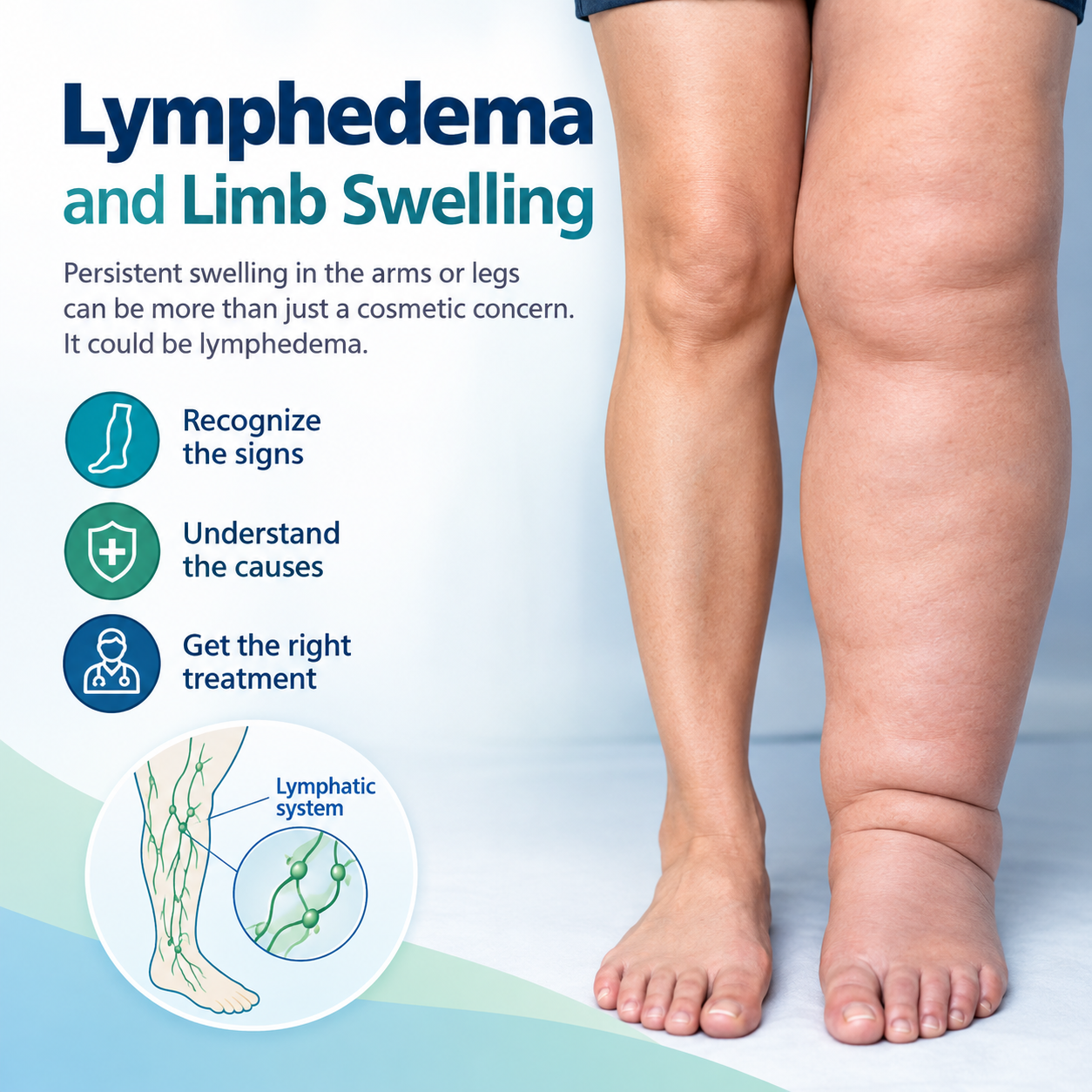
What Is Lymphedema?
The lymphatic system drains fluid from the tissues. When lymph nodes or vessels are removed, damaged or missing, fluid accumulates and the limb swells; over time the skin thickens and infections (cellulitis) become common. Swelling can also come from veins (chronic venous disease, DVT), the heart, kidneys or medicines, so the first step is a proper diagnosis.
Complete decongestive therapy - manual lymphatic drainage, compression bandaging, exercises and skin care, followed by fitted garments - reduces swelling substantially and keeps it controlled. Our Lymphedema Clinic is run by a certified lymphedema therapist (Dr. Chaitali Patel, BPT, CLT) working with the vascular surgeon.
A swollen arm or leg can affect comfort, clothing and confidence, and many people wait a long time before seeking help. Lymphedema is long-term, but it responds well to proper therapy, and starting early usually makes it easier to control.
Not every swollen limb is lymphedema. The visit is about finding the cause first, as clots, vein problems and other medical conditions also cause swelling. Once lymphedema is confirmed, the therapist plans a programme and teaches you how to keep the swelling down at home.
Signs of Lymphedema and Limb Swelling
Lymphedema often starts slowly and can come and go at first. You may also notice:
- Persistent swelling of one arm or leg (sometimes both)
- Heaviness, tightness or aching in the limb
- Clothes, rings or shoes becoming tight on one side
- Thickened, hard skin; pitting early on
- Repeated skin infections of the limb
- Reduced movement of the joint
- Swelling that is worse at the end of the day or in hot weather
- A feeling of fullness before any swelling can be seen
- Skin that is harder to pinch on the swollen side
Symptoms vary from person to person. Having one or more of these does not confirm the condition - it means it is worth being checked.
When Is a Swollen Limb Urgent?
Do not wait for an online appointment if you have any of the following. Call the hospital or go to the nearest emergency department.
- Sudden swelling with pain and redness - possible DVT or infection
- Fever with a red, hot, swollen limb (cellulitis)
- Swelling with breathlessness
How We Find the Cause of Limb Swelling
At your first visit you are asked when the swelling started, about any cancer treatment, infections or clots, and about your general health. The limb is examined and measured. A duplex scan checks for a clot or vein problem, and further tests are added when the cause is unclear.
What Causes an Arm or Leg to Swell?
- Removal of lymph nodes or radiotherapy for cancer (breast, pelvic, skin cancers)
- Filariasis and other infections
- Congenital absence or weakness of lymphatic vessels
- Chronic venous disease, previous DVT
- Obesity and immobility
- Other medical causes of swelling - heart, kidney, liver disease, medicines
Lymphedema can appear months or even years after lymph node surgery or radiotherapy, so new swelling in a treated arm or leg is worth checking at any time. In some people the lymph vessels are weak from birth and swelling appears in childhood or later life. Infections, weight gain and inactivity can make any type worse.
Investigations
- Clinical assessment
- History, examination and limb measurements; the pattern often makes the diagnosis.What to expect: The limb is examined and measured at set points, and the measurements are compared with the other side. It is painless and helps track progress during therapy.
- Duplex ultrasound
- To exclude a clot or venous cause.What to expect: A painless scan with gel and a probe on the limb, done by the vascular team, to check for a clot or a vein problem.
- Lymphoscintigraphy or other lymphatic imaging
- When the diagnosis or the site of blockage is unclear.What to expect: A small amount of tracer is injected under the skin of the hand or foot and scans show how it moves. It is needed in some patients; your doctor will tell you if it is advised.
- Blood tests
- To exclude heart, kidney, liver or thyroid causes.What to expect: A routine blood sample to check the heart, kidneys, liver and thyroid, which can also cause swelling.
Treatment Options for Lymphedema
The usual path
- Check the cause.
The vascular surgeon rules out a clot, vein disease or other medical causes before therapy begins.
- Reduce the swelling.
In the intensive phase, the Lymphedema Clinic uses manual lymphatic drainage, compression bandaging, exercise and skin care.
- Keep it controlled.
Fitted compression garments and a home programme of exercise and skin care hold the gains made in therapy.
- Consider surgery in selected cases.
If swelling remains despite therapy, the vascular surgeon discusses whether a surgical option is suitable.
- Complete decongestive therapy
- Manual lymphatic drainage, multi-layer compression bandaging, exercises and meticulous skin care in an intensive phase, then maintenance.
- Compression garments
- Fitted sleeves or stockings worn daily to keep the swelling down.
- Skin care and infection prevention
- Protecting the skin and treating any infection early; some patients need preventive antibiotics.
- Exercise and weight management
- Tailored activity improves drainage.
- Surgery
- In selected patients, procedures such as lymphaticovenous bypass or reduction surgery are considered, discussed with the vascular surgeon.
The right treatment depends on the cause, how severe it is and your overall health. Your doctor will discuss the options with you before anything is decided.
Frequently Asked Questions about Lymphedema
Can lymphedema be cured?
It is a long-term condition, but with proper therapy and garments most people control it well and prevent it worsening.
Are diuretics (water tablets) useful?
Generally no. Lymphedema is protein-rich fluid that diuretics do not remove; they are used only if there is another reason.
Is it safe to exercise?
Yes - exercise with compression is part of treatment. The therapist will show you the right exercises.
How do I avoid skin infections in a lymphedema limb?
Keep the skin clean and moisturised, treat athlete's foot and small cuts at once with an antiseptic, and protect the limb from insect bites, burns and tight jewellery. Avoid injections, blood pressure checks and blood tests on the affected arm where possible. Red, hot skin with fever is cellulitis and needs antibiotics the same day - contact us or the nearest doctor rather than waiting.
Do I have to wear the compression garment every day?
Yes, during the day, for as long as the swelling tendency lasts - which for most people is lifelong. Compression is what holds the gains made during therapy; without it the fluid slowly returns. Garments lose their stretch and are usually replaced every few months, and the therapist will re-measure the limb so that the fit stays correct.
Who should I see first for a swollen arm or leg?
The vascular surgeon, who checks for a clot, a vein problem or another cause before therapy starts. You can be seen at our Adajan hospital or at the OPD nearest you; therapy sessions are at the Lymphedema Clinic in Adajan.
I had lymph nodes removed for cancer. Can I do anything before swelling starts?
Yes. Looking after the skin, staying active, keeping a healthy weight and noticing early signs such as tightness or heaviness all help. You can come to the clinic for advice even before any swelling appears.
What happens at a therapy session?
The therapist measures the limb, uses gentle massage to move the fluid, then applies compression bandages. You are shown exercises and skin care. Sessions are more frequent in the intensive phase, then spaced out as the swelling settles.
Why Choose Gujarat Hospital for Lymphedema
How we look after lymphedema and limb swelling at our main hospital in Adajan, Surat:
- Therapy by a Clinical Lymph Therapist. Dr. Chaitali Patel, Clinical Lymph Therapist (BPT, CLT), runs the Lymphedema Clinic and treats primary lymphedema and swelling after cancer treatment.
- The vascular surgeon in the same department. Swelling that may have another cause, such as a clot or a vein problem, is assessed with a duplex scan, and surgical options are discussed for selected patients.
- Complete decongestive therapy, not water tablets. Manual lymphatic drainage, compression bandaging, exercise and skin care, followed by fitted garments.
- Self-care you can continue at home. You are taught bandaging, exercises and skin care so the gains made in the clinic are kept.
The information on this page is for general patient education and does not replace individual medical advice, diagnosis or treatment. Medical Disclaimer