
Deep Vein Thrombosis (DVT) in Surat What to Expect
Deep vein thrombosis is a blood clot in the deep veins, usually of the leg. It causes swelling and pain and can break off to the lungs (pulmonary embolism), which is dangerous. Prompt diagnosis by ultrasound and treatment with blood thinners prevents complications.
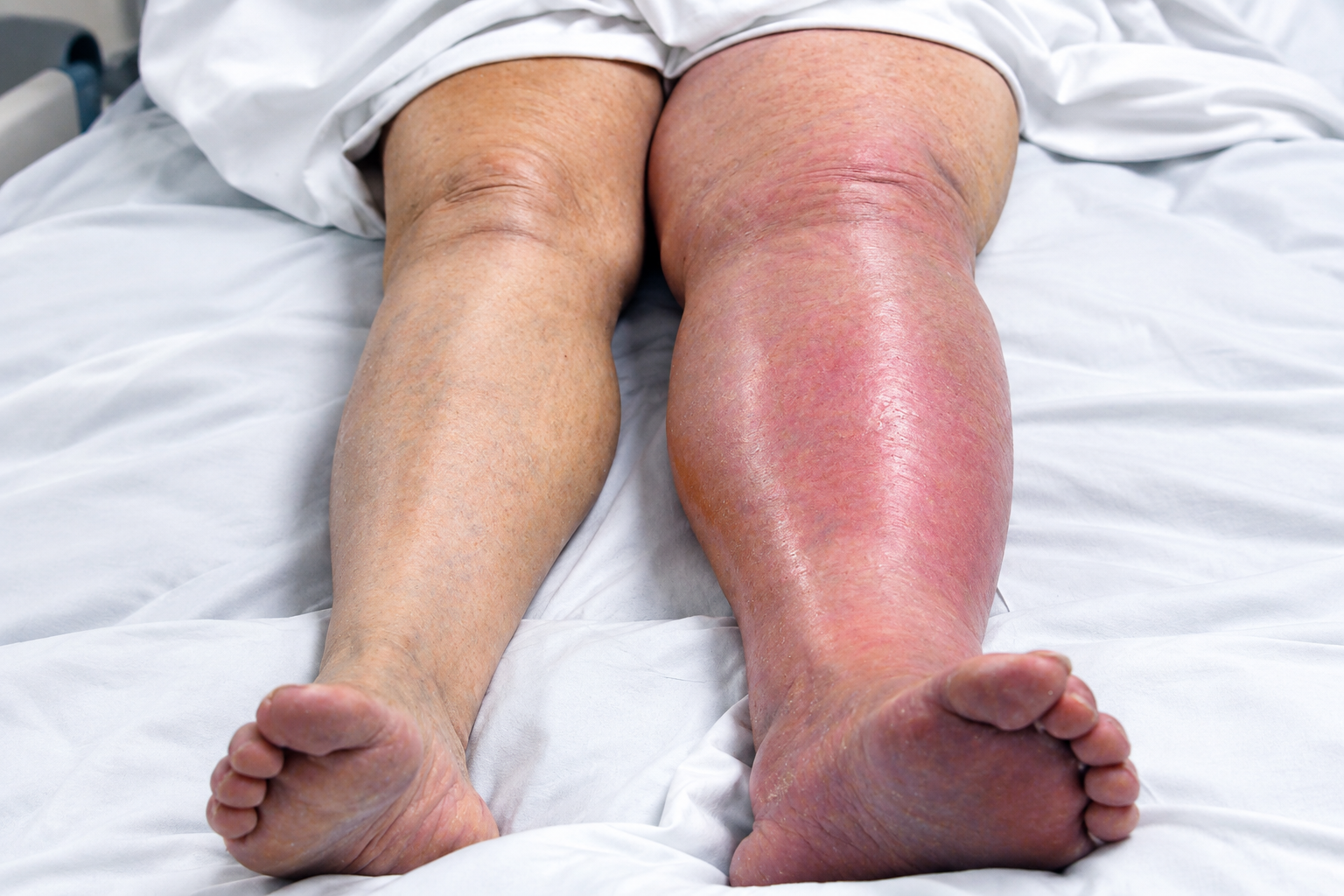
What Is Deep Vein Thrombosis (DVT)?
Clots form when blood flow slows - after surgery, long journeys or bed rest - or when the blood clots more easily because of illness, pregnancy, hormones, cancer or inherited tendency. The clot blocks the vein, causing the leg to swell and ache; part of it may travel to the lungs and cause breathlessness and chest pain.
Treatment with anticoagulant (blood-thinning) medicines stops the clot growing and allows the body to dissolve it. For large clots in the pelvis or thigh, catheter-directed treatments can remove the clot and reduce the long-term leg damage (post-thrombotic syndrome). Our vascular team provides diagnosis, treatment and follow-up, including care of the leg afterwards.
A swollen, painful leg can be worrying, and it is right to have it checked quickly. Most DVTs are treated with blood-thinning tablets without a stay in hospital, and with prompt treatment most people recover well.
The first step is a scan to confirm the clot and see how far it extends. The doctor then explains how long treatment is likely to last, what to watch for, and whether a catheter treatment would help with a large clot in the thigh or pelvis.
Symptoms of a Clot in the Leg
A DVT does not always cause obvious symptoms. You may also notice:
- Swelling of one leg - calf or the whole leg
- Pain or tenderness in the calf or thigh, worse on standing or walking
- Warmth and redness of the leg
- Prominent surface veins
- Breathlessness, chest pain or coughing blood - signs the clot has reached the lungs
- A calf that feels tight or cramp-like, especially when you walk
- One leg looking larger than the other when you compare them
Symptoms vary from person to person. Having one or more of these does not confirm the condition - it means it is worth being checked.
When Is a DVT an Emergency?
Do not wait for an online appointment if you have any of the following. Call the hospital or go to the nearest emergency department.
- Sudden breathlessness or chest pain with a swollen leg - call the emergency number
- A leg that is swollen, painful and turning pale or blue
- Swelling of the leg after surgery or a long journey
How We Diagnose DVT
When you arrive, the doctor asks about recent surgery, travel, illness and any earlier clots, and examines your leg. A duplex ultrasound is done the same day to confirm or rule out a clot. Further tests depend on your symptoms and on whether a cause needs to be found.
What Makes a DVT More Likely?
- Recent surgery, injury, hospital stay or immobility
- Long journeys
- Cancer and its treatment
- Pregnancy, the contraceptive pill and hormone therapy
- Inherited clotting tendencies, previous DVT
- Obesity, smoking, older age
A clot forms when blood moves slowly, when the vein wall is damaged, or when the blood clots more easily than usual. Often more than one of these is present, such as after an operation followed by bed rest. Sometimes no trigger is found, and the doctor may then look for an underlying cause.
Investigations
- Duplex ultrasound
- The standard test: shows the clot, its extent and blood flow. Done promptly by our vascular team.What to expect: A painless scan with gel and a probe along the leg. The vascular team presses gently on the veins to see whether they are blocked, and you are told the result the same day.
- Blood tests
- D-dimer, clotting and, where appropriate, tests for clotting disorders.What to expect: A routine blood sample. Some tests are done before blood thinners are started, so the sample is usually taken early.
- CT pulmonary angiography
- If pulmonary embolism is suspected.What to expect: You lie on a scanner table while a dye is given through a drip in your arm. You may feel warm briefly. It is needed when a clot in the lungs is suspected.
- Assessment for a cause
- Particularly for a first clot without an obvious trigger.What to expect: The doctor reviews your history and may suggest further tests. Your doctor will explain which, if any, are needed for you.
Treatment Options for DVT
The usual path
- Start blood thinners.
Tablets or injections are started as soon as a DVT is confirmed, to stop the clot growing.
- Keep moving.
Walking is encouraged, and compression stockings may be advised to ease swelling.
- Treat large clots directly.
For extensive clots in the thigh or pelvis, catheter-directed thrombolysis in the Hybrid Operation Theatre & Cathlab can dissolve or remove the clot.
- Plan follow-up.
The team reviews the leg, decides how long treatment continues and helps prevent another clot.
- Anticoagulant medicines
- Tablets or injections for at least three months, longer if the cause persists; modern tablets need no routine blood monitoring.
- Compression and mobility
- Walking is encouraged; compression stockings help symptoms and may reduce long-term swelling.
- Catheter-directed thrombolysis or thrombectomy
- For extensive clots in the thigh and pelvis, the clot is dissolved or removed through a catheter in our Cathlab to protect the vein's valves.
- Filters
- An IVC filter is placed only when blood thinners cannot be used and the risk to the lungs is high.
- Follow-up
- Review of the leg, duration of treatment and prevention of recurrence.
The right treatment depends on the cause, how severe it is and your overall health. Your doctor will discuss the options with you before anything is decided.
Frequently Asked Questions about DVT
Can I walk with a DVT?
Yes, once treatment has started. Walking is safe and encouraged; bed rest is not required.
How long will I be on blood thinners?
Usually three to six months for a clot with a temporary cause; longer or indefinitely if the cause persists or clots recur. Your doctor will decide with you.
Will my leg return to normal?
Most do, especially with early treatment. Some people have long-term swelling or heaviness; catheter treatments for large clots and compression reduce this.
Can I fly or take a long journey after a DVT?
Long journeys are best avoided in the first weeks after a clot. Once you are settled on treatment, travel is usually safe if you take your blood thinner on time, walk about regularly, keep well hydrated and wear compression stockings. Check with your doctor before any long journey, especially by air, as the advice depends on the size of the clot and how long you have been treated.
What should I watch for while taking blood thinners?
Blood thinners make bleeding more likely, so report black or bloody stools, blood in the urine, nosebleeds that will not stop, unusual bruising or any head injury straight away. Avoid painkillers such as ibuprofen or aspirin unless your doctor has approved them, and tell every doctor and dentist that you are on a blood thinner. Never stop the medicine on your own, even if the leg feels better.
Which doctor should I see for a suspected DVT?
A vascular surgeon, and on the same day if possible. A swollen, painful leg should be scanned promptly. If you are also breathless or have chest pain, come to the emergency department straight away.
How can I lower the chance of a clot after surgery or on a long journey?
Keep moving: walk when you can, flex your ankles often while sitting, and drink enough fluids. After an operation your doctor may advise injections or stockings. Ask about your own risk if you have had a clot before.
Is a clot in a surface vein the same as a DVT?
No. A clot in a vein just under the skin (superficial thrombophlebitis) causes a red, tender cord and is usually less serious. It can sometimes extend into a deep vein, so a scan is often advised.
Why Choose Gujarat Hospital for DVT
How we look after deep vein thrombosis (DVT) at our main hospital in Adajan, Surat:
- Same-day duplex ultrasound. A suspected DVT is scanned the same day by the vascular team, so treatment can begin without delay.
- A vascular surgeon who treats clots. Catheter-directed thrombolysis and surgery for clots in blood vessels are among the procedures our vascular surgeon performs.
- Catheter treatment in the Hybrid Operation Theatre & Cathlab. For extensive thigh and pelvic clots, the vein can be imaged and the clot treated in the same room, in the same sitting.
- Follow-up for the long term. The team decides how long blood thinners are needed and manages any lasting swelling, with the Lymphedema Clinic in the same department.
The information on this page is for general patient education and does not replace individual medical advice, diagnosis or treatment. Medical Disclaimer