
Aneurysm in Surat What to Expect
An aneurysm is a weakened, ballooned segment of an artery - most often the abdominal aorta, sometimes the chest aorta or the arteries behind the knee. Most cause no symptoms until they enlarge; the danger is rupture. Aneurysms above a certain size are repaired, by endovascular stent-graft or open surgery.
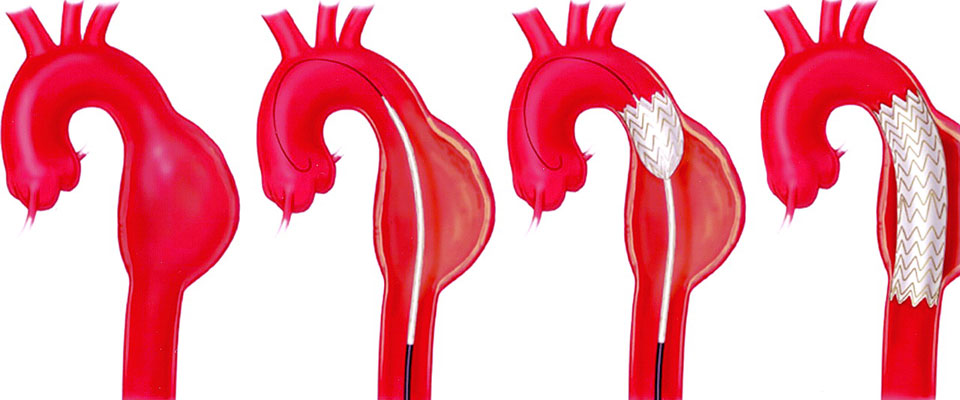
What Is an Aneurysm?
The aorta is the main artery from the heart. With age, smoking and high blood pressure its wall can weaken and stretch. Small aneurysms are monitored with ultrasound; once they reach a size where the risk of rupture outweighs the risk of repair, treatment is advised. Rupture is life-threatening, which is why detection and planned repair matter.
Endovascular aneurysm repair (EVAR) places a stent-graft inside the aorta through small groin punctures, avoiding a large incision, and is suitable for many patients. Open surgical repair replaces the segment with a graft and remains the right choice for some. Our vascular and endovascular surgeon performs both, supported by the Hybrid Operation Theatre and Cathlab.
An aneurysm can form in any artery, but the ones a vascular surgeon sees most often are in the aorta in the abdomen, the aorta in the chest and the artery behind the knee. Where it is decides what the risk is: aneurysms of the aorta can burst, while those in the leg more often fill with clot and block the blood supply.
Being told you have an aneurysm can be worrying, but most are found early and many never need an operation. The first step is to confirm where it is and how large it is. Your surgeon then explains whether it should be watched with scans or repaired, and which kind of repair suits that part of the body.
Symptoms of an Aneurysm
Most aneurysms are silent. When they do cause symptoms, you may notice:
- Usually none - found on a scan for another reason
- A pulsating feeling or lump in the abdomen
- Deep, persistent pain in the abdomen, back or chest
- For popliteal aneurysms: a lump behind the knee, or sudden leg pain from a clot
- Rupture: sudden severe pain, collapse, faintness
- A lump that you can feel beating with your pulse, in the abdomen, groin or behind the knee
- Pain or tenderness over a known aneurysm
- A swelling in the groin after a catheter test or injury, which may be a false aneurysm
Symptoms vary from person to person. Having one or more of these does not confirm the condition - it means it is worth being checked.
When Is an Aneurysm an Emergency?
Do not wait for an online appointment if you have any of the following. Call the hospital or go to the nearest emergency department.
- Sudden severe abdominal, back or chest pain with a known aneurysm - or with collapse or faintness - is an emergency
- A cold, painful leg in someone with a popliteal aneurysm
How We Find and Measure Aneurysms
At your first visit the surgeon asks about your symptoms, smoking, blood pressure and family history, and feels the pulses in your abdomen and legs. An ultrasound usually confirms and measures the aneurysm. More detailed scans are added when repair is being planned.
Why Do Aneurysms Form?
- Atherosclerosis, smoking and high blood pressure
- Increasing age, male sex, family history
- Inherited connective-tissue disorders
- Infection or injury of the artery wall (rare)
The common thread is a weak artery wall. Ageing, smoking and high blood pressure wear the wall down over many years, and some people inherit a weaker wall. Having an aneurysm in one place raises the chance of another elsewhere, which is why the surgeon may scan more than one area, such as the abdominal aorta and both knees.
Investigations
- Ultrasound
- Detects and measures abdominal aortic and popliteal aneurysms; used for surveillance.What to expect: A painless scan using gel and a probe on the skin over the artery. For the abdomen you may be asked not to eat for a few hours before, so the aorta is easier to see.
- CT angiography
- Precise measurements and anatomy for planning repair.What to expect: You lie still on a scanner table for a short time while a dye is given through a drip in your arm. Tell the team about kidney problems, diabetes medicines or any allergy to dye.
- Screening
- Ultrasound is advised for men over 65 who have smoked, and for close relatives of people with aneurysms.What to expect: A single quick ultrasound of the abdomen, done lying down. If it is normal, you usually do not need further routine checks.
- Fitness assessment
- Heart, lung and kidney checks before repair.What to expect: Blood tests, an ECG and other heart and lung checks as needed. Your surgeon explains which tests you need and why before any repair.
Treatment Options for Aneurysms
The usual path
- Control the risk factors.
Stopping smoking and controlling blood pressure and cholesterol slow growth and protect your other arteries.
- Measure and watch.
Small aneurysms are measured with ultrasound at intervals your surgeon sets, so repair can be planned before the risk rises.
- Repair from inside the artery.
Where the shape is suitable, a stent-graft is placed through small punctures in the groin, under X-ray, without a large incision.
- Open surgery or bypass.
Some aneurysms are better repaired by open surgery with a graft, and aneurysms in the leg are often treated with a bypass. Your surgeon explains which suits you.
- Surveillance
- Regular ultrasound for small aneurysms, with control of blood pressure and stopping smoking.
- Endovascular repair (EVAR/TEVAR)
- A stent-graft inserted through the groin arteries under imaging guidance lines the aneurysm and removes pressure from its wall; short hospital stay, with lifelong follow-up scans.
- Open repair
- Replacement of the aneurysm with a synthetic graft through an abdominal or chest incision - durable, with a longer recovery.
- Popliteal aneurysm repair
- Bypass or endovascular exclusion to prevent clots and limb loss.
- Risk-factor control
- For every patient, to protect the rest of the arterial system.
The right treatment depends on the cause, how severe it is and your overall health. Your doctor will discuss the options with you before anything is decided.
Frequently Asked Questions about Aneurysms
My aneurysm is small - why not repair it now?
Because the risk of rupture at small sizes is lower than the risk of any repair. Monitoring is safe, and repair is advised once the size crosses the threshold or it grows quickly.
Is endovascular repair as good as open surgery?
It has a lower immediate risk and a faster recovery, and is the first choice for many. It needs lifelong imaging follow-up to check the stent-graft. Some anatomies are better suited to open repair; your surgeon will explain which applies to you.
Can an aneurysm be treated with medicines?
No medicine shrinks an aneurysm, but controlling blood pressure and stopping smoking slow its growth.
How often will my aneurysm be scanned while it is being watched?
Small abdominal aortic aneurysms are measured by ultrasound at regular intervals - typically every one to three years for the smallest and every three to six months as they approach the repair threshold. The interval is set by the surgeon according to the size and rate of growth. Blood pressure control and stopping smoking are part of surveillance, not an alternative to it.
Should my family be checked for aneurysms?
Yes. Abdominal aortic aneurysms run in families, so brothers, sisters and children of a patient are advised to have a one-off ultrasound of the aorta, usually from around the age of 50 or 60. The test is painless and takes a few minutes. If it is normal, no further routine checks are needed.
Which doctor should I see for an aneurysm?
A vascular surgeon, for aneurysms of the aorta and of the arteries in the arms and legs. You can book at our Adajan hospital or at the OPD nearest you; scans and any repair are done at Adajan.
Is an aneurysm in the brain treated in the same way?
No. A brain aneurysm is a different condition and is looked after by neurosurgeons and neuro-interventional specialists. This page is about aneurysms of the aorta and the arteries of the limbs.
What is a false aneurysm?
A swelling caused by a leak from a damaged artery, held in by the surrounding tissue rather than the artery wall. It can follow an injury or a catheter test in the groin. Small ones may close on their own; larger ones are repaired.
Why Choose Gujarat Hospital for Aneurysms
How we look after an aneurysm at our main hospital in Adajan, Surat:
- One vascular surgeon for the whole plan. Dr. Ankur Patel, Vascular & Endovascular Surgeon, assesses where the aneurysm is, how large it is and whether it needs watching or repair.
- Duplex ultrasound by the vascular team, to find and measure aneurysms of the abdominal aorta and the leg arteries, and to follow them over time.
- Endovascular and open repair, including EVAR stent-graft and open repair of abdominal aortic aneurysms, and bypass surgery for aneurysms in the leg, in the Hybrid Operation Theatre & Cathlab.
- Repair of injured arteries, for a false aneurysm (pseudoaneurysm) that forms after an injury or a catheter puncture.
The information on this page is for general patient education and does not replace individual medical advice, diagnosis or treatment. Medical Disclaimer